


Recognizing Plant Cell authors: Federico López Hernández
The Plant Cell, The Plant Cell: Author ProfilesFederico López Hernández, first author of Calcium binding by arabinogalactan polysaccharides is important for normal plant development
Current Position: Research Scientist at Tropic Biosciences
Education: B.Sc. in Biotechnology Engineering from Monterrey Institute of Technology and Higher Education,…

Recognizing Plant Physiology authors: Bo Yu
Plant Physiology, Plant Physiology: Author ProfilesBo Yu, co-first author of MYC2-Activated TRICHOME BIREFRINGENCE-LIKE 37 Acetylates Cell Walls and Enhances Herbivore Resistance
Current Position: Research Associate in Shanghai Center for Plant Stress Biology and Center for Excellence in Molecular Plant Sciences, Chinese Academy of Sciences
Education:…

Recognizing Plant Physiology authors: Aiqing Sun
Plant Physiology, Plant Physiology: Author ProfilesAiqing Sun, co-first author of MYC2-Activated TRICHOME BIREFRINGENCE-LIKE 37 Acetylates Cell Walls and Enhances Herbivore Resistance
Current Position: Postdoc in Shanghai Jiaotong University
Education: PhD, 2014-2019, Shanghai Institute for Biological Sciences, CAS; Bachelor, 2010-2014, Nanjing Agricultural…
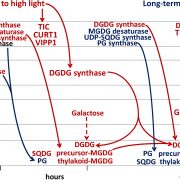
Multi-omics reveals mechanisms of total resistance to extreme illumination of a desert alga (Nature Plants)
Plant Science Research WeeklyThe green alga Chlorella ohadii was recently isolated from the harsh environment of desert biological sand crusts, where it is able to grow and thrive in extreme conditions. Previously, studies showed that it is unusually resistant to photodamage, even at twice the irradiance of maximal sunlight thanks…

Calcium binding by arabinogalactan polysaccharides is important for normal plant development (Plant Cell)
Plant Science Research WeeklyArabinogalactan proteins (AGPs) are a class of apoplastic carbohydrate-binding proteins with a carbohydrate portion that can also bind to calcium (Ca2+) ions in a pH-dependent manner. Here, Lopez-Hernandez and colleagues have probed the role of AGPs and the functional significance of their Ca2+-binding…

Fission control in Chlamydomonas
Plant Science Research WeeklyChlamydomonas, like many green algae, divides by so-called “multiple fission” where the mother cell can grow many-fold in size before undergoing a series of rapid divisions. The dramatic separation of cell growth from cell division makes Chlamydomonas an attractive system to study genetic control…

Cleavage-furrow formation without F-actin (Proc. Natl. Acad. Sci. USA)
Plant Science Research WeeklyThe contractile actomyosin ring (CAR) would be familiar to most students of cell biology. It is often assigned a major role in the formation of the cleavage furrow that bisects the cell during cytokinesis. The contractile force of the ring is generated by type-II myosin motor proteins pulling on actin…
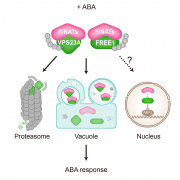
A new node in mediating crosstalk between the proteasomal and autophagic degradation pathways (Plant Cell)
Plant Science Research WeeklyProtein degradation is mediated by several systems: the ubiquitin-proteasome system, multi-vesicle body-mediated vacuolar sorting (MVB), and the autophagy-vacuole pathway. However, the communication between these different protein degradation systems are less characterized. Here, Xia et al. report a…
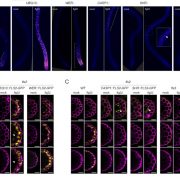
Spatial profiling of immune competence in plant roots (bioRxiv)
Plant Science Research WeeklyPlant roots should prevent immune activation by innocuous soil microbiota, as constitutive immune activation is harmful to plant growth. Previous studies have indicated variable immune competence of different root cell types and developmental zones, but this is currently poorly understood with the fine…