

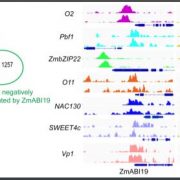
A Hub of Hubs: The Central Role of ZmABI19 in the Regulatory Network of Maize Grain Filling
Blog, The Plant Cell, The Plant Cell: In BriefCereal grains accumulate large amounts of proteins and starch and are a major source of dietary calories for humans and animals. In maize (Zea mays), most of the storage compounds are synthesized during the grain-filling period of kernel development. Several key transcription factors (TFs) that regulate…

Recognizing Plant Cell authors: Ryo Yokoyama
The Plant Cell, The Plant Cell: Author ProfilesRyo Yokoyama, first author of The Entry Reaction of the Plant Shikimate Pathway Is Subjected to Highly-Complex Metabolite-Mediated Regulation
Current Position: Postdoctoral fellow, Department of Botany, University of Wisconsin-Madison, USA
Education: BA, MS, and Ph.D., Kyoto University, Japan
Non-scientific…

Recognizing Plant Physiology authors: Maki Hayashi
Plant Physiology, Plant Physiology: Author Profiles
Maki Hayashi, first author of The quest for the central players governing pollen tube growth and guidance
Current Position: Postdoctoral fellow at Department of Plant and Environmental Sciences, University of Copenhagen
Education: Ph.D. from Nagoya University, Nagoya, Japan
Non-scientific Interests:…

Recognizing Plant Physiology authors: Flora Hetherington
Plant Physiology, Plant Physiology: Author Profiles
Flora Hetherington, first author of Lateral root inhibition in response to K+-deprivation in Arabidopsis is mediated by gibberellin signalling
Current Position: Senior Manager, Global Food Security Programme, UKRI
Education: BSc in Botany, University of Bristol; PhD, Durham University
Non-scientific…
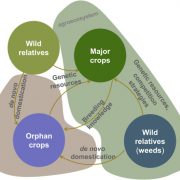
Review: Orphan crops and their wild relatives in the genomic era (Mol. Plant)
Plant Science Research WeeklyMore than half of human calories come from rice, wheat, and corn, although many other cereals have been domesticated as food crops. Several of these “orphan” cereal crops and their wild relatives are being studied with the goal of diversifying our food supply, which is particularly important due…
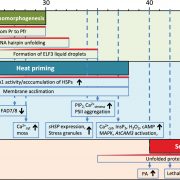
Review: Hot topic: Thermosensing in plants (Plant Cell Environ.)
Plant Science Research Weekly
Climate change has increased global temperatures and affected agriculture in recent years. Heat stress can negatively impact plant growth, development, metabolism, fertility, and immunity. To generate resilient plants that will endure warmer weather conditions, it is imperative to understand how…
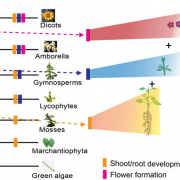
Functional innovations of PIN auxin transporters mark crucial evolutionary transitions (Science)
Plant Science Research Weekly
Complex multicellular flowering plants evolved from simple unicellular algae. This evolutionary transition was driven by crucial innovations in plant anatomy like shoot and root, inflorescence and flowers. Multiple studies have demonstrated the role of local auxin gradients in determining the development…

NPA directly binds to and inhibits PIN transporters (PNAS)
Plant Science Research WeeklyN-1-naphthylphthalamic acid (NPA) inhibits polar auxin transport (PAT). Though used for over six decades, the precise mechanism by which it inhibits PAT is still unclear. A new study by Abas and colleagues now suggests that NPA directly associates with and inhibits the activity of PIN-FORMED (PIN) transporters.…
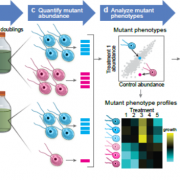
Systematic characterization of gene function in a photosynthetic organism (bioRxiv)
Plant Science Research Weekly
Vilarrasa-Blasi and coworkers described their impressive work on a huge barcoded Chlamydomonas collection, in which they screened almost 60,000 insertion mutants grown under a wide range of environmental and chemical stress conditions. The authors assessed genotype-phenotype specificity for almost…