


Recognizing Plant Physiology author Tereza Tichá
Plant Physiology: Author Profiles
Tereza Tichá, co-first author of HEAT SHOCK PROTEIN 90 proteins and YODA regulate main body axis formation during early embryogenesis
Current Position: Postdoctoral scientist in the group of Prof. Thorsten Hamann, Institute for Biology, Faculty of Natural Sciences, Norwegian University of Science…

Recognizing Plant Physiology author Tereza Vavrdová
Plant Physiology: Author ProfilesTereza Vavrdová, co-first author of HEAT SHOCK PROTEIN 90 proteins and YODA regulate main body axis formation during early embryogenesis
Current Position: Postdoctoral Researcher in the group of Moritz Nowack, VIB Center for Plant Systems Biology, Ghent University, Ghent, Belgium
Education: PhD…

The secret arsenal of phytopathogenic fungi
The Plant Cell: In a NutshellMartínez-Cruz et al. identify fungal effectors with chitinase activity, which suppress chitin-triggered immunity.
by Jesús Martínez-Cruza,b, Diego Romeroa,b, Jesús Hierrezueloa,b, Michael Thonc, Antonio de Vicentea,b and Alejandro Pérez-Garcíaa,b
aDepartamento de Microbiología, Facultad…

Recognizing Plant Physiology author Yeling Zhou
Plant Physiology: Author Profiles
Yeling Zhou (周叶玲), first author of In vivo FRET-FLIM reveals ER-specific increases in the ABA level upon environmental stresses
Current Position:
Senior Researcher in Southern University of Science and Technology, Shenzhen, China
Education:
PhD in Phytopathology, Utrecht University,…
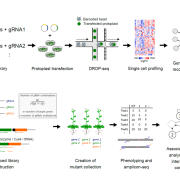
Review: CRISPR screens in plants: Approaches, guidelines, and future prospects (Plant Cell)
Plant Science Research WeeklyWe don’t need to remind you of the tremendous positive impact that CRISPR-based technologies have had on the life sciences through enabling any gene to be edited precisely. Here, Gaillochet et al. provide an up-to-date review of a lesser-known application of CRISPR, its use in large-scale screening…
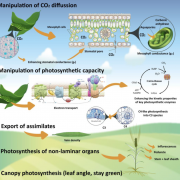
Review: Improving crop yield and resilience through photosynthesis optimisation: panacea or pipe dream? (J. Exp. Bot.)
Plant Science Research WeeklyHas crop photosynthesis research been successful for increasing yields? This very crucial question is analyzed in a new review by Araus et al. The authors report that there has been no increase that can be described as a "quantum leap," but they discuss the merits of increasing leaf photosynthesis and…
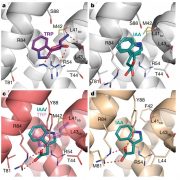
A biosensor for the direct visualization of auxin (Nature)
Plant Science Research WeeklyAuxin is an omnipresent, tryptophan-derived phytohormone that plays roles in innumerable physiological processes, so it is imperative to understand its distribution. Currently the best tools to do so employ the use of indirect sensors, such as the synthetic auxin-responsive promoter DR5. While invaluable,…
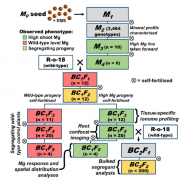
Magnesium and calcium over-accumulate in the leaves of a schengen3 mutant of Brassica rapa (Plant Physiol)
Plant Science Research WeeklyMagnesium (Mg) and calcium (Ca) are essential nutrients for plants and also the animals that eat them. Human deficiencies of these elements are not uncommon. Here, Alcock et al. used Inductively Coupled Plasma Mass Spectroscopy to measure the elemental composition of a mutagenized population of Brassica…
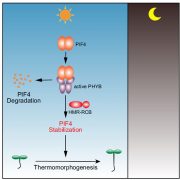
Who keeps PIF4 high on a hot day? RCB joins HEMERA as a partner in crime (Nature Comms)
Plant Science Research WeeklyPHYTOCHROME INTERACTING FACTOR4 (PIF4) is a key protein that mediates thermomorphogenic responses in plants. Under warm temperatures, PIF4 levels are high in the daytime even in the presence of active phyB, which is known to induce degradation of PIFs. Thus, in warm temperatures there must be a mechanism…