

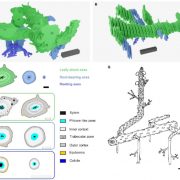
An evidence-based 3D reconstruction of Asteroxylon mackiei, the most complex plant preserved from the Rhynie chert (bioRxiv)
Plant Science Research WeeklyThe Rhynie chert holds some of the oldest and best-preserved fossils of vascular plants (Rhynie is a village in north-east Scotland, and chert is a type of sedimentary rock). Analysis of thin section of fossils from here have provided the earliest cellular details of “rhizoid-based rooting systems,…

Trapped in traffic – redefining cellular responses to auxin pharmacology (Plant Physiol.)
Plant Science Research WeeklyUnderstanding cellular responses to the phytohormone auxin has always been a challenge and decades of work has constantly renewed our knowledge of the same. Here, Narasimhan and colleagues attempted to revisit and resolve the basis of differential action of naturally occurring auxin indole-3-acetic acid…

Structural insights into photosystem II assembly (Nature Plants)
Plant Science Research WeeklyPhotosystem II is a multisubunit enzyme complex in the thylakoid membranes of plant, algae, and cyanobacteria. Here, Zebret et al. used cryo-electron microscopy to produce high-resolution structural information of the intermediate complexes involved in the biogenesis and assembly of photosystem II from…
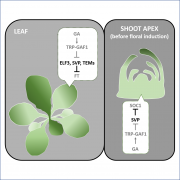
DELLA degradation by gibberellin promotes flowering via GAF1-TPR-dependent repression of floral repressors in Arabidopsis (Plant Cell)
Plant Science Research WeeklyIn Arabidopsis, flowering is promoted by the activation of the florigen FT in response to long days and by the accumulation of the phytohormone GA under short days (SD). Despite the extensive knowledge of regulatory networks involving FT, the molecular mechanism controlled by GA is still unresolved.…
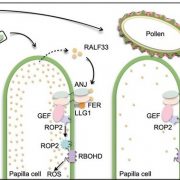
Pollen PCP-B peptides unlock a stigma peptide–receptor kinase gating mechanism for pollination (Science)
Plant Science Research WeeklyIt’s spring where I live and the air and my eyes are filled with pollen. The lucky few pollen grains that land on the stigmatic surface of a flower might germinate and deliver the sperm to the ovule, but there are many checkpoints even after their safe landing. Here, Liu et al. uncover one of the earliest…

SeedQuant: A deep learning-based tool for assessing stimulant and inhibitor activity on root parasitic seeds (Plant Physiol.)
Plant Science Research WeeklyParasitic plants can completely wipe out a farmer’s harvest. The seeds can lie dormant in soil until they perceive signals from potential host plants, which stimulate germination. Therefore, germination stimulants applied to fields before the crops are planted can cause the parasitic seeds to germinate…
Plant Science Research Weekly: April 30th, 2021
WWR Full PostReview: Ageing beautifully: can the benefits of seed priming be separated from a reduced lifespan trade-off?
Seed priming is a family of presowing techniques that control water uptake in seeds, so they are dehydrated once metabolic activities have restarted but before the end of germination. Primed…

Recognizing Plant Physiology author Bingli Ding
Plant Physiology: Author ProfilesBingli Ding, co-first author of Phloem unloading via the apoplastic pathway is essential for shoot distribution of root-synthesized cytokinins
Current Position: Research associate
Education: Master, College of Chemistry and Life Sciences, Zhejiang Normal University
Non-scientific Interests: Reading,…

Recognizing Plant Physiology author Jiangzhe Zhao
Plant Physiology: Author ProfilesJiangzhe Zhao, co-first author of Phloem unloading via the apoplastic pathway is essential for shoot distribution of root-synthesized cytokinins
Current position: Assistant Professor, College of Life Science and Chemistry, Zhejiang Normal University
Education: BSc in Biological Science and PhD…