

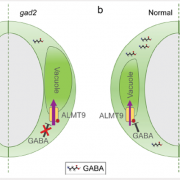
GABA signalling modulates stomatal opening to enhance plant water use efficiency and drought resilience (Nature Comms)
Plant Science Research WeeklyGamma-aminobutyric acid (GABA) is a non-protein amino acid produced by animals and plants, but is its function conserved across kingdoms? In mammals, GABA acts as chemical messenger in the central nervous system by inhibiting neurotransmission. In plants, GABA accumulates in response to stress but its…
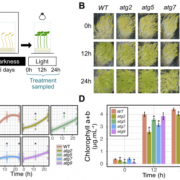
Autophagy promotes photomorphogenesis during seedling development (bioRxiv)
Plant Science Research WeeklyAutophagy is an intracellular evolutionarily conserved catabolic process that degrades cytoplasmic constituents and organelles in lytic vacuoles (micro- and macro-autophagy) or in the cytosol (mega-autophagy). Autophagy can be induced by biotic or abiotic stresses, sugar, carbon and nutrient starvation…
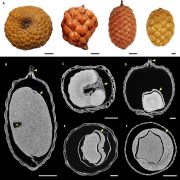
Fossil palm reading using fruits to reveal the deep roots of palm diversity (Am. J. Bot.)
Plant Science Research WeeklyOne of the biggest challenges when using fossils in plant evolution studies is establishing the phylogenetic relationships between fossils and modern plants. This task is particularly complicated with fossils from flowers or fruits, given the little information available for most groups' reproductive…
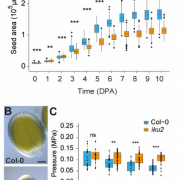
Endosperm turgor pressure both promotes and restricts seed growth and size (bioRxiv)
Plant Science Research WeeklySeed size is a plant trait with agricultural and ecological relevance. However, the mechanisms that determine the final size of seeds are still subject to debate. Here, Creff and colleagues use computational models and mutant experiments to dissect the role of endosperm turgor in Arabidopsis seed size.…
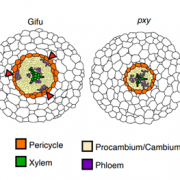
Natural variation identifies a Pxy gene controlling vascular organization and formation of nodules and lateral roots in Lotus japonicus (New Phytol.)
Plant Science Research WeeklySymbiosis between legumes and nitrogen-fixing bacteria such as Mesorhizobium loti requires an exchange of signals. Plants recognize both specific nod factors (lipochitooligosaccharides) as well as cell-surface exopolysaccharides through distinct pathways. The M. loti exoU mutant fails to properly form…
Plant Science Research Weekly: April 16, 2021
WWR Full PostReview: CRISPR screens in plants: Approaches, guidelines, and future prospects
We don’t need to remind you of the tremendous positive impact that CRISPR-based technologies have had on the life sciences through enabling any gene to be edited precisely. Here, Gaillochet et al. provide an up-to-date…

Recognizing Plant Direct author Joanna Friesner
Plant Direct, Plant Direct: Author Profiles, Research
Joanna Friesner, first author of Broadening the impact of plant science through innovative, integrative and inclusive outreach
Current Position: Executive Director, North American Arabidopsis Steering Committee (NAASC)
Education: PhD in Genetics, University of California, Davis
Non-scientific…

Recognizing The Plant Cell author Kirk Amundson
The Plant Cell: Author Profiles
Kirk Amundson, first author of Rare instances of haploid inducer DNA in potato dihaploids and ploidy-dependent genome instability
Current Position: Ph.D. Candidate, University of California Davis, Davis CA USA
Education: B.S. in Biochemistry, University of Minnesota
Non-scientific interests:…

Recognizing Plant Physiology author Lu-Shen Li
Plant Physiology: Author Profiles
Lu-Shen Li, first author of Calmodulin-Binding Protein 60b is a central transcriptional activator of immunity
Current Position: PhD candidate in Prof. Yan Zhang’s lab at Shandong Agricultural University, Shandong, China
Education: BS in College of Life Sciences, Shandong Agricultural University,…