

CLAVATA modulates auxin homeostasis to regulate stem cell identity in a moss (New Phytol.)
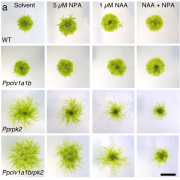
Plant Science Research WeeklyThe size and shape of aerial organs in angiosperms is determined by the activity of shoot apical meristem cells. The mechanism by which this cell population is maintained has been well described in Arabidopsis, and involves a negative feedback loop of diffusible CLAVATA peptides and the transcription…
Coordinated evolution of plant immune receptor repertoires (bioRxiv)
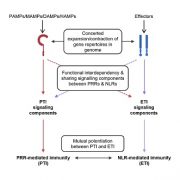
Plant Science Research WeeklyIn plants, immune signalling and the corresponding defence responses are initiated by direct or indirect recognition of pathogen molecules via immune receptors. In the plasma membrane, pattern-recognition-receptors (PRRs) recognize signs of invasion and pattern-triggered immunity (PTI) is initiated.…
Crosstalk between phosphate transport and plant immunity (Curr. Biol.)
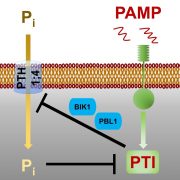
Plant Science Research WeeklyPlants have evolved signaling cascades to survive biotic and abiotic stresses, and recent studies have shown that there is crosstalk between many of these pathways. In a recent study, Dindas et al. developed a micro-electrode-based system to detect active inorganic phosphate (Pi) transport in Arabidopsis…
GWAS on multiple traits identifies mitochondrial ACONITASE3 as important for acclimation to submergence stress (Plant Physiol.)
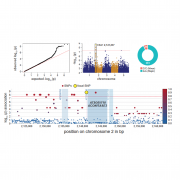
Plant Science Research WeeklyClimate change is affecting the frequency and intensity of extreme climatic events such as floods, reducing crop production severely. Submergence might lead to a lack of O2, light, and carbon dioxide, having an impact on the carbohydrate content and ATP synthesis. In this work, Xiangxiang et al. characterise…
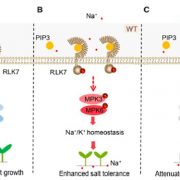
Plant salt tolerance through a peptide and receptor like kinase pathway (Plant Cell)
Plant Science Research WeeklySoil salinity is a major stress that hampers plant growth, but plants have evolved signaling pathways to sense and respond to salinity. Zhou and colleagues have recently reported a novel pathway in Arabidopsis thaliana that that involves a peptide ligand, PAMP-INDUCED SECRETED PEPTIDE 3 (PIP3) and…
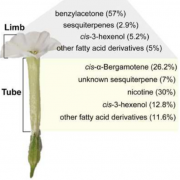
Single-cell RNA-sequencing of Nicotiana attenuata corolla cells reveals the biosynthetic pathway of a floral scent (New Phytol.)
Plant Science Research WeeklyRelease of scents or volatile compounds influence pollinator preference for or localisation of many flora. In excess of 1,700 distinct floral scents have been classified to date, yet our understanding of biosynthetic processes associated with many scents is limited. Kang et al. recently determined the…

The sweet and musky scent of home: biogenic ethylene fine-tunes seed germination in wetlands (Plant Biol.)
Plant Science Research WeeklyLight, temperature, substrate moisture and oxygen availability are renowned germination triggers for wetland species. However, wetlands sediments are a significant source of gases that might shape the species germination behavior, such as ethylene –a renowned germination promoter. Still, little is…

Using ‘Machine Learning’ to predict crop behaviour (Nature Plants)
Plant Science Research WeeklyMachine Learning (ML) is described by Wikipedia as ‘the study of computer algorithms that can improve automatically through experience and by the use of data’. In agronomy, machine learning can predict important crop traits (including yield) by analysing the large datasets such as data generated…
Plant Science Research Weekly: February 4, 2022
Blog, WWR Full PostReview: The great diversity in kinds of seed dormancy: a revision of the Nikolaeva–Baskin classification system for primary seed dormancy ($)
In 1967, Marianna G. Nikolaeva presented the first detailed system to classify seed dormancy based on its causes and the conditions required to break it.…