

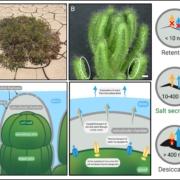
How salt-extruding halophytes avoid drying out
Plant Science Research WeeklyHalophytes are plants that have evolved ways to adapt to high-salt environments that can be toxic to non-halophytes. Some halophytes prevent salt uptake, some sequester it in disposable bladders, and some extrude it from salt glands. In a new study, Mai et al. studied Nolana mollis, a salt-tolerant plant…
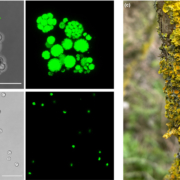
Genomic analysis of a lichen photobiont alga
Plant Science Research WeeklyLichens are complex assemblies that are composed of at least two organisms, a fungus (the mycobiont) and a photosynthetic partner, the photobiont. Lichen lifestyles have emerged several times, and the photobiont can be either prokaryotic cyanobacteria or eukaryotic algae. Recently, Tagirdzhanova et al.…
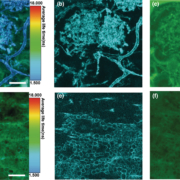
New tools to study an old mycorrhiza
Plant Science Research WeeklyI love learning about the many molecular adaptations that allowed plants to adapt to life on land, and particularly have enjoyed sharing the iconic micrograph from Remy et al (1994) that shows a 400 year old arbuscular mycorrhiza of the fungus Glomeromycotina inside a cell of Aglaophyton major. Now,…
Plant Science Research Weekly: December 5, 2025
WWR Full PostReview: A complete guide to metabolomics
This review by Rai et al., part of a focus collection on metabolism, comprehensively covers the role of metabolomics in plant biology: its history, its tools and techniques, and its impact. As the authors point out, metabolomics bridge the gap between genotype…
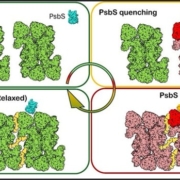
Review.When the sun becomes too hot: Non-photochemical quenching in plants
Plant Science Research WeeklyPlant photosynthetic machinery can easily be overwhelmed by strong sunlight. Therefore, plants developed a set of processes called Non-Photochemical Quenching, a safety valve that dissipates excess light energy as heat. In a recent review, van Amerongen and Croce synthesize decades of often contradictory…
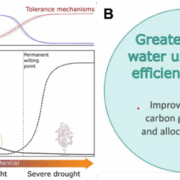
Review. When water runs short: How plant hydraulic traits function and matter most
Plant Science Research WeeklyLong-standing puzzles have perplexed scientists about the physiological tradeoff between drought resistance and crop production, and this review brings the pieces together. What, exactly, allows a crop to keep producing when water runs short? Should breeding focus on early stomatal closure and limited…
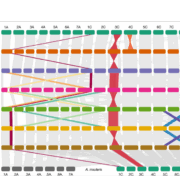
Cracking the oat code: A comprehensive pangenome and pantranscriptome resource
Plant Science Research WeeklyOat (Avena sativa) is a globally cultivated cereal for its rich dietary fiber and health-promoting benefits. Yet, despite its nutritional importance, oat genomics has long lagged behind other cereals due to its large, repeat-rich, and allohexaploid genome which does not generally recombine. In a recent…
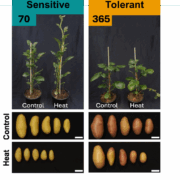
Feeling the heat: SP6A links heat tolerance and defense in potato
Plant Science Research WeeklyClimate change is a major threat to potato, as high temperatures inhibit tuberization and reduce yield. A recent study by Yeo and colleagues screened for heat-tolerance in offspring from one tolerant and one sensitive parent potato cultivar. SELF-PRUNING 6A (SP6A), encoding a phloem-mobile tuberization…
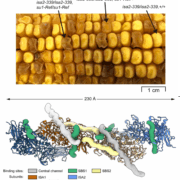
Master of non-enzymatic functions: ISOAMYLASE complex structure reveals additional metabolic roles
Plant Science Research WeeklyPlants store glucose polymers in semicrystalline starch granules. Starch debranching enzymes, including isoamylases (ISAs), are involved in maintaining starch’s crystalline organization. In maize, sugary1 (su1) mutants with impaired ISA1 enzymatic activity accumulate soluble polyglucan chains (phytoglycogen).…