


Lignification and oxidative enzymes: Localization, localization, localization!
Blog, Plant Physiology, Plant Physiology: News and Views, ResearchName Marc Somssich
Affiliation University of Melbourne
ORCiD 0000-0001-5092-6168
[email protected]
Lignification of cell walls is a pivotal process in plant life. Lignin is a biopolymer that provides additional stability to secondary cell walls (SCWs), enables vascular cells to…
Fine Tuning Floral Morphology: MADS-Box Protein Complex Formation in Maize
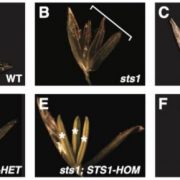
Blog, Research, The Plant Cell, The Plant Cell: In BriefPlant floral organ development is orchestrated by master regulatory genes that control the differentiation of meristem tissue. According to the ABC(DE) model of flower development (Bowman et al., 1989; nicely summarized by Irish, 2017), different floral organs form in concentric whorls (verticils) in…
MYB30 links the ROS wave to systemic acclimation
Blog, Plant Physiology, Plant Physiology: News and Views, ResearchAmna Mhamdi
Ghent University, Department of Plant Biotechnology and Bioinformatics, and VIB Center for Plant Systems Biology, 9052 Ghent, Belgium
Address correspondence to [email protected]
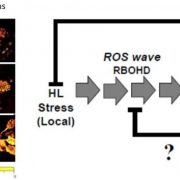
Stress signals trigger systemic signaling and acclimation. The propagation of reactive oxygen species…

More complexity for root meristem development
Blog, Research, The Plant Cell, The Plant Cell: In a NutshellXiong et al. investigated the transcriptional regulation of PLT1 in Arabidopsis, which revolves around competitive and antagonistic binding of JANUS and GIF1 to IMPORTIN β4. The Plant Cell (2020). https://doi.org/10.1105/tpc.20.00108
By Feng Xiong and Sha Li, State Key Laboratory of Crop Biology,…
A DNA Methylation Reader with an Affinity for Salt Stress
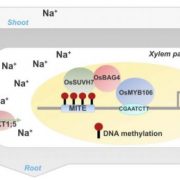
Blog, Research, The Plant Cell, The Plant Cell: In BriefHigh levels of soil salinity lead to toxic accumulation of sodium (Na+) and chloride (Cl-) ions in plants, which adversely affect plant growth and yield. Plants use several strategies to cope with salt stress. These include removal and compartmentalization of toxic ions, and maintenance of growth and…

Unexpected Role of a TCP Transcription Factor in Seed Oil Biosynthesis
Blog, Plant Physiology, Plant Physiology: News and Views, ResearchTianhu Sun
ORCID ID: 0000-0002-2513-1387
Plant Breeding and Genetics Section, School of Integrative Plant Science, Cornell University, Ithaca, New York 14853
[email protected]
Plant seed oils (such as canola oil, sunflower oil, and soybean oil) are important for the human diet and store energy…

AP-2-dependent Endocytosis of BRI1
Blog, Research, The Plant Cell, The Plant Cell: In a NutshellLiu et al. demonstrate how canonical tyrosine endocytic motifs control the internalization of plasma membrane proteins by the clathrin adaptor complex AP-2. The Plant Cell (2020) https://doi.org/10.1105/tpc.20.00384.
Background: In plants, plasma membrane (PM)-resident proteins are selectively…

Plantae Presents Panel: Evo-devo as a discovery tool
Blog, Plantae Presents, Research SkillsPlantae Presents - Evo-devo. What can we learn from comparative studies?
Recorded Wednesday, October 28 - 10 am EDT
We're pleased to announce the second in our series of webinars that are drawn from contributed short videos, followed by a panel discussion. This week we'll look at the topic of…
Lipid Synthesis and Beyond: SAD Fatty Acid Desaturases Contribute to Seed Development
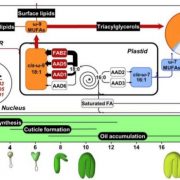
Blog, Research, The Plant Cell, The Plant Cell: In BriefFatty acid (FA) desaturases have long been recognized as key enzymes in synthesizing lipids containing unsaturated FAs, which constitute the majority of seed oil. As a major class of FA desaturases, stearoyl-acyl carrier protein desaturases (SADs) catalyze the first desaturation step, producing the monounsaturated…