


Articles and projects by ASPB Conviron Scholars
Blog, Careers, Careers - BlogThe inaugural class of ASPB Conviron Scholars are wrapping up their virtual course, which included discussions and exercises on various aspects of professional development, from communication to leadership.
As part of the course, they were asked to write a blog post and do some sort of independent…

New PI: Welcome to Committee Work
BlogPart of the "Self Reflection" series by and for early-career researchers
-OK, so you just got a job as a new PI where you are busy setting up your lab (a big challenge) and teaching your first course (another big challenge), BUT wait there’s more…
“We need you to be on this committee, and…
Symphony of the regulators: How do plants control complex responses to environmental signals?
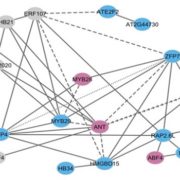
Blog, The Plant Cell, The Plant Cell: In BriefThere are several models we use to conceptualize how plants respond to environmental signals through transcriptional regulation. In perhaps the best-understood model, the perception of some environmental signal flows through one or several mechanisms to a master regulator, often a transcription factor…
Zombie Donkeys and the Modern Science Ph.D. Degree
Blog0 Comments
/
By Andrew Hanson
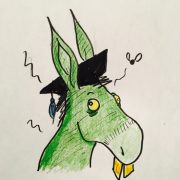
In George Orwell’s masterpiece ‘Animal Farm’ Benjamin the donkey tells the other animals "Donkeys live a long time. None of you has ever seen a dead donkey”. The point: history had hit him hard and often, so he could foresee outcomes.
As a non-dead (zombie) academic donkey…
Hold Me Closer: Meiotic Crossover Formation and FANCD2
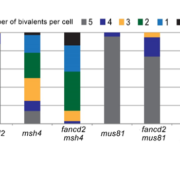
Blog, The Plant Cell, The Plant Cell: In BriefMeiosis takes a single, diploid cell and turns it into four haploid spores. The equal distribution of genetic material is critical for genome stability across generations, and relies heavily on proper pairing of chromosomes and their timely release. During the first meiotic division, crossovers (COs)…
Goldilocks Principle: MtNFH1 Ensures Optimal Nod Factor Activity
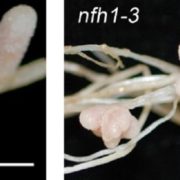
Blog, The Plant Cell, The Plant Cell: In BriefPartner selection is a critical step that must occur early during establishment of Root Nodule Symbiosis (RNS). RNS refers to the mutualistic interaction between legumes and some non-legumes with soil bacteria that help convert atmospheric nitrogen into plant usable ammonia. In legumes such as Medicago…

Pathways not pipelines
BlogReflections on a Plant Science Research Network Workshop from an Early Career Scientist
by Nikki Forrester
It was a quiet morning in August. I sat in my apartment, sipping coffee and sifting through emails. “We are seeking early career scientists . . . who are eager to participate in…

Check Out the Job and Internship Listings - February 6, 2018
Blog, Careers, Careers - Blog
ASPB and Plantae have already set a tone of collaboration and constant improvement by and for plant scientists. In keeping with our commitment to providing the best recruitment resources for our members, we are excited to announce the launch of our new and expanded online employment resource: the…
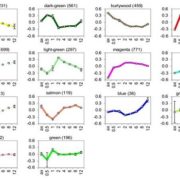
The Shifting Transcriptional Response of Corn Smut Fungus
Blog, Research, The Plant Cell, The Plant Cell: In BriefAs a biotrophic fungus, Ustilago maydis (corn smut fungus) relies on living plant tissues for sustenance. Once U. maydis cells of compatible mating types fuse on a leaf surface, they produce a dikaryotic filament with a specialized infection structure—the appressorium—that penetrates epidermal cells.…