


Scientific Publishing and Peer Review Processes
Blog, EducationHaving peer-reviewed publications should not be the ultimate goal of scientific research, but it is often one of the assessment criteria for pursuing research degrees, fulfilling grant requirements, and meeting professional standards. In this article, we will explore scientific publishing and peer review…

The Secret Life of Plant Science: How and Where It Shapes Our World
Blog, EducationIntroduction
Walk outside and you’ll find them everywhere, shading your path, perfuming the air, and quietly turning sunlight into life. Plants are the green engines of our planet, shaping the atmosphere, feeding the world, and anchoring ecosystems that sustain every breath we take. Yet, they are…

Plantae Presents - Figuring It Out: Creating Figures That Communicate Science
Blog, Education, Plantae WebinarsPlantae Presents - Figuring It Out: Creating Figures That Communicate Science
Featuring Eva Birtell, Helena K. Jambor, and Alicja Barbara Kunkowska
When: Wednesday, December 17, 2025, at
06:00 AM PST | 9:00 AM EST | 2:00 PM GMT | 10:00 PM Beijing
About this Webinar
Scientific figures are visual…

The Science Foundation What IFS 2025: An Opportunity for Basic Research Funding and Call for Reviewers
Blog, CommunityThe Science Foundation, a new non-profit, non-partisan organization, is running an inaugural competition to fund approximately five to ten up to $10,000 research projects in all domains of basic science. SciFdn (“Sci Fund”) was founded by an evolutionary ecologist and a software engineer, and we…
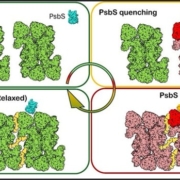
Review.When the sun becomes too hot: Non-photochemical quenching in plants
Plant Science Research WeeklyPlant photosynthetic machinery can easily be overwhelmed by strong sunlight. Therefore, plants developed a set of processes called Non-Photochemical Quenching, a safety valve that dissipates excess light energy as heat. In a recent review, van Amerongen and Croce synthesize decades of often contradictory…
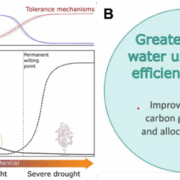
Review. When water runs short: How plant hydraulic traits function and matter most
Plant Science Research WeeklyLong-standing puzzles have perplexed scientists about the physiological tradeoff between drought resistance and crop production, and this review brings the pieces together. What, exactly, allows a crop to keep producing when water runs short? Should breeding focus on early stomatal closure and limited…
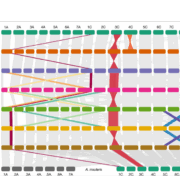
Cracking the oat code: A comprehensive pangenome and pantranscriptome resource
Plant Science Research WeeklyOat (Avena sativa) is a globally cultivated cereal for its rich dietary fiber and health-promoting benefits. Yet, despite its nutritional importance, oat genomics has long lagged behind other cereals due to its large, repeat-rich, and allohexaploid genome which does not generally recombine. In a recent…
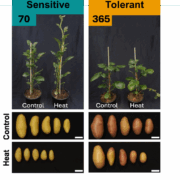
Feeling the heat: SP6A links heat tolerance and defense in potato
Plant Science Research WeeklyClimate change is a major threat to potato, as high temperatures inhibit tuberization and reduce yield. A recent study by Yeo and colleagues screened for heat-tolerance in offspring from one tolerant and one sensitive parent potato cultivar. SELF-PRUNING 6A (SP6A), encoding a phloem-mobile tuberization…
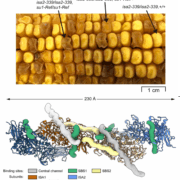
Master of non-enzymatic functions: ISOAMYLASE complex structure reveals additional metabolic roles
Plant Science Research WeeklyPlants store glucose polymers in semicrystalline starch granules. Starch debranching enzymes, including isoamylases (ISAs), are involved in maintaining starch’s crystalline organization. In maize, sugary1 (su1) mutants with impaired ISA1 enzymatic activity accumulate soluble polyglucan chains (phytoglycogen).…