

Plantae Presents – Figuring It Out: Creating Figures That Communicate Science
Plantae Presents – Figuring It Out: Creating Figures That Communicate Science
Featuring Eva Birtell, Helena K. Jambor, and Alicja Barbara Kunkowska
When: Wednesday, December 17, 2025, at
06:00 AM PST | 9:00 AM EST | 2:00 PM GMT | 10:00 PM Beijing
About this Webinar
Scientific figures are visual stories that shape how research is perceived and understood. In an era where attention spans are short and visuals often speak first, the ability to create clear, well-structured figures has become an essential part of scientific communication. This webinar will explore the guiding principles behind effective figure design – from refining data and image figures for publication, to developing visuals that enhance scientific presentations, and designing graphical abstracts that capture the essence of a study. Our speakers will describe how thoughtful visual organization, color balance, and layout can transform complex results into clear and engaging messages.
Hosted by the 2025 Plantae Fellows.
SPEAKERS
Eva Birtell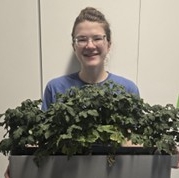
Eva Birtell is a PhD candidate and Unidel Distinguished Graduate Scholar at the University of Delaware, researching controlled environment agriculture and automated irrigation systems to enhance data accuracy and reproducibility in plant science. Her work advances irrigation management and data-collection technologies for hydroponic and chamber-based crop studies. She earned dual Bachelor’s degrees in Horticulture and Biology from the University of Wisconsin–Platteville in 2020, where she developed a passion for plant growth system design in controlled environments. During her undergraduate studies, Eva completed two NASA internships, first at Kennedy Space Center studying plant growth on the International Space Station, and later at Langley Research Center, advancing food production research for Mars missions. She was also part of a finalist team in NASA’s 2019 BIG Idea Challenge to design a Martian greenhouse, integrating plant science and engineering for sustainable extraterrestrial cultivation. LinkedIn: http://linkedin.com/in/eva-birtell-5b1283127.
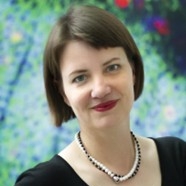 Helena K. Jambor
Helena K. Jambor is a molecular biologist with a passion for design. After completing a PhD at EMBL, she worked with multi-dimensional datasets, images, and genome-scale data at the Max-Planck in Dresden. With a scholarship from the Institute for Advanced Studies, HKJ started researching biomedical data visualisation practices. After working as an adjunct professor for bioinformatics (Berlin) and data visualisation scientist (Medical Faculty Dresden) for 5 years, HKJ is now an Associate Professor for data visualization in Chur/Switzerland. She remains a member at the Medical Faculty Dresden.
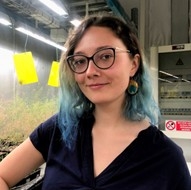 Alicja Barbara Kunkowska
Alicja Barbara Kunkowska is a molecular plant biologist specializing in uncovering the molecular mechanisms that integrate hypoxia signaling with sugar availability. She is currently a postdoctoral researcher at the Sant’Anna School of Advanced Studies in Pisa, where her work explores the fine-tuning of ERF-VII transcriptional activity through post-translational modifications and the role of miRNAs in plant responses to low oxygen. In addition to her research, Alicja serves as an Assistant Features Editor for Plant Physiology. She is passionate about science communication and collaborative research. Outside the lab, she enjoys reading, hiking, and baking.
MODERATORS
 Krishna Chaitanya Alamuru
Krishna is a PhD candidate at the Centre for Crop Health, University of Southern Queensland, Australia. His research focuses on understanding disease resistance in mungbean through genome-wide association studies (GWAS), host range evaluation, and pathotyping of tan spot and powdery mildew pathogens in mungbean. He integrates field trials, controlled-environment experiments, and molecular diagnostics to identify resistance loci and support breeding programs through genetics and genomics.
In addition to his research, Krishna serves as the Secretary of the Researchers in Agriculture for International Development (RAID) Network, a program by the Crawford Fund that connects and empowers early-career researchers in agricultural science and international development. He is also a Plantae Fellow with the American Society of Plant Biologists (ASPB) and co-leads Plantgenomia, an international initiative dedicated to fostering collaboration and knowledge exchange in plant science. Krishna is passionate about science, communication, and sustainability. He enjoys travelling, gardening, and exploring nature. X (Twitter): @alamuru_krishna | LinkedIn: linkedin.com/in/alamuru02.
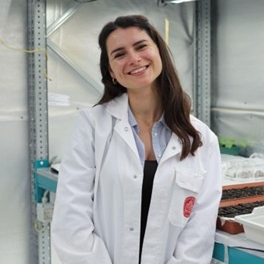
Elisa De Meo
Elisa De Meo is a PhD candidate in Plant Molecular Biology at the Sant’Anna School of Advanced Studies in Pisa, Italy. Her research focuses on understanding the role of RNA interference in plant adaptation to environmental changes, with the broader goal of uncovering molecular mechanisms that contribute to plant resilience and agrobiodiversity. She holds a Master’s degree in Molecular and Cellular Biology and a Bachelor’s degree in Biological Sciences from the University of Bologna. During her Erasmus+ experience at Utrecht University, she worked in the Group of Experimental and Computational Plant Development, using fluorescence microscopy to visualize small RNAs. Beyond her research, Elisa is passionate about science communication and public engagement. She enjoys translating complex scientific concepts into accessible language to foster curiosity and appreciation for plant biology and molecular research among wider audiences. Outside academia, Elisa loves swimming, outdoor sports, reading, and traveling. LinkedIn: www.linkedin.com/in/elisa-de-meo-25415a20b | Email: [email protected].

Irene I. Ikiriko
Irene is a PhD candidate in the Department of Plant and Soil Sciences at the University of Delaware with an interest in developmental biomechanics. Her research combines principles of physics and biology to understand how plant-level responses to mechanical forces emerge from cellular perception of mechanical signals across growth stages. This work has defined the trajectory of maize stalk mechanics and identified changes in tissue material properties as the main factor driving the trajectory. She continues working to uncover the cellular mechanisms that underlie changes in plant mechanics by studying the MSL mechanosensitive gene family and performing QTL analysis in a maize mapping population. Irene is also a licensed educator who has taught at multiple educational levels and is passionate about mentorship and science communication. Outside academia, she enjoys cooking, reading and writing fiction, and volunteering at her NGO for low-income widowed families. X (Twitter): @ireneikiriko | LinkedIn: linkedin.com/in/irene-ibiwari-ikiriko.

Elise Krespan
Elise is a PhD Candidate in the Department of Biology at Syracuse University. Her work investigates combined transgenic and mycorrhizal strategies of optimizing growth, cell wall characteristics, and drought resistance in poplar trees. Using expression of expansins and swollenins, she studies the alterations in tree-fungus dynamics. She aims to increase understanding of cell wall composition and regulation in poplar and how these both affect and are affected by the interactions between poplar and mycorrhizal fungi. Elise is also interested in transdisciplinarity and the intersections between Biology and Design. Outside of lab, Elise enjoys tennis, art, and cooking. LinkedIn: www.linkedin.com/in/elise-k-34a914179.

