
Unusual cell death pathway in maize endosperm
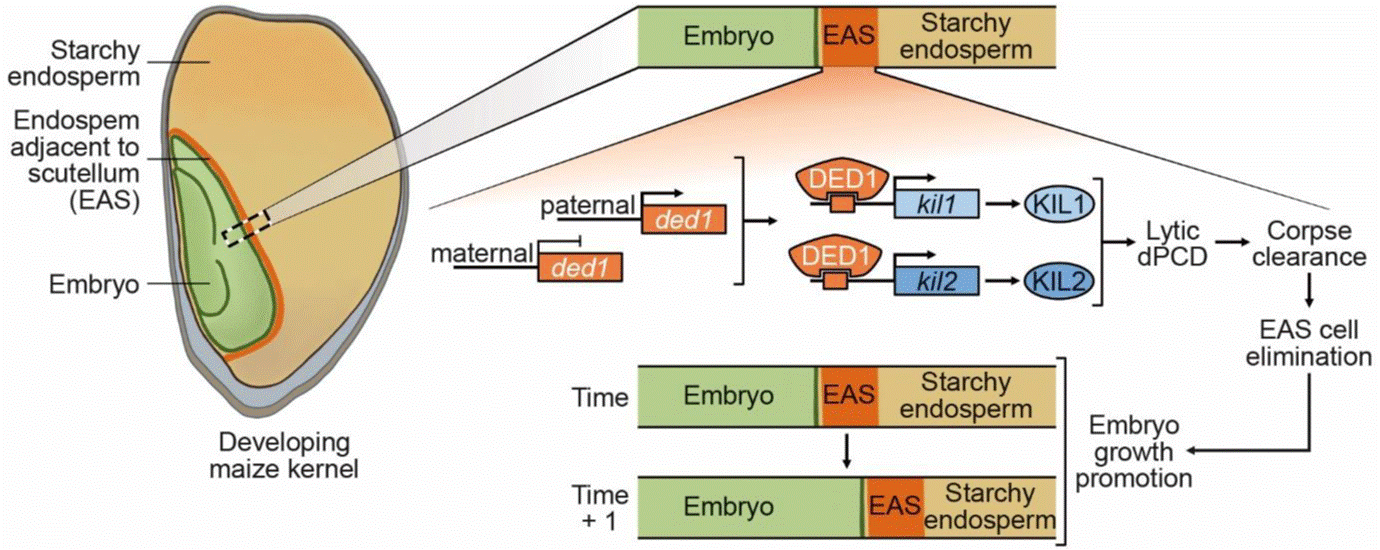 An interesting new study by Doll et al. addresses one of the most complex and important plant developmental processes, that of seed formation, with a focus on maize. Like other seeds, the maize seed (kernel) includes the next generation embryo, surrounded by various maternal tissues as well as the triploid endosperm that provide nutrients to the embryo before and after dormancy and germination. Unlike Arabidopsis seeds, where the endosperm degrades and transfers nutrients to the developing embryo prior to dormancy, in maize seeds the endosperm tissues persist. Although the cells of the endosperm die, the tissue only fully degrades and transfers nutrients to the embryo during germination. However, the maize endosperm is complex, and a distinct tissue type has been identified that is called the embryo-adjacent to scutellum (EAS) tissue. Using single-nucleus RNA sequencing, the authors found that this special region of the endosperm fully degrades, and in mutants that block this degradation embryo growth is inhibited – this tissue is reminiscent of Arabidopsis endosperm that degrades to provide space for the embryo to grow. Interestingly, this EAS degradation is regulated by a paternally expressed imprinted gene. This study raises the possibility of tweaking the developmental balance between embryo and endosperm to promote the food quality of corn kernels. (Summary by Mary Williams @PlantTeaching.bsky.social) Plant Cell 10.1093/plcell/koaf162