

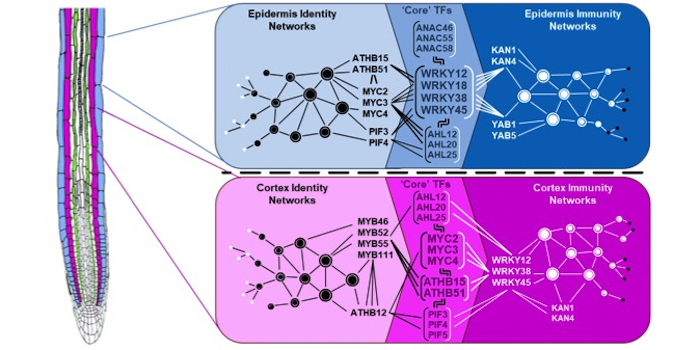
Back to the Roots of Plant Immunity
Blog, Research, The Plant Cell, The Plant Cell: In a NutshellRich-Griffin et al. uncover cell type-specific gene networks that function in plant immunity in Arabidopsis roots. The Plant Cell (2020) https://doi.org/10.1105/tpc.20.00154
By Charlotte Rich-Griffin1, Ruth Eichmann1,2, Sascha Ott3,4,5 & Patrick Schäfer1,2
1School of Life Sciences,…

It takes two to be you: promoter motif pairs keep immune responses within cell identity boundaries
Blog, Research, The Plant Cell, The Plant Cell: In BriefBeing a multicellular organism is not an easy task. Proper functioning of individual cell types with different functions requires coordination of gene expression to determine cell identity, but also regulatory mechanisms to respond to environmental cues. The root may appear simple at first sight, but…
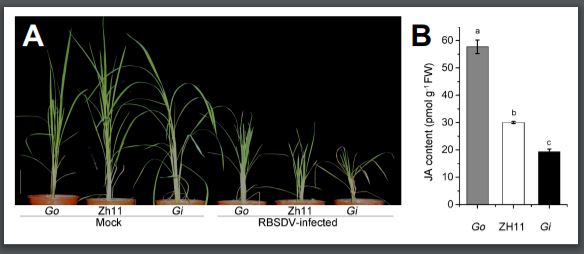
OsGSK2 integrates jasmonic acid and brassinosteroid signalling in rice
Blog, Research, The Plant Cell, The Plant Cell: In BriefPlant defenses against herbivore or pathogen attack involve the coordination of multiple hormone-mediated signalling networks, including the jasmonate (JA) and brassinosteroid (BR) pathways. Jasmonate is an oxylipin phytohormone that triggers the transcription of defence-related proteins and secondary…
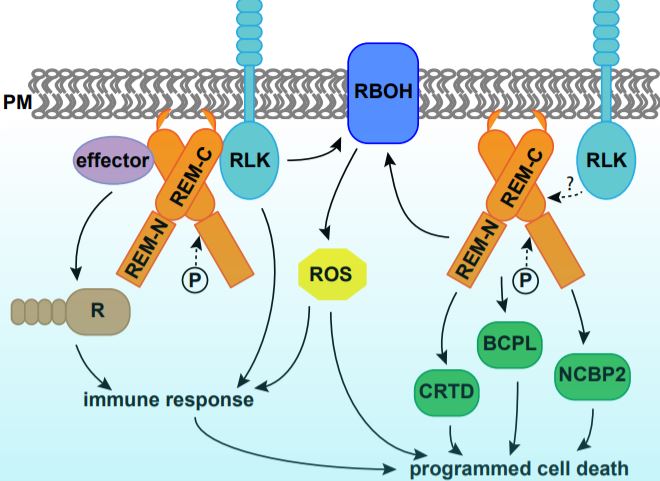
Remorins: essential regulators in plant–microbe interaction and cell death induction
Blog, Plant Physiology, Plant Physiology: News and Views, ResearchProgrammed cell death (PCD) is a genetically controlled process triggered by developmental or environmental cues. Plant–microbe interactions often lead to PCD in plant host cells, triggered by the hypersensitive response. Plants may recognize microbes through receptor-like kinases in the plasma membrane,…

NLR-Annotator: a tool for de novo annotation of intracellular immune receptor repertoire
Plant Physiology, Plant Physiology: News and Views, ResearchWei Zhang
ORCID: 0000-0002-5092-643X
Department of Plant Pathology, Kansas State University, 1712 Claflin Road, Throckmorton Hall, Manhattan, KS, 66506, USA
[email protected]
Nucleotide-binding domain leucine-rich repeat (NLR) proteins serve as intracellular immune receptors in plants to…

Comparing genomes of diverse plants reveals new candidate genetic components for plant disease resistance
Research, The Plant Cell, The Plant Cell: In a NutshellBaggs et al. look for key immune genes bases on their presence/absence patterns in different plant species. The Plant Cell https://doi.org/10.1105/tpc.19.00903
by Erin Baggs, University of California, Berkeley, USA
Ruby O’Grady, The John Innes Centre and The Sainsbury Laboratory, Norwich, UK…
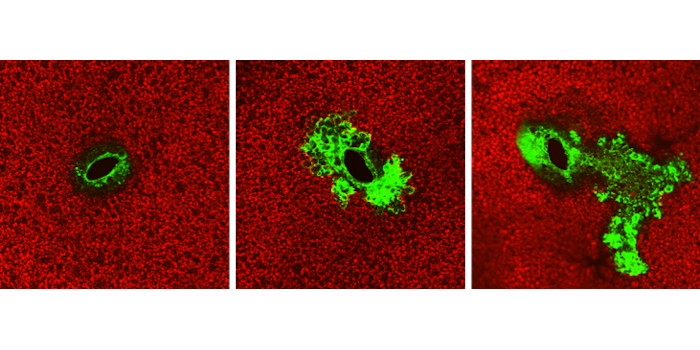
Taking Down Plant Communication Channels to Invade
Research, The Plant Cell, The Plant Cell: In a NutshellAung et al. reveal that pathogenic bacteria target plant plasmodesmata to colonize and invade surrounding tissues.
Plant Cell https://doi.org/10.1105/tpc.19.00707
By Kyaw Aung and Sheng Yang He
Background: Multicellular organisms like animals and plants host a multitude of microorganisms.…

A Maize Mutant Modifier Links Development and Defense
Research, The Plant Cell, The Plant Cell: In a NutshellAnderson et al. identify a second site modifier that rescues a maize developmental mutant and report that it encodes a homolog of Arabidopsis ENHANCED DISEASE RESISTANCE4, providing insight into the integration of developmental control and immune responses. Plant Cell https://doi.org/10.1105/tpc.18.00840
By…
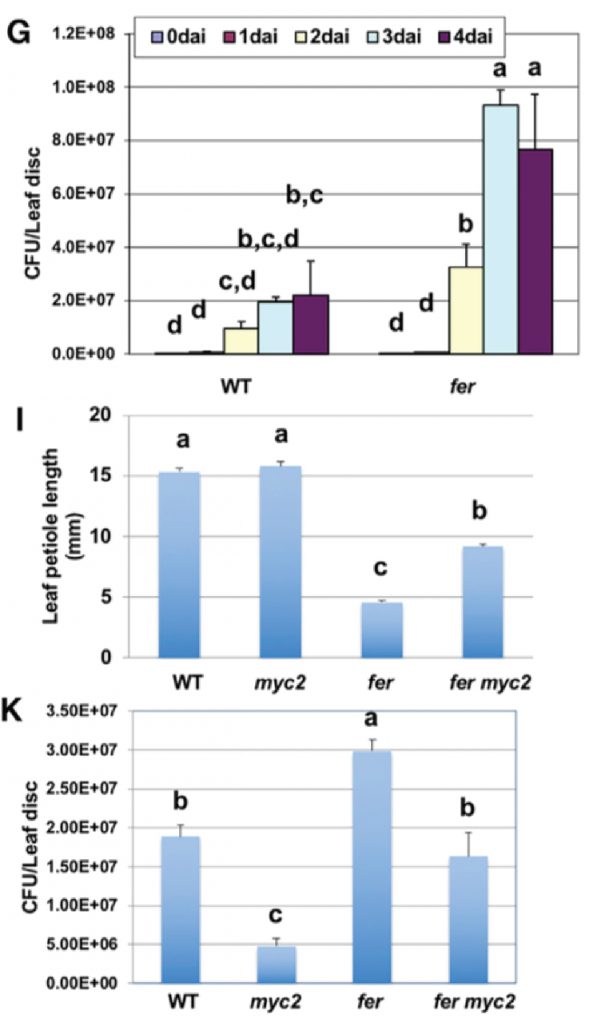
FERONIA receptor kinase contributes to plant immunity by suppressing jasmonic acid signaling in Arabidopsis thaliana (Curr. Biol. - $)
Plant Science Research WeeklyReceptor-like kinase FERONIA plays important role in the regulation of plant growth as well as interactions with the environment. In order to understand how FER affects plant growth Guo et al. examined global transcriptome changes in fer mutant. The authors observed that genes up-regulated by stress…