

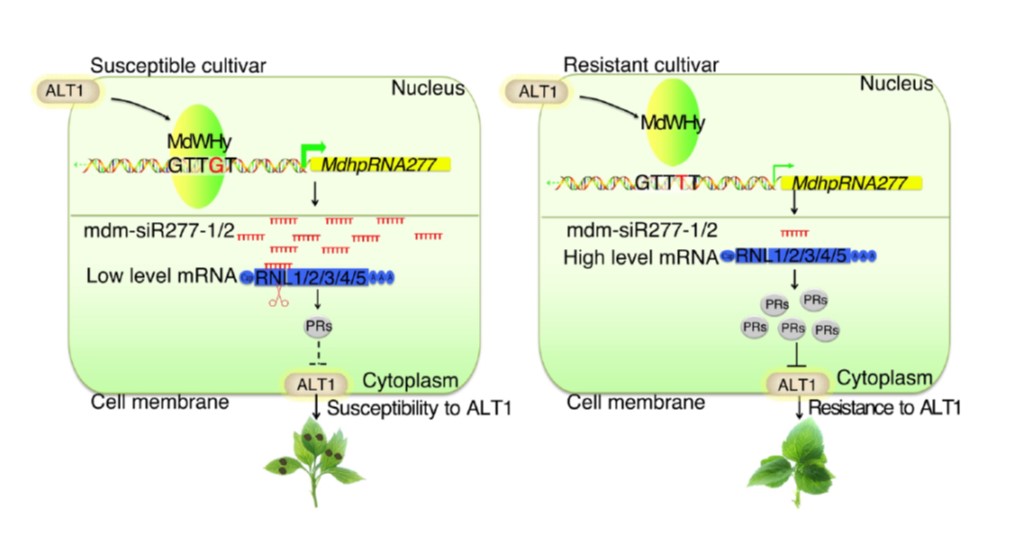
What a difference a base makes: A single nucleotide confers Alternaria resistance in apple ($) (Plant Cell)
Plant Science Research WeeklyGolden Delicious apples are particularly susceptible to the fungal pathogen Alternaria alternaria f. sp. mali. Zhang et al. have traced this susceptibility to a single nucleotide in the promoter of gene encoding a hairpin RNA (hpRNA), MdhpRNA277. This hpRNA produces small RNAs that selectivey target…
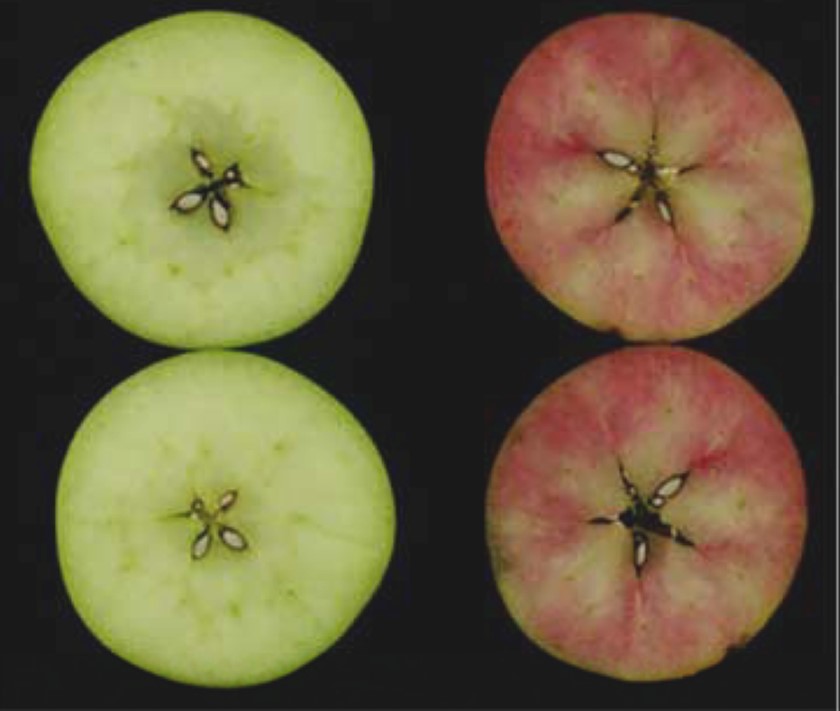
How Ethylene Reddens Apples
Blog, Plant Physiology, Plant Physiology: On The InsideEthylene is essential for the ripening of climacteric fruits, and a rapid burst of ethylene production and a rise in respiration occur at the transition to ripening. In ripening apple (Malus domestica) fruits, the accumulation of anthocyanins that is responsible for reddening is correlated with ethylene…
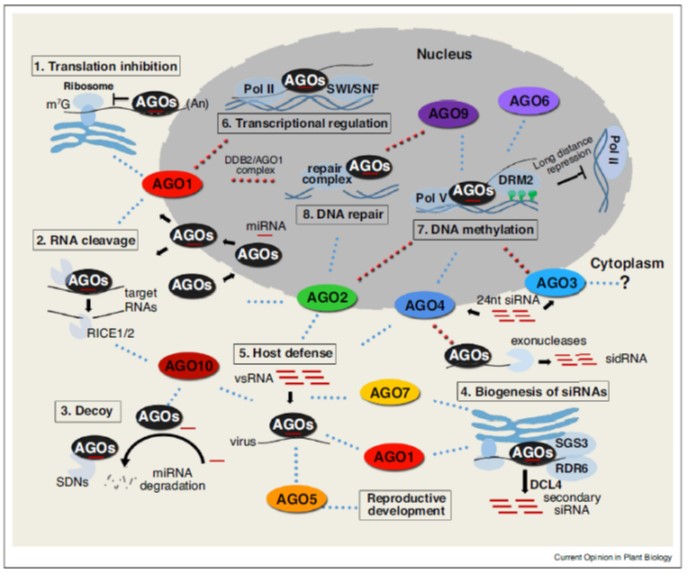
Review. Actions of plant Argonautes: Predictable or unpredictable? (COPB $)
Plant Science Research WeeklyThe Arabidopsis genome encodes nine Argonaute proteins and an AGO pseudogene. The nine functional proteins fall into three clades based on sequence. Ma and Zhang update what we know about these proteins. It turns out, the simple assumptions made early on have not entirely been borne out. For example,…
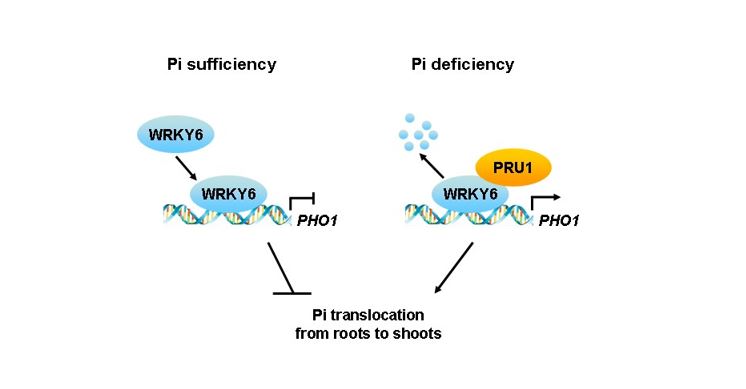
Phosphate Translocation from Roots to Shoots is Precisely Modulated
Research, The Plant Cell, The Plant Cell: In a NutshellYe et al. discover a protein that mediates phosphate translocation and is dependent on environmental phosphate supply. Plant Cell (2018). https://doi.org/10.1105/tpc.17.00845
By Qing Ye and Yi-Fang Chen
Background: Phosphorus is a major essential nutrient for plant growth and development, and phosphate…

Function of m6A in Arabidopsis
Research, The Plant Cell, The Plant Cell: In a NutshellWei et al. Study m6A binding protein ECT2 in Arabidopsis. The Plant Cell (2018). https://doi.org/10.1105/tpc.17.00934
By Lian-Huan Wei
Background: N6-methyladenosine (m6A) is the most abundant chemical modification of eukaryotic messenger RNA (mRNA). The regulation of m6A modification plays important…
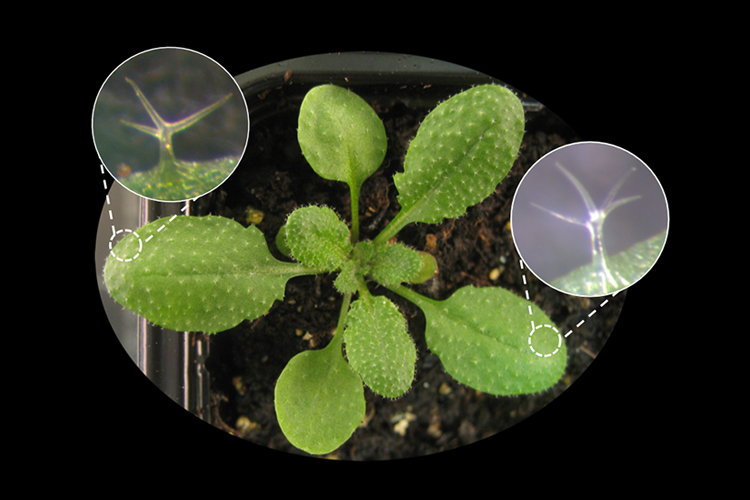
Decoding RNA Methylation Regulates Trichome Branching
Research, The Plant Cell, The Plant Cell: In a NutshellScutenaire et al. show that a YTH domain protein acts as a reader of m6A mRNA modifications, thereby playing crucial roles in trichome branching, likely by acting on mRNAs in the cytosol. Plant Cell (2018). https://doi.org/10.1105/tpc.17.00854
By J. Scutenaire and C. Bousquet-Antonelli
Background:…
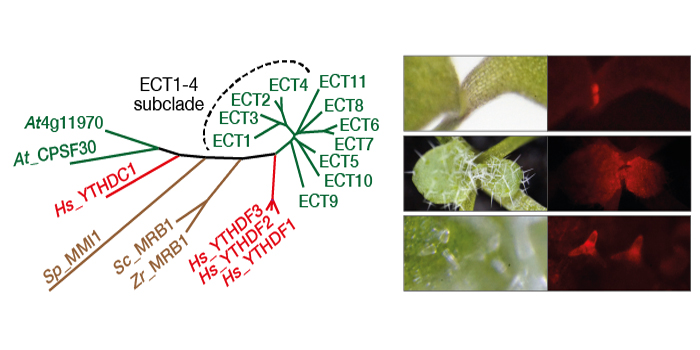
Digging into the Big Family of Plant m6A Readers
Research, The Plant Cell, The Plant Cell: In a NutshellArribas-Hernández et al. find that the N6-methyladenosine RNA binding proteins ECT2, ECT3, and ECT4 are required for the correct timing of leaf formation and correct leaf and trichome morphogenesis. Plant Cell (2018). https://doi.org/10.1105/tpc.17.00833.
By Laura Arribas-Hernández
Background:…
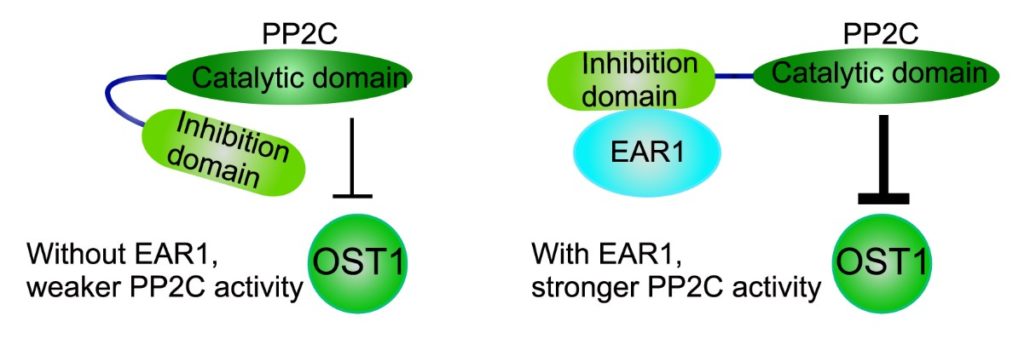
A New Component Regulating ABA Signaling
Research, The Plant Cell, The Plant Cell: In a NutshellWang et al. find that EAR1 is a general negative regulator of ABA signaling. https://doi.org/10.1105/tpc.17.00875
By Kai Wang, Jigang Li and Zhizhong Gong
Background: Abscisic acid (ABA) signaling in plants controls many biological processes, such as seed germination, seedling root growth, and…
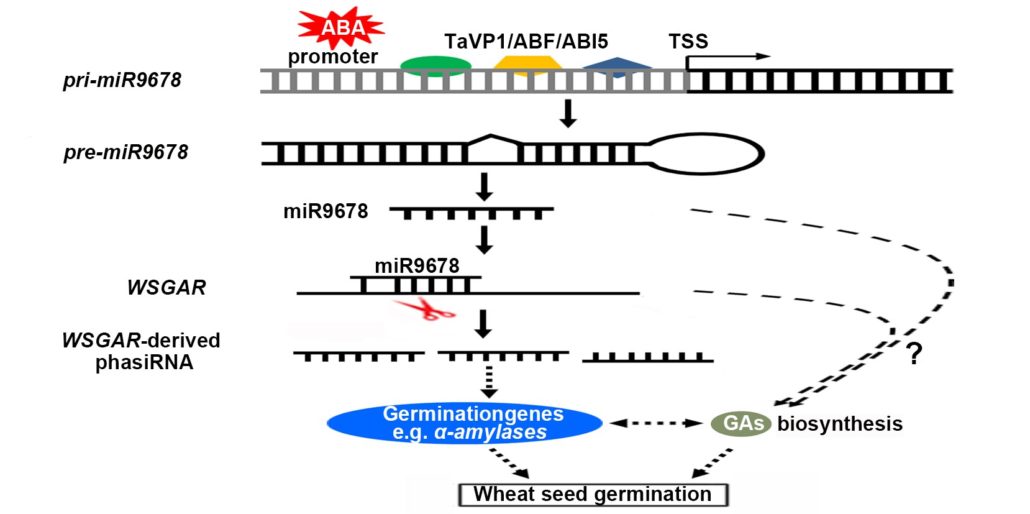
miRNA-Mediated Regulation of Germination
Research, The Plant Cell, The Plant Cell: In a NutshellGuo et al. show that miR9678 affects seed germination in wheat by generating phased siRNAs and modulating abscisic acid/gibberellin signaling. Plant Cell https://doi.org/10.1105/tpc.17.00842
By Guanghui Guo and Yingyin Yao
Background: Seed germination is important for grain yield and quality…