

Knock-down of rice microRNA166 confers drought resistance through changes in leaf morphology (Plant Physiol.)
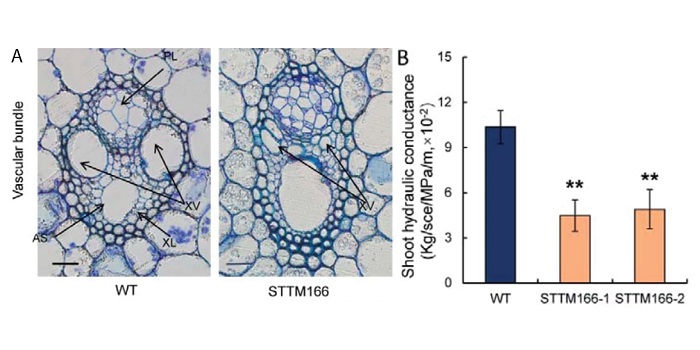
Plant Science Research Weekly, Research, Research BlogUnder drought conditions, moderate leaf rolling improves yield in rice by reducing water loss and allowing efficient photosynthesis (leaf upright position). In STTM166 transgenic rice plants, miRNA166 is knocked down (STTM means "short tandem target mimic") and the plants constitutively exhibit the…

Review. Use it or average it: Stochasticity in plant development (Curr. Opin. Plant Biol.)
Plant Science Research Weekly, Research, Research BlogIn this interesting review, Roeder describes the importance of stochasticity in plant development. She starts off with an explanation: “A process that can be analyzed statistically but not predicted precisely is stochastic. Stochasticity does not imply the absence of regulation, just that the regulation…
Auxin and ROP GTPase signaling of polar nuclear migration in root epidermal hair cells (Plant Physiology)
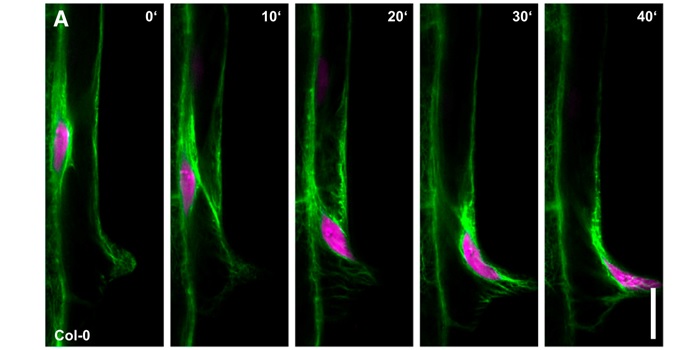
Blog, Plant Science Research Weekly, Research, Research BlogThe nucleus is a dynamic organelle whose positioning and movement is highly coordinated throughout plant development and differs between cell types. Upon the initiation and subsequent elongation of root hairs, the nucleus moves from a central position to the tip of the growing root hair. Nakamura et…
Nutrient modulation of Arabidopsis shoot apical meristem dynamics (PNAS)
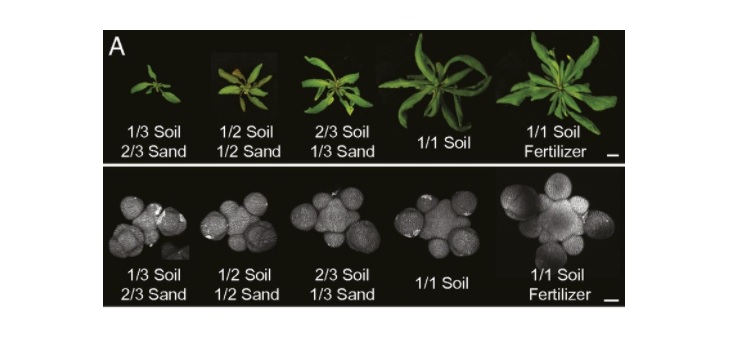
Blog, Plant Science Research Weekly, Research, Research BlogProc. Natl. Acad. Sci. USA. The shoot apical meristem (SAM) is essential for the adaptation of aerial plant tissue architecture to changes in the environment. This paper by Landrein and colleagues connects changes in the plant environment (soil type, soil fertility, nitrate concentration) to changes…
Design Stars: How GRF-INTERACTING FACTORs Help Determine the Layout of the Root Tip
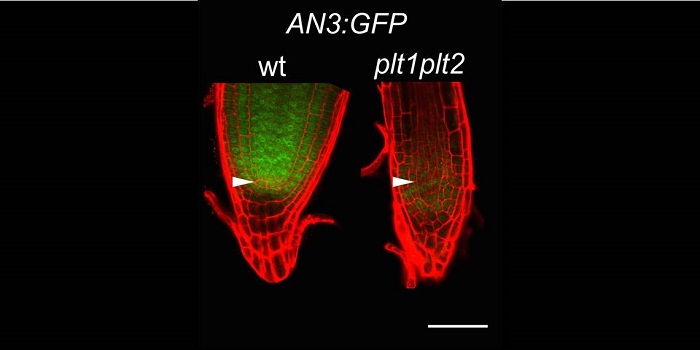
Blog, Research, The Plant Cell, The Plant Cell: In BriefRoots grow into new regions of the soil in their constant quest for water and dissolved minerals. This crucial task is made possible by the root meristem and stem cell niche, where neatly arranged stem cells quickly divide beneath a protective root cap. Stem cells give rise to transit amplifying cells,…

A Conserved Mechanism to Terminate Floral Meristems
Blog, The Plant Cell, The Plant Cell: In BriefIn plants, the balance between stem cell renewal and loss is carefully maintained by intricate regulatory networks. Although the root and shoot apical meristems can in principle continue to grow and self-renew indefinitely, the floral meristem is terminated once flower formation is completed. The precise…
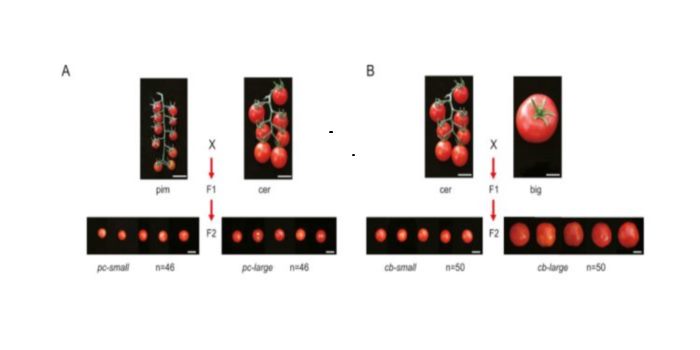
Rewiring of the fruit metabolome in tomato breeding
Blog, Plant Science Research Weekly, Research, Research BlogCell. The tomato plant has been of keen interest to mankind for centuries, and its domestication led to delicious fruits much larger than their wild, bitter-tasting ancestors. Domestication of tomato had many intended outcomes (increased fruit size, less bitter taste), and several unintended consequences.…
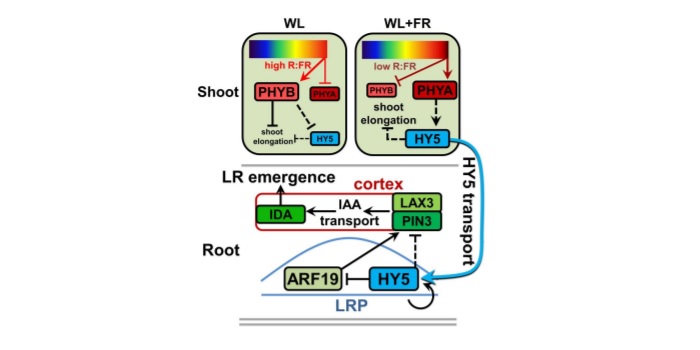
Regulation of lateral root development via the HY5 Transcription Factor
Blog, Plant Science Research Weekly, Research, Research BlogPlant Cell. Plants sense competitors through phytochromes. Phytochromes detect the reflection of far-red light from nearby plants, resulting in a reduced red:far-red (R:FR) ratio. The reduced ratio causes shade avoidance responses which modify shoot and root system architecture. This paper by van Gelderen…

Hydrogen peroxide acts downstream of melatonin to induce lateral root formation
Blog, Plant Science Research Weekly, Research, Research BlogAnn. Botany. Melatonin was first identified in plants in 1995. Since then, it has been found to be involved in many aspects of plant response to biotic and abiotic stress. Chen et al. investigate the effect of melatonin during lateral root (LR) development in alfalfa and Arabidopsis seedlings. Exogenous…