


LOCALIZER: Subcellular localization prediction of both plant and effector proteins in the plant cell
Plant Science Research Weekly, Research0 Comments
/
Proteins carry sequence tags that are read by cellular machineries that deliver the proteins to their proper destinations, which include the nucleus, mitochondria and plastid. Many pathogen effector proteins have acquired such targeting tags too, but for these can sometimes be cryptic to bioinformatics…
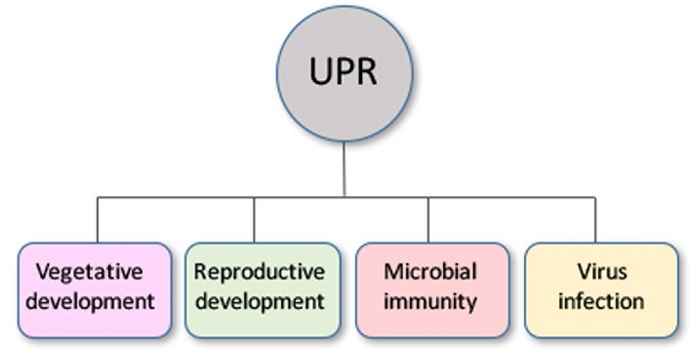
Review: The unfolded protein response in development, defense, and stress
Plant Science Research Weekly, ResearchThe unfolded protein response (UPR) is a eukaryote-wide signalling pathway in which unfolded proteins in the ER (often caused by abiotic stress) initiate signals transduced to the nucleus that lead to the expression of stress-response genes. Bao and Howell review the UPR in plants. They describe two…

Phosphatidylinositol 3-phosphate–binding protein AtPH1 controls the localization of the metal transporter NRAMP1
Plant Science Research Weekly, ResearchNRAMPs are transporters of iron (Fe) and manganese (Mn). The nramp3nramp4 double mutant arrests shortly after germination, due to its inability to remobilize Fe from seed vacuolar stores. Agorio et al. used a genetic approach to identify nns1, a partial suppressor of the growth-arrest phenotype. They…

Light sheet fluorescence microscopy quantifies calcium oscillations in root hairs
Plant Science Research Weekly, ResearchLight sheet fluorescence microscopy (LSFM) is a powerful imaging tool; unlike confocal microscopy, which illuminates a sample one small volume at a time, LSFM illuminates a complete optical section at a time, greatly speeding up the imaging process and lowering phototoxic effects. Candeo et al. use close-to-physiological…
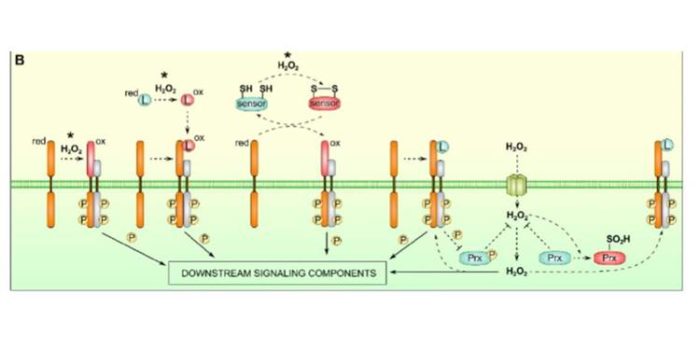
Review: Bound by fate: Reactive oxygen species in receptor-like kinase signaling
Plant Science Research Weekly, ResearchBoth receptor-like protein kinase (RLK) and reactive oxygen species (ROS) signaling have been shown to affect a plethora of plant processes, including growth, metabolism, development, and environmental responses. To date, previous reviews have focused on mechanisms that govern either ROS or RLK signaling;…

Update: Ion transport at the vacuole during stomatal movement
Plant Physiology, Plant Physiology: Updates, Plant Science Research Weekly, ResearchGas exchange and transpiration are regulated by the stomatal aperture, which is itself regulated by the changes in volume of the guard cells that overlay the stomatal pore. When triggered to open, solutes such as K+ and Cl– enter the guard cell through ion transporters, followed osmotically by water;…
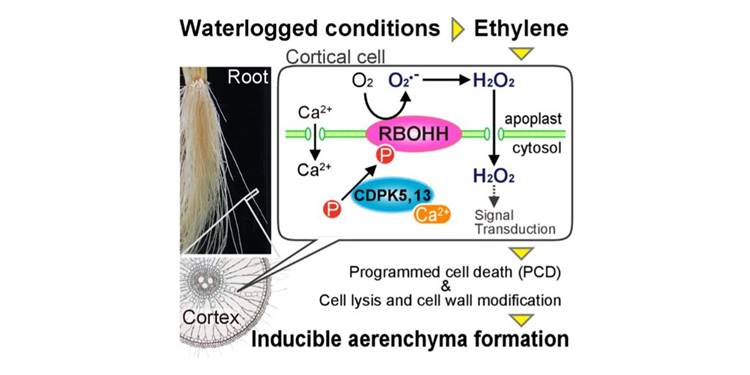
Better understanding how plant roots breathe under water ($)
Plant Science Research Weekly, ResearchWaterlogging, a process by which water saturates soil, results in oxygen-deficient soil conditions and can result in massive crop loss. In order for plants to survive in waterlogged soil, shoots transport oxygen to roots through lysigenous aerenchyma, a specialized tissue type formed by ethylene-induced…
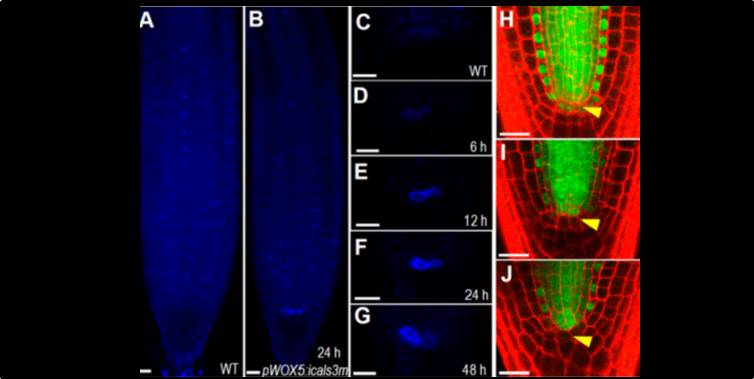
Symplastic communication spatially directs local auxin biosynthesis to maintain root stem cell niche in Arabidopsis ($)
Plant Science Research Weekly, ResearchAlthough plant cells are surrounded by walls, cytoplasmic strands connect adjacent cells through junctions called plasmodesmata. Liu et al. investigated the contributions of plasmodesmata to signaling between root quiescent center (QC) cells and the cells that surround the QC by expression of an inducible…
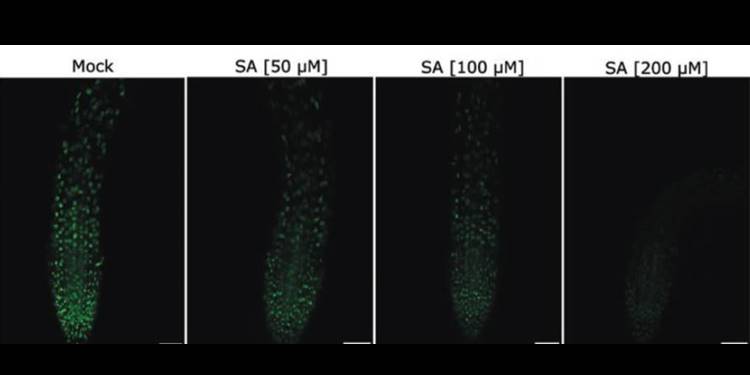
Salicylic acid interferes with GFP fluorescence in vivo
Plant Science Research Weekly, ResearchGreen Fluorescent Protein (GFP) is a widely-used reporter with which to analyze protein localization and expression levels. De Jonge et al. report that GFP fluorescence is greatly diminished in the presence of the hormone salicylic acid (SA), as is the fluorescence of the reporters RFP and VENUS. The…