Reprogramming trees: Hairy root-mediated transformation unlocks genetic engineering in poplar
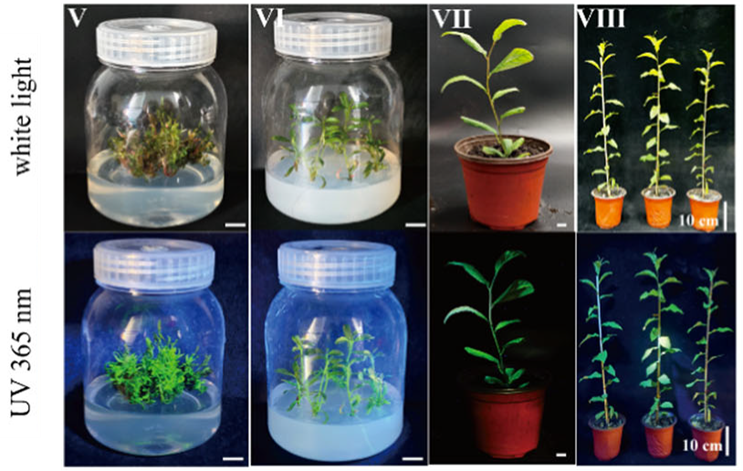 Agrobacterium tumefaciens, through its natural capacity to deliver foreign DNA into plant genomes, has enabled efficient transformation across many plant species and cultivars. Despite these advancements, persistent challenges remain, including genotype-dependent recalcitrance, potential off-target DNA integration, and the lengthy tissue culture steps required for stable regeneration. These limitations are particularly evident in woody species such as poplar (Populus spp.), which are widely used for industrial wood production, ecological restoration, and urban greening. Although poplar serves as an important model for tree biology, a robust and broadly applicable transformation system has yet to be established. Addressing this gap, Wei and colleagues demonstrate that Agrobacterium rhizogenes-mediated hairy root transformation system provides an efficient alternative for poplar genetic manipulation. The authors demonstrated that multiple explant types, including leaf, stem, and root tissues, can be readily induced to form transgenic hairy roots, which can subsequently undergo shoot induction, elongation, and rooting to generate whole plants. To validate the functional robustness of the system, they overexpressed a UV-fluorescently tagged version of Hox52, a key regulator of adventitious root formation, and employed CRISPR/Cas9 to disrupt endogenous Hox52 function. Remarkably, a single transformed hairy root produced more than 100 fluorescent plantlets within 12 weeks, underscoring the efficiency and scalability of the method. In contrast, Hox52 knockout lines exhibited reduced adventitious rooting. Together, this work establishes a rapid, versatile platform for poplar transformation along with a genome editing toolkit, opening new avenues for functional genomics and accelerating genetic improvement in woody plants. (Summary by Ching Chan @ntnuchanlab) Plant Cell Environ. 10.1111/pce.70306