
Focus issue on AI for plant sciences
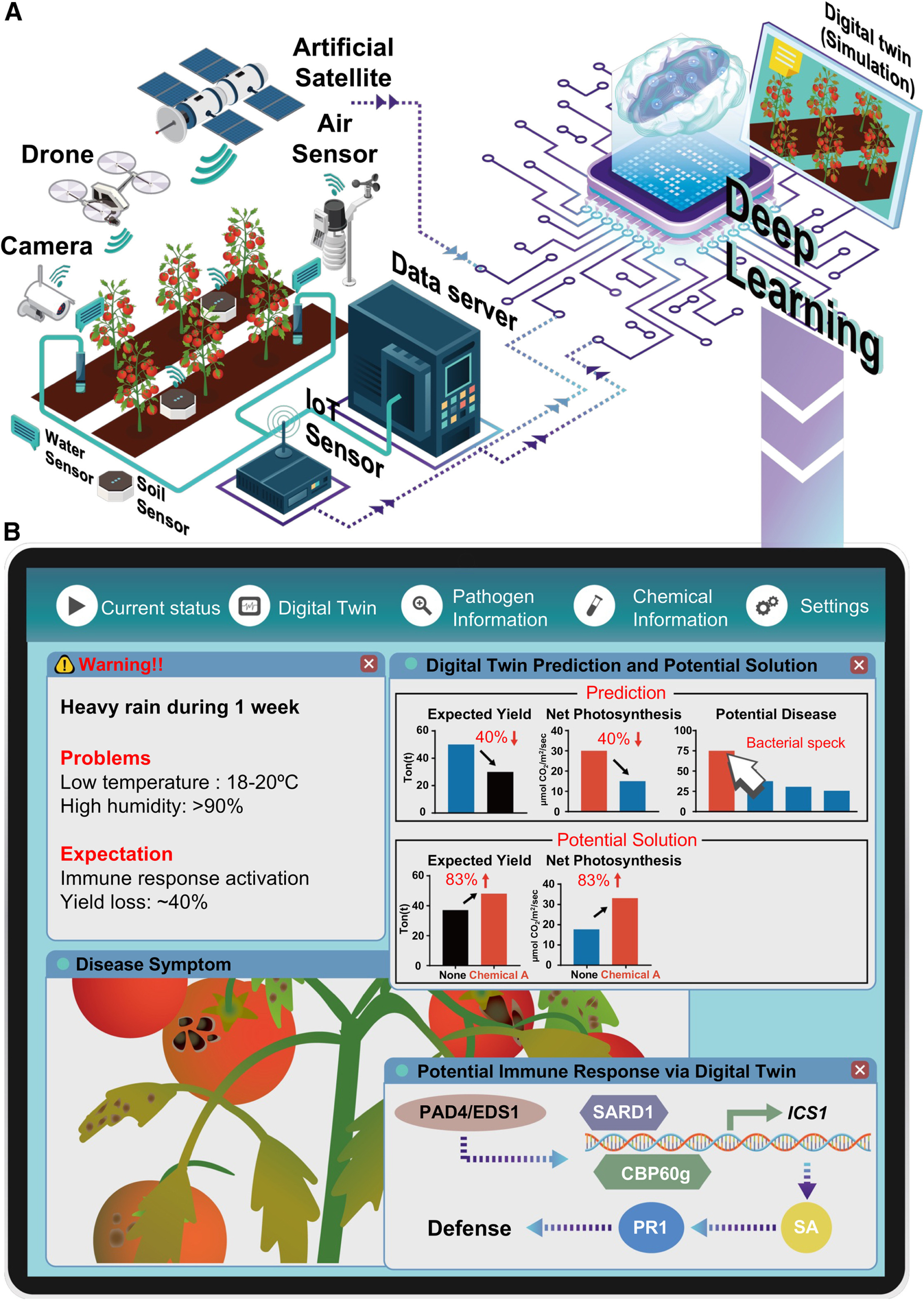 There are numerous ways that AI can support research productivity through its ability to evaluate large datasets. Plant Communications has assembled a collection of articles that describe some of these new tools and approaches. As an example, Jang et al. describe the use of digital twins as tools to evaluate plant-microbe interactions. They describe how models built from multi-omics data can be combined with real-time sensor data to test potential interventions in silico (https://doi.org/10.1016/j.xplc.2026.101871). Another paper by Wang et al. introduces PlantSetDelta, that adds a “complementary, regulation-aware layer” to gene set analysis by incorporating analysis of transcription factor binding sites to GO analysis (https://doi.org/10.1016/j.xplc.2026.101847). Zhang et al. introduce how AI can contribute to seed design, starting with a beautiful overview of the history of seed science (https://doi.org/10.1016/j.xplc.2026.101820). And there are more – you can browse the full collection here https://www.cell.com/plant-communications/issue?pii=S2590-3462(25)X0006-7. (Summary by Mary Williams @PlantTeaching.bsky.social)