
Elevated mutation rates in tissue-culture derived plant tissues
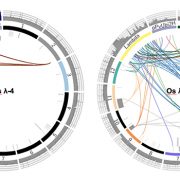
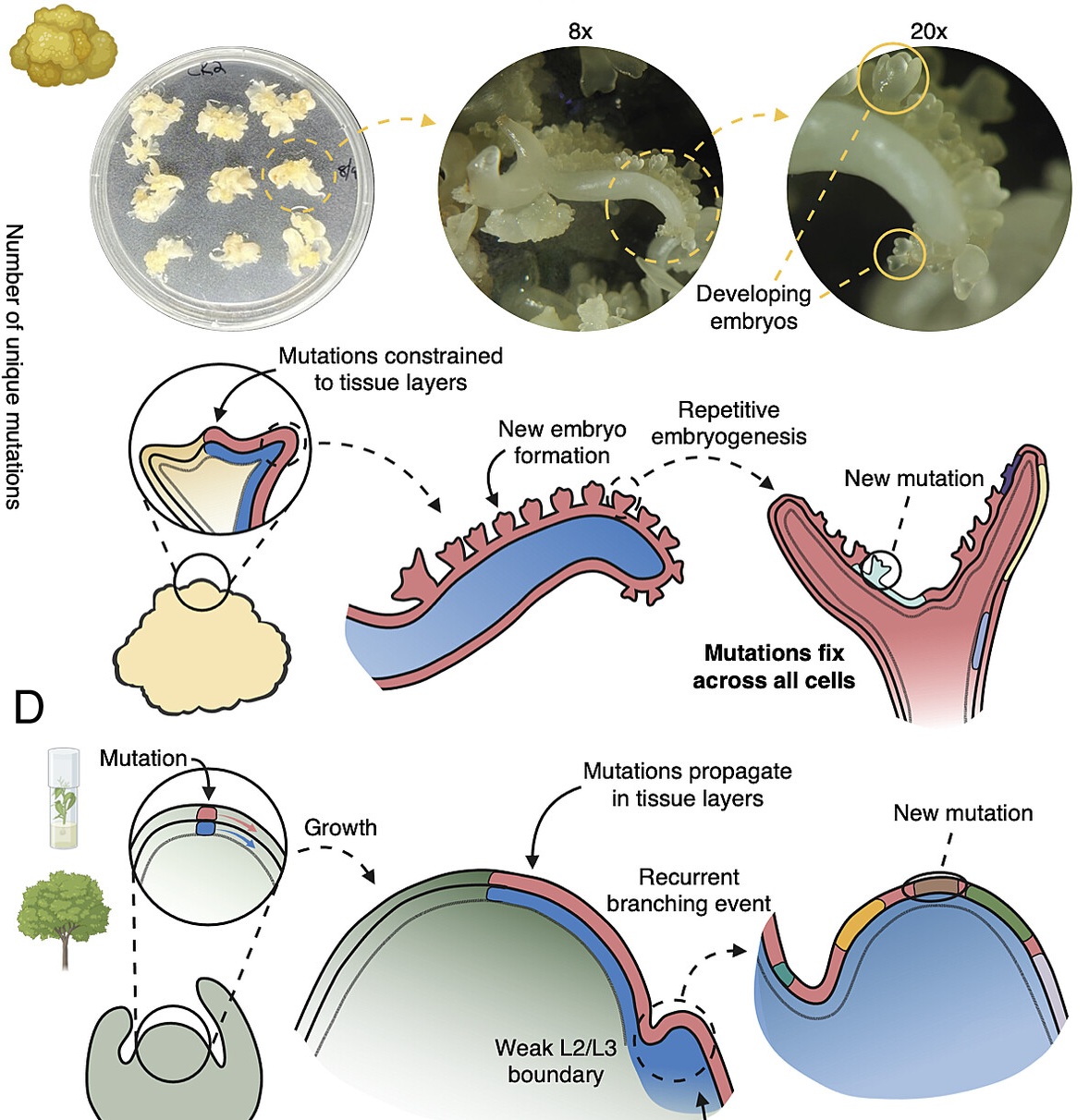 The totipotency of plant tissues makes them very amenable to propagation through somatic tissues. Tissue culture propagation is used to regenerate gene edited plants from single cells and to cultivate plants that are difficult to propagate sexually. In a recent paper, Davis et al. investigated the genomic impact of tissue culture, using propagated walnut lines. They carried out telomere-to-telomere sequencing of trees as well as shoot cultures and somatic embryo cultures derived from these trees. The somatic embryo tissues showed dramatically increased numbers of mutations as compared to both the cultured shoots and trees. These changes included chromosome-level duplications and recombinations, increased transposon activites, and de novo point mutations. Similarly, such genomic instabilities have been observed in cultured animal tissues as well as human cancer cell lines. Given the importance of tissue culture methods for plant biotechnology, the authors advocate for sequencing the regenerated tissues to avoid propagating suboptimal clones. The authors do however point out that tissue-culture propagated materials are “exceedingly unlikely to have adverse effects if consumed.” (Summary by Mary Williams @PlantTeaching.bsky.social) Proc. Natl. Acad. Sci. USA 10.1073/pnas.2530182123