

A New Plant Component of the Conserved Machinery for Cellular Trafficking
Research, The Plant Cell, The Plant Cell: In a NutshellGarcia et al. discover a plant-specific component of TRAPP membrane trafficking complexes with important roles in plant development. Plant Cell https://doi.org/10.1105/tpc.20.00044.
By Veder Garcia and Zhi-Yong Wang
Department of Plant Biology, Carnegie Institution for Science, Stanford, CA
Background:…
A Nod to Their Ancestors: Mutation of MtNOOT1 Highlights Conserved Nodule Development
Research, The Plant Cell, The Plant Cell: In BriefNitrogen is an essential component of amino acids, nucleic acids, and even chlorophyll. Plants cannot grow without it. However, acquiring nitrogen is difficult as plants cannot use the most common form, atmospheric nitrogen (N2). To solve this, a select group of flowering plants have evolved to harness…

Formation of xylem vessels: Role of a WRKY transcription factor
Research, The Plant Cell, The Plant Cell: In a NutshellGe et al explore the function of a transcription factor that functions upstream of a master regulator of tracheary element differentiation. Plant Cell https://doi.org/10.1105/tpc.19.00689
By Shating Ge1, Juan Xu2, and Shuqun Zhang3
1 College of Plant Protection, Nanjing Agricultural University,…

Recognizing Plant Cell authors: Hardy Rolletschek
The Plant Cell, The Plant Cell: Author ProfilesHardy Rolletschek, first author of Cellular plasticity in response to suppression of storage proteins in the Brassica napus embryo
Current Position: Project leader at the Institute of Plant Genetics and Crop Plant Research, Research group “Assimilate Allocation and NMR”, Department of Molecular…
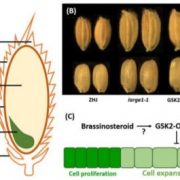
When Less is More: GSK2-OML4 Module Negatively Regulates Grain Size in Rice
Research, The Plant Cell, The Plant Cell: In BriefSeed size is a major component of seed yield. Unveiling the control of seed size provides a theoretical foundation for developing new strategies to boost crop production in the context of global food security. How plants determine their seed size is also a fascinating question in developmental biology.…

Recognizing Plant Cell authors: Qian Xu
The Plant Cell, The Plant Cell: Author ProfilesQian Xu, co-first author of Strigolactone and Karrikin Signaling Pathways Elicit Ubiquitination and Proteolysis of SMXL2 to Regulate Hypocotyl Elongation in Arabidopsis thaliana
Current Position: Currently unemployed
Education: PhD in Genetics at the Institute of Genetics and Developmental Biology,…

Recognizing Plant Cell authors: Lei Wang
The Plant Cell, The Plant Cell: Author ProfilesLei Wang, co-first author of Strigolactone and Karrikin Signaling Pathways Elicit Ubiquitination and Proteolysis of SMXL2 to Regulate Hypocotyl Elongation in Arabidopsis thaliana
Current Position: Post doctor, Agricultural Genome Institute at Shenzhen, Chinese Academy of Agricultural Sciences
Education:…
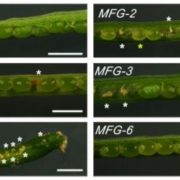
Stop the FUSS: BPCs restrict FUSCA3 transcription to promote ovule and seed development
Research, The Plant Cell, The Plant Cell: In BriefTightly controlled genetic programs regulate developmental phase transitions within distinct tissues and cells. This is especially true for the vegetative-to-reproductive and reproductive-to-seed developmental phase changes that ensure the production of gametes capable of generating viable seed upon…

A Catalytic Inhibitor of Cellulose Biosynthesis in the Toolbox
Research, The Plant Cell, The Plant Cell: In a NutshellHuang et al. identify a new cellulose synthase inhibitor. Plant Cell https://doi.org/10.1105/tpc.20.00202.
By Lei Huang and Chunhua Zhang
Background: Cellulose is a polymer of b-1,4-D-glucose that serves as an essential source of everyday objects such as cloth, paper, and biofuel. Plant cellulose…