

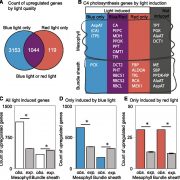
Cell-Specific Light Response in C4 Photosynthesis
Plant Physiology, Plant Physiology: On The InsideIn C4 species, the expression of photosynthesis genes is partitioned such that leaf mesophyll and bundle sheath cells accumulate different components of the photosynthetic pathway. The expression of nucleus-encoded photosynthesis genes is modulated both by photoreceptor activity and by a network of…
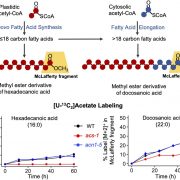
The Fate of Acetate During Hypoxia
Plant Physiology, Plant Physiology: On The InsideUnder hypoxia, Acetyl-CoA Synthetase (ACS), an enzyme that synthesizes acetyl CoA, recovers carbon that would otherwise be lost from the plant as ethanol. Plastid-localized ACS metabolizes cellular acetate and contributes to the de novo biosynthesis of fatty acids and Leu. On the other hand, a peroxisome-localized…
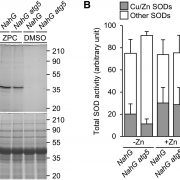
Autophagy Maintains Zinc Pools under Zinc Deficiency
Plant Physiology, Plant Physiology: On The InsideZinc (Zn) is a metallic element that is essential for all living organisms. Zn serves as a catalytic or structural cofactor in a large number of enzymes including alcohol dehydrogenase, superoxide dismutase (SOD), and regulatory proteins such as transcription factors containing Z-finger domains. Accordingly,…
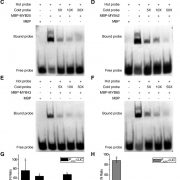
MYB Transcription Factors Regulate Secondary Metabolism
Plant Physiology, Plant Physiology: On The InsideSecondary cell walls play important roles in providing long-distance water transport, mechanical support, and plant defense. The main components of secondary cell walls are cellulose, hemicellulose, and lignin. The synthesis of lignin monomers involves the phenylpropanoid pathway, which is also shared…
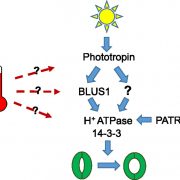
Temperature Signaling in Guard Cells
Plant Physiology, Plant Physiology: On The InsideThe elucidation of plant temperature signaling networks is confounded by the fact that commonly measured physiological outputs of temperature change (e.g., stem elongation and flowering time) can be temporally and spatially distant from the temperature perception event, requiring intercellular, intertissue,…
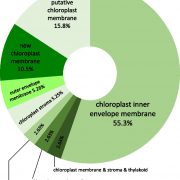
Cold-Induced Proteomic Changes in the Chloroplast Envelope
Plant Physiology, Plant Physiology: On The InsideAs a cold-hardy species, Arabidopsis (Arabidopsis thaliana), is a useful model for the investigation of the molecular and physiological mechanisms underlying cold acclimation in plants. Chloroplasts harbor the enzymatic machinery required for photosynthetic CO2 fixation, starch production, nitrite and…
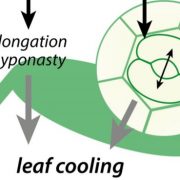
Keep cool and open up: temperature-induced stomatal opening
Plant Physiology, Plant Physiology: News and Views, ResearchWhen air temperatures rise above the comfortable level, plants initiate a cooling mechanism to prevent heat stress. High ambient temperatures induce a specific set of growth responses, termed thermomorphogenesis, which includes enhanced hypocotyl and petiole elongation, and leaf hyponasty (reviewed by…
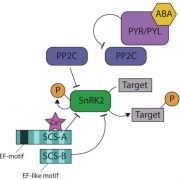
A Tale of Two Isoforms: Calcium-dependent Inhibition of SnRK2 by SnRK-Calcium-binding Sensor
Plant Physiology, Plant Physiology: News and Views, ResearchMagdalena Julkowska
[email protected]
Reacting to the environment requires not only activating signaling cascades but also modulating the activity of individual components in a context- and time-dependent manner. For example, under non-stress conditions protein phosphatases 2C…
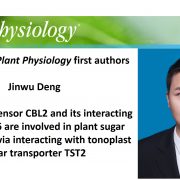
Recognizing Plant Physiology authors: Jinwu Deng
Plant Physiology, Plant Physiology: Author ProfilesJinwu Deng, first author of The calcium sensor CBL2 and its interacting kinase CIPK6 are involved in plant sugar homeostasis via interacting with tonoplast sugar transporter TST2
Current position: Ph.D. student, College of Plant Science and Technology, Huazhong Agricultural University
Education:…