

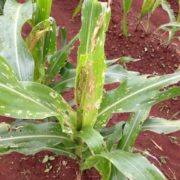
Scientists tackle deadly fall armyworm infestation devastating maize in southern Africa
Research, Research Blog0 Comments
/
From CIMMYT, by Brenda Wawa / February 23, 2017
"Smallholder farmers in eastern and southern Africa are facing a new threat as a plague of intrepid fall armyworms creeps across the region, so far damaging an estimated 287,000 hectares of maize.
Since mid-2016, scientists with the International…
Quinoa—quest to feed the world
Research, Research BlogThe high-quality sequencing of a quinoa genome brings new potential for global food security.
“Quinoa was the staple ‘Mother Grain’ that fueled the ancient Andean civilizations, but the crop was marginalized when the Spanish arrived in South America and has only recently been revived as a new…

New lines of broccoli flowers without need for cold treatment
Blog, Research, Research BlogToday the BBSRC strategically funded John Innes Centre has announced a potential breakthrough in broccoli production that will aid in UK food resilience and global food security. Scientists at JIC are developing a new line of fast-growing sprouting broccoli that goes from seed to harvest in 8-10 weeks.…
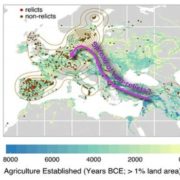
1135 Arabidopsis genomes reveal global pattern of polymorphism
Plant Science Research Weekly, ResearchThere are many accessions of Arabidopsis thaliana beyond the ecotypes predominantly used in research laboratories. In this article, The 1001 Genomes Consortium describe a resource based on whole-genome sequencing of 1,135 A. thaliana genomes from Europe, North Africa, and North America. This data…
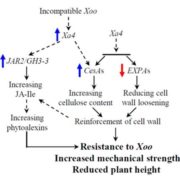
Durable resistance gene Xa4 encodes a cell wall-associated kinase
Plant Science Research Weekly, ResearchXa4 is a durable rice disease resistance gene that confers resistance against Xanthomonas oryzae pv. oryzae (Xoo), causal agent of bacterial blight. Hu et al. show that Xa4 encodes a wall-associated kinase (WAK) that promotes cellulose synthesis and suppresses wall loosening, thereby strengthening the…
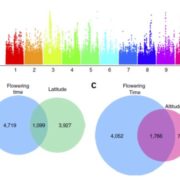
Allelic diversity underlying flowering-time adaptation in maize landraces ($)
Plant Science Research Weekly, ResearchLandraces are native varieties that have been selected for adaptation to their native environment, and as such they provide a wealth of largely unexplored genetic potential. Romero Navarro et al. used a new approach called F-one association mapping (FOAM) in combination with genome-wide association strategy…
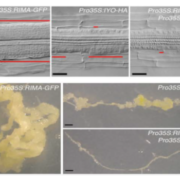
Molecular signals for regeneration ($)
Plant Science Research Weekly, ResearchEvery gardener knows that pulling off a shoot is not sufficient to kill a plant. Plants are able to reprogram cells in order to regenerate missing tissues. Pulling off a shoot removes photosynthetic tissues, but the root responds by activating chloroplasts to take over this role. Kobayashi et al. (Plant…
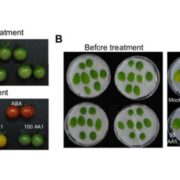
A novel chemical inhibitor of ABA signaling targets all ABA receptors
Plant Science Research Weekly, ResearchChemical genetics is an approach that enables small molecules with specific effects on phenotypes to be identified. Through a screen for small molecules that would reverse the inhibitory effect of ABA on seed germination, Ye et al. identified AA1 (ABA Antagonist 1). AA1 interferes with the interaction…
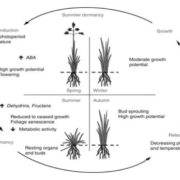
Review: Winter and summer dormancy: similar adaptive strategies?
Plant Science Research Weekly, ResearchDormancy (growth arrest) is a state by which seeds and plants can survive harsh conditions. Seasonal dormancy is a strategy to survive seasonally unfavorable conditions. Plants can display winter and summer dormancy. Although woody species are the main study systems for winter dormancy, herbaceous species…