


Proteomics of two differently pathogenic races of Fusarium oxysporum
Plant Science Research Weekly, Research, Research Blog0 Comments
/
Fusarium oxysporum is a fungal pathogen of plants. F. oxysporum f. sp. conglutinans (Foc) causes fungal wilt in cabbage. Two races have been identified, with Race 2 being much more pathogenic than Race 1. Li et al. used a proteomic approach to investigate the origin of Race 2’s enhanced pathogenicity.…
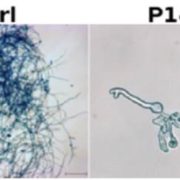
Sterol-binding activity of PR-1 contributes to its antimicrobial activity ($)
Plant Science Research Weekly, Research, Research BlogPATHOGENESIS-RELATED 1 (PR-1) protein was identified 50 years ago as a small protein induced in response to pathogens, but its mode of action has remained obscure. PR-1 is a member of the CAP family (cysteine-rich secretory protein, antigen 5, and pathogenesis-related 1). These proteins share a 150…

Structure of SHR–SCR heterodimer bound to BIRD/IDD transcriptional factor JKD
Plant Science Research Weekly, Research, Research BlogStructural biology provides a key link between genotype and phenotype. Hirano et al. probe the structure of a heterodimer of plant-specific GRAS family transcriptional regulators [SHORT-ROOT (SHR) and SCARECROW (SCR)] as bound to the transcription factor JACKDAW (JKD). The GRAS family proteins (encoded…
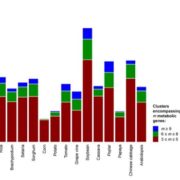
Genome-wide prediction of metabolic enzymes, pathways and gene clusters in plants
Plant Science Research Weekly, Research, Research BlogA considerable knowledge gap remains between the plant genome and the plant metabolome. To address this, Schläpfer et al. have developed a computational pipeline to identify metabolic enzymes, pathways, and gene clusters. Although metabolic genes are known to cluster in bacteria and fungi, until recently…
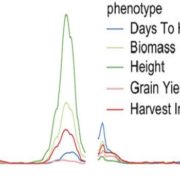
Field-based high throughput phenotyping identifies genes controlling yield in rice
Plant Science Research Weekly, Research, Research BlogThe classic art of plant breeding involves carefully examining a genetically segregating population for traits of interest. Increasingly, high-throughput, automated phenotyping systems are being used; for example, robots can carry plants to imaging chambers for data collection. However, growth-chamber…
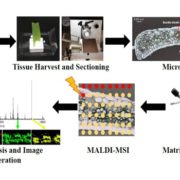
Technical Advance: Distribution of thylakoid membrane lipids among individual cells of maize leaf ($)
Plant Science Research Weekly, Research, Research BlogThe distribution of metabolites in tissues can be determined in situ through the technique Mass spectrometry imaging (MSI) with matrix-assisted laser desorption ionization (MALDI) (also known as MALDI-MSI). Duenas et al. used MALDI-MSI to analyze the distribution of thylakoid membrane lipids in maize,…
Review: The cryptic chemical traits that mediate plant community composition
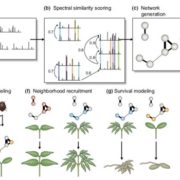
Plant Science Research Weekly, Research, Research BlogPlants produce a huge variety of specialized metabolites, many with roles in defense. Metabolic profiles rarely follow phylogenetic lines; in fact, closely related species often produce dramatically different suites of metabolites. When it comes to defense chemistry, it is advantageous to be different…
Update: Stomatal biology of CAM plants
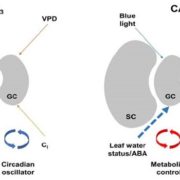
Plant Physiology: Updates, Plant Science Research Weekly, Research BlogCrassulacean acid metabolism (CAM) plants open their stomata at night, decreasing water loss and increasing water-use efficiency as well as drought tolerance. Males and Griffiths review the stomatal biology of CAM plants as compared to C3 plants. For example, CAM stomata are relatively insensitive to…
Update: Pollen Development at High Temperature: From Acclimation to Collapse
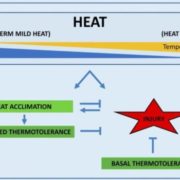
Plant Physiology: Updates, ResearchThe seeds and fruits derived from the sexual reproduction of flowering plants constitute the major part of the human diet. Our capacity to generate sufficient crop yield is increasingly compromised by human population expansion, competition for land use, biodiversity loss, and global climate change.…