

Review: Receptor kinases in plant pathogen interactions: More than pattern recognition
Plant Science Research Weekly, Research0 Comments
/
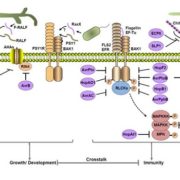
Zhou et al. review the contributions of Receptor-Like Kinases (RLKs) and Receptor-Like Proteins (RLPs) as Pattern Recognition Receptors (PRRs) that contribute to the recognition of pathogens, as well as the contributions of receptor-like cytoplasmic kinases (RLCKs). The authors summarize recent studies…
Temperature induced remodeling of the photosynthetic machinery tunes photosynthesis in a thermophyllic red alga
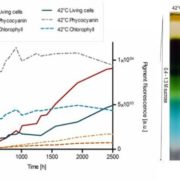
Plant Science Research Weekly, ResearchThe red alga Cyanidioschyzon merolae is notable for several reasons: it is an early-branching red alga, it has one of the smallest genomes and simplest cellular structures of photosynthetic eukaryotes, and its photosynthetic machinery is intermediate between cyanobacteria and green algae. Furthermore,…
Plant immune and growth receptors share common signaling components but localize to distinct plasma membrane nanodomains
Plant Science Research Weekly, ResearchSignal transduction in plant and animal cells is often initiated at the plasma membrane (PM) and involves common signaling components, raising the question of how receptor complexes elicit distinct signaling outputs. To address this question, Bücherl et al. investigated physical characteristics of the…
IRREGULAR POLLEN EXINE1 Is a novel factor in anther cuticle and pollen exine formation
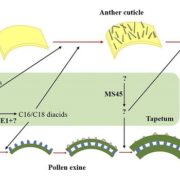
Plant Science Research Weekly, ResearchChen et al. identified a novel male-sterile Zea mays mutant, named ipe1. Mutant pollen grains show defective development of the tapetum and pollen exine (outer surface), causing microspore abortion. In addition, ipe1 anthers are smooth instead of reticulate, suggesting defects in anther cuticle formation. …
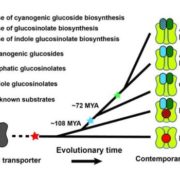
Origin and evolution of transporter substrate specificity within the NPF family
Plant Science Research Weekly, ResearchWhich arose first during evolution- a metabolite molecule or a transporter that could move it across a membrane? Jørgensen et al. studied transporters for glucosinolate defense molecules in Brassicales species. Glucosinolates are derived from the broad class of cyanogenic glucosides, and glucosinolates…
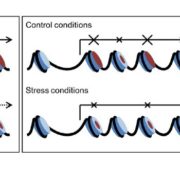
Dual role of the histone variant H2A.Z in regulation of stress-response genes
Plant Science Research Weekly, ResearchHistones are protein complexes around which genomic DNA is wrapped; post-translational modifications to histone proteins and alterations of histone protein composition affect transcription. H2A.Z is a widely conserved variant form of histone H2A that has been implicated in various forms of transcriptional…
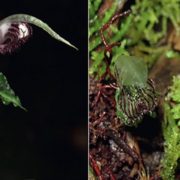
Spotlight: The fate of the world’s plants
Plant Science Research Weekly, ResearchIn 2016, Kew Gardens released a report “The State of the World’s Plants”, which includes estimates of the total number of plant species on Earth and the percentage of those facing extinction. Pimm and Raven delve into those numbers and offer the opinion that many species will be lost before they…
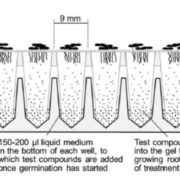
Method: Microphenotron, a miniaturized robotic phenotyping platform
Plant Science Research Weekly, ResearchHigh-throughput screening greatly extends the number of individuals that can be screened, so is particularly crucial for genetic or chemical genetic approaches. Burrell et al. report on a miniaturized robotic phenotyping platform, “Microphenotron” designed for chemical genetic screening. Seeds…
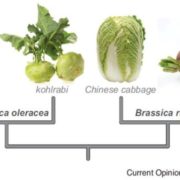
Review: Using mustard genomes to explore the genetic basis of evolutionary change ($)
Plant Science Research Weekly, ResearchBrassicaceae is one of the largest angiosperm families and provides many opportunities for studies of evolution. Of course, its most famous species, Arabidopsis thaliana is an important resource, but Brassicaceae also includes the very interesting Brassica crops (cabbage, turnip) that demonstrate the…