

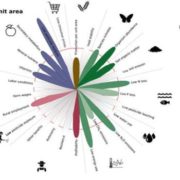
Review: Many shades of gray – The context-dependent performance of organic agriculture
Plant Science Research Weekly, Research0 Comments
/
“The benefits of organic agriculture are widely debated. Although some promote it as a solution to our sustainable food security challenges, others condemn it as a backward and romanticized version of agriculture that would lead to hunger and environmental devastation.” Seufert and Ramankutty address…
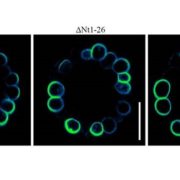
Threonine Phosphorylation Regulates Polar Localization of the Boric Acid Transporter NIP5;1 in Root Cells
Research, The Plant Cell: In BriefIN BRIEF by Gregory Bertoni [email protected]
Proper localization of proteins in the plasma membrane is critical for proper functioning of plant cells, but the underlying mechanisms are poorly understood (Łangowski et al, 2016). This is especially true for transporter proteins that move necessary…
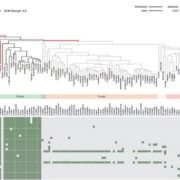
Review: Chloroplast function revealed through analysis of GreenCut2 genes
Plant Science Research Weekly, ResearchOf the 3000 or so proteins housed in the chloroplast, we know the functions of only a few hundred. One approach to identify function is to first identify plastid proteins found exclusively in photosynthetic organisms. This subset, GreenCut2, is further subdivided by whether the proteins are found in…
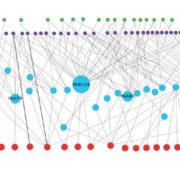
Review: Mechanisms to mitigate the tradeoff between growth and defense ($)
Plant Science Research Weekly, ResearchIt is widely recognized that defense incurs a cost in terms of reduced growth. Karasov et al. explore the nature of this tradeoff. They observe that rather than tradeoff being driven directly by metabolic competition, it appears to occur upstream through regulatory processes including antagonism between…
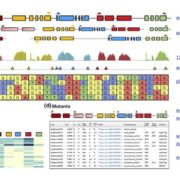
Review: Wheat genomics comes of age
Plant Science Research Weekly, ResearchDue to its highly repetitive, polyploid genome, wheat genomics has lagged behind that of other cereals, but new tools promise to begin closing that gap. Uauy reviews these new tools, which include access to full genomes of several wheat varieties, gene expression data from hundreds of publicly available…
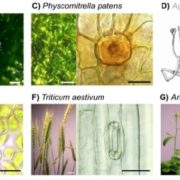
Update: Origins and evolution of stomatal development
Plant Physiology, Plant Physiology: Updates, ResearchThe fossil record suggests stomata-like pores were present on the surfaces of land plants over 400 million years ago. Whether stomata arose once or whether they arose independently across newly evolving land plant lineages has long been a matter of debate. In Arabidopsis, a genetic toolbox has been identified…

Signatures of local adaptation in lowland and highland teosintes from whole genome sequencing of pooled samples ($)
Plant Science Research Weekly, ResearchTeosinte, the ancestor of maize, grows in a range of environments in México. Teosinte parviglumis (Zea mays ssp parviglumis) is more prevalent in lowland regions while teosinte mexicana (Zea mays ssp mexicana) occupies highland territory (>2000 m above sea level). Admixture between parviglumis and…
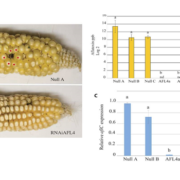
Aflatoxin-free transgenic maize using host-induced gene silencing
Plant Science Research Weekly, ResearchAflatoxins are toxic metabolites produced by some species of Aspergillus fungi that can occur on numerous crop plants. When ingested by animals, aflatoxins cause health problems including liver cancer and stunted growth. Thakare et al. used host-induced gene silencing (HIGS) to block aflatoxin production…
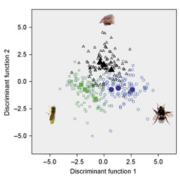
Divergent evolution driven by pollinators
Plant Science Research Weekly, ResearchA great variety of plants rely on pollinators to be fertilized successfully. This close relationship is thought to drive evolutionary diversification in plants, making the presence or absence of pollinators in response to climate change an increasingly relevant matter. Gervasi and Schiestl addressed…