

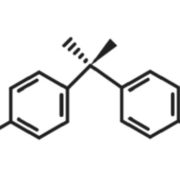
The effect of bisphenol A on growth, pigment composition and photosystem II activity of Arabidopsis thaliana
Blog, Plant Science Research Weekly, Research, Research BlogMany of the plastic consumables we have at home contain synthetic chemical BPA (Bisphenol A). In 1930, a UK scientist discovered that BPA weakly mimics the human hormone estrogen. It has also been found that tiny amount of BPA can leach out of plastic (Stanford University). Thus, there has been a heightened…
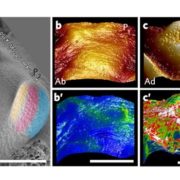
Mechanical regulation of organ asymmetry in leaves
Blog, Plant Science Research Weekly, Research, Research BlogThe mystery of asymmetry is a fundamental question in biology. Plants produce asymmetric shapes in many organs e.g., primordial cells on the leaf epidermis which undergo asymmetric divisions to define stomatal stem cells that ultimately form mature stomata. This asymmetric polarity of cells is governed…
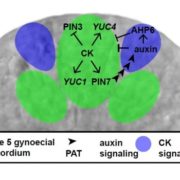
Cytokinin-auxin crosstalk in the gynoecial primordium ensures correct domain patterning
Blog, Plant Science Research Weekly, Research, Research BlogThe phytohormones auxin and cytokinin (CK) work either antagonistically or synergistically to regulate several critical development pathways such as meristem formation and maintenance. Müller et al. show similar crosstalk between auxin and CK in controlling early gynoecium patterning. Using TCSn::GFP…
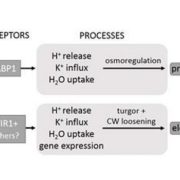
Protoplast swelling and hypocotyl growth depend on different auxin signaling pathways ($)
Blog, Plant Science Research Weekly, Research, Research BlogAuxin was the first phytohormone to be discovered and it has been found to have a role in nearly every aspect of plant growth and development. Auxin biology is multi-layered, as you will see in the following summaries. Auxin is regulated at the level of biosynthesis, different receptors, and domain segregation.…

Recognizing Plant Cell first authors: Jamie Waese
Blog, Research, Research Blog, The Plant Cell, The Plant Cell: Author ProfilesJamie Waese, featured first author of ePlant: Visualizing and Exploring Multiple Levels of Data for Hypothesis Generation in Plant Biology
Current Position: Senior Manager, Data Visualization Lab, Department of Enterprise Advanced Analytics, TD Bank, Toronto, Canada.
Education: PhD (2017) in Data…

Recognizing Plant Cell first authors: James K. McCarthy
Blog, Research, Research Blog, The Plant Cell: Author ProfilesJames K. McCarthy, featured first author of Nitrate Reductase Knockout Uncouples Nitrate Transport from Nitrate Assimilation and Drives Repartitioning of Carbon Flux in a Model Pennate Diatom
Current Position: Research Fellow, J. Craig Venter Institute, La Jolla, CA.
Education: Ph. D. Microbiology…
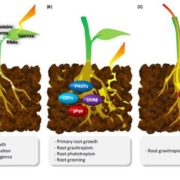
Review: Multiple routes of light signaling during root photomorphogenesis
Blog, Plant Science Research Weekly, Research, Research BlogLight response research in plants has traditionally focused on the shoot, but recent studies have revealed that roots are also light responsive. Lee et al. address the why and how of root photomorphogenesis. They review three ways that light is perceived in roots: via mobile signals from the shoot, direct…

Review: Transcriptional control of photosynthetic capacity - conservation and divergence from Arabidopsis to rice
Blog, Plant Science Research Weekly, Research, Research BlogAbout 3000 genes are required for a plant to carry out photosynthesis. Wang et al. review the transcriptional control of these photosynthetic genes, drawing on transcriptomic and evolutionary studies to make comparisons between Arabidopsis and grasses. Photosynthesis of course starts with light, and…
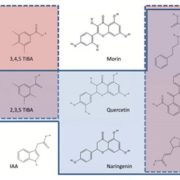
Review: Naphthylphthalamic acid and the mechanism of polar auxin transport ($)
Blog, Plant Science Research Weekly, Research, Research BlogTeale and Palme give an overview of what the last 60 years of using synthetic chemicals inhibitors of polar auxin transport has really taught us. Key among inhibitors is Naphthylphthalamic acid (NPA) that interferes with polar auxin transport and can mimic PIN gene mutant phenotypes. These inhibitors…