

To Grow or to Defend: That is the Question for Plant Central Metabolism
Research, The Plant Cell, The Plant Cell: In a NutshellFusari et al. perform GWAS to explore primary plant metabolism https://doi.org/10.1105/tpc.17.00232
By Corina M. Fusari and Rik Kooke
Background: Primary metabolites such as sugars, organic acids, and amino acids are essential chemical compounds that drive plant growth and development by providing…
How Meiotic Chromosomes Cluster into a “Bouquet”
Research, The Plant Cell, The Plant Cell: In a NutshellZhang et al. explore the behavior of chromosomes during meiosis. The Plant Cell (2017). https://doi.org/10.1105/tpc.17.00287
By Fanfan Zhang
Background: In meiosis, plants, animals, and fungi reduce their chromosome numbers by half to form gametes (sperm and eggs) that can fuse to form a cell…
Space-Time Continuum of Gene Expression in Lateral Root Development
Research, The Plant Cell, The Plant Cell: In a NutshellWalker et al. explore how the environment shapes root architecture. The Plant Cell 2017. https://doi.org/10.1105/tpc.16.00961
By Liam Walker
Background: To acquire nutrients and anchor themselves, plant roots spread both vertically and horizontally in soil. Plants typically have a primary root…
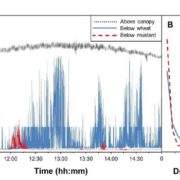
Update: Fluctuating light takes crop photosynthesis on a rollercoaster ride
Blog, Plant Physiology, Plant Physiology: Updates, Research, Research BlogBy Elias Kaiser, Alejandro Morales, Jeremy Harbinson
The environment of the natural world in which plants live, have evolved, and within which photosynthesis operates, is one characterised by change. The time scales over which change occurs can range from seconds (or less) all the way to the geological…

A Plant Protein That Foils Aphid Feeding
Research, The Plant Cell, The Plant Cell: In a NutshellKloth et al. probe aphid feeding behavior. The Plant Cell 2017 doi: 10.1105/tpc.16.00424
By Karen Kloth
Background: Aphids are phloem-feeding insects. They penetrate plants with a piercing-sucking mouth. Once they reach a tube where the plant transports its sugar-rich phloem sap, they can take…
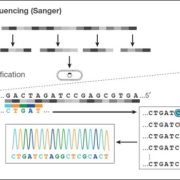
Review: DNA sequencing at 40: past, present and future ($)
Blog, Plant Science Research Weekly, Research, Research BlogShendure et al. provide a superb review of how DNA sequencing technology has changed over the years and how these changes open up new applications. They start with the Maxam and Gilbert chemical cleavage and the Sanger “chain-termination” methods developed in the 1970s, and describe the scale-ups…
De novo assembly of a new Solanum pennellii accession using nanopore sequencing
Blog, Plant Science Research Weekly, Research, Research BlogChromosomes are long, and DNA sequencing reads have typically been short, meaning that it is necessary to assemble lots and lots of short reads by looking for overlapping sequences. This strategy is made more difficult in repeat-rich and transposon-rich regions of genomes, which characterize many plant…
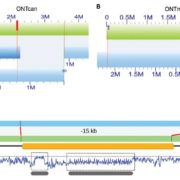
High contiguity Arabidopsis thaliana genome assembly with a single nanopore flow cell
Blog, Plant Science Research Weekly, Research, Research BlogThe current version of the Arabidopsis thaliana Col-0 reference genome, TAIR10, still has some gaps and mis-assemblies due to centromeres and repeat-rich regions. In another demonstration of the promise of single-molecule sequencing, Michael, Jupe et al. used a single nanopore flow cell to sequence the…
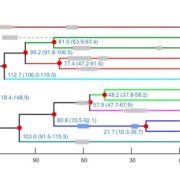
Genome of wild olive and the evolution of oil biosynthesis
Blog, Plant Science Research Weekly, Research, Research BlogOlive oil is a staple of the healthy “Mediterranean diet” and contains high levels of the monounsaturated fat oleic acid. Unver, Wu et al. present the genome of the wild olive tree (Olea europaea var. sylvestris) (draft sequences of domesticated olive trees without extensive functional annotation…