


The Cys-Arg/N-end rule pathway is a general sensor of abiotic stress in flowering plants
Blog, Plant Science Research Weekly, Research, Research BlogThe N-end rule pathway is a conserved pathway for the control of protein turnover, through which the clipping or modification of amino acids from the amino-terminus of a protein leads to an interaction with PROTEOLYSIS 6 (PRT6; an N-recognin E3 ligase) and 26S proteasome-mediated proteolysis. Previously,…
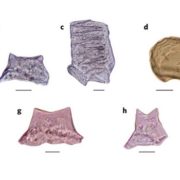
Evidence for mid-Holocene rice domestication in the Americas
Blog, Plant Science Research Weekly, Research, Research BlogRice is one of our most important crops, and previous work has indicated that it was domesticated independently in Asia (Oryza sativa) and Africa (Oryza glaberrima). Using archeological approaches, Hilbert et al. for the first time show evidence for domestication of a rice species (Oryza sp.) in the…
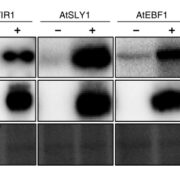
Expression and purification of unstable proteins using an ASK-assisted system
Blog, Plant Science Research Weekly, Research, Research BlogUbiquitin-mediated protein degradation is important in many plant processes (growth, development, responses to stress) but little is known about F-box proteins, a key component of the SCF (SKP1-CUL1-F-box protein) E3 ubiquitin ligase complex, due to their unstable protein structures. Li et al. investigated…
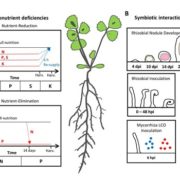
Small peptides, big importance: Small, secreted peptides as novel regulators of symbiosis and nutrient acquisition
Blog, Plant Science Research Weekly, Research, Research BlogIt is becoming increasingly evident that small, secreted peptides (SSPs) are important regulators of plant development and responses to stress. Traditional gene prediction algorithms are biased toward larger coding sequences and have therefore been inadequate in the hunt for plant SSPs. To address this…
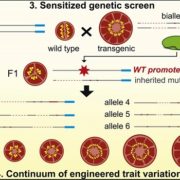
Improving crops by genome editing
Blog, Plant Science Research Weekly, Research, Research BlogIntroducing new desirable traits in domesticated crops takes time and is limited by the need for existing trait variation in members of the same species or closely related species. Rodríguez-Leal et al. propose a system by which variation in a quantitative trait can be generated by editing the promoter…
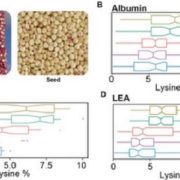
The genome of Quenopodium quinoa, a halophytic pseudocereal
Blog, Plant Science Research Weekly, Research, Research BlogQuenopodiium quinoa is a highly nutritive and facultative halophyte pseudocereal whose cultivation has increased 10 fold in the last decades. However, the adaption to non-native areas is not easy to achieve and the limited genetic resources do not allow a breeding program. Zou and collaborators have…
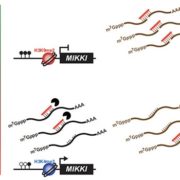
Regulation of rice root development by a retrotransposon acting as a microRNA sponge
Blog, Plant Science Research Weekly, Research, Research BlogTransposable elements are known to affect their neighboring genes, but they were so far unknown to affect the function of distant genes. Cho and Paszkowski observed a high level of transposon transcription expressed in rice. A transposon with root specific expression, MIKKI, was found to contain an imperfect…
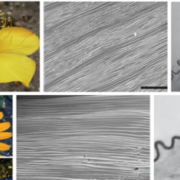
"Blue halo" light scattering enhances signalling to bees
Blog, Plant Science Research Weekly, Research, Research BlogVisual and other cues attract pollinators. Bees vision is skewed towards blue colors, but they also visit non-blue flowers. Moyroud et al. looked at how petal surface textures affect bee responses. The authors observed that similar parallel cuticular striations in diverse angiosperm lineages show convergent…
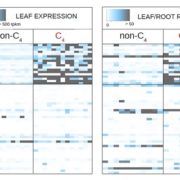
Highly expressed genes are preferentially co-opted for C4 photosynthesis
Blog, Plant Science Research Weekly, Research, Research BlogOne of the great questions of biology is how and why C4 photosynthesis pathway evolved independently more than 60 times. The advantages are obvious (increased productivity), but the underlying molecular predisposition to this transition remains poorly defined. Using a comparative transcriptomics approach…