

What We're Reading: October 20th
Blog, Research, Research BlogReview: DNA sequencing at 40: past, present and future ($)
Shendure et al. provide a superb review of how DNA sequencing technology has changed over the years and how these changes open up new applications. They start with the Maxam and Gilbert chemical cleavage and the Sanger “chain-termination”…
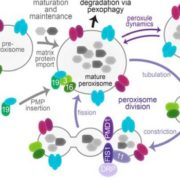
Update: Peroxisome function, biogenesis, and dynamics in plants
Blog, Plant Science Research Weekly, Research, Research BlogPeroxisomes are endoplasmic reticulum-derived membrane-enclosed organelles in which many oxidative enzymatic reactions are compartmentalized. These reactions and their products contribute to energy production, detoxification, and signaling. Kao et al. review our understanding of the plant peroxisome,…

Update: Flower primary metabolism, pollinators’ preferences and seed and fruit set
Blog, Plant Science Research Weekly, Research, Research BlogBecause of their important roles in attracting pollinators, the secondary or specialized metabolites of flowers (color, fragrance) get a lot of attention. Borghi and Fernie argue that flower function is equally dependent on primary (central) metabolites, which not only provide the precursors for secondary…
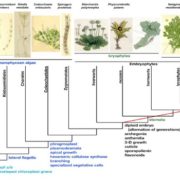
Insights into land plant evolution garnered from the Marchantia polymorpha genome
Blog, Plant Science Research Weekly, Research, Research BlogThe liverwort Marchantia polymorpha is a fascinating plant for many reasons, including the fact that it is one of the earliest terrestrial species that split off from the rest of the land plants. Therefore, comparisons between Marchantia and green algae or Marchantia and the rest of the land plants tell…

Insights into plasmodesmata composition of fully developed Arabidopsis thaliana leaves
Blog, Plant Science Research Weekly, Research, Research BlogPlasmodesmata (PD) are complex, regulated channels between plant cells that facilitate the movement of signals, metabolites and pathogens, but their small size makes them difficult to study. Previously, Kraner et al. identified an Arabidopsis mutant that produced fewer, simpler plasmodesmata. In their…
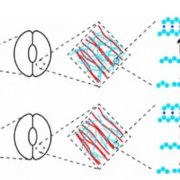
Pectinase function in growth and stomatal dynamics
Blog, Plant Science Research Weekly, Research, Research BlogPectin is a polymer that holds cell walls together and stiffens the walls, but what happens when those cell walls need to move, for example when cells (including guard cells) expand? Rui et al. started with a guard-cell specific transcriptome to identify genes encoding cell-wall modifying enzymes. They…

Ectopic expression of WINDING 1 leads to asymmetrical distribution of auxin and a spiral phenotype in rice
Blog, Plant Science Research Weekly, Research, Research BlogThrough insertional mutagenesis of rice, Cheng et al. identified a BTBN (Brac/Tramtrack/Broad complex and NPH3 domain)-encoding gene which they named WINDING 1 (WIN1), because the mutant phenotype (caused by ectopic expression in the shoot) causes the shoot to grow in a spiral. Ectopic expression of…
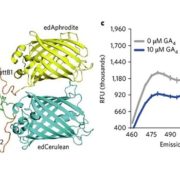
In vivo gibberellin gradients visualized in rapidly elongating tissues
Blog, Plant Science Research Weekly, Research, Research BlogBiosensors can reveal cellular or even sub-cellular distributions of hormones, greatly enhancing our understanding of hormone action. Rizza et al. have developed an in vivo, FRET-based gibberellin biosensor, GIBBERELLIN PERCEPTION SENSOR 1 (GPS1), that incorporates portions of two GA-binding proteins,…

Temporal network analysis of mild drought in Brassica rapa
Blog, Plant Science Research Weekly, Research, Research BlogIf you whithold water from a plant it eventually will wilt, but before this visible change there are other measurable effects and responses. However, many plant processes change cyclically over a 24-hour period independently of early drought responses, so it can be difficult to separate drought-responsive…