

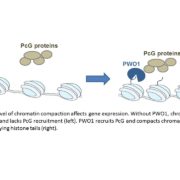
Recruiter of Chromatin Regulators
Research, The Plant Cell, The Plant Cell: In a NutshellHohenstatt et al. describe a new recruiter of PcG chromatin regulators affecting flowering and meristem identity in Arabidopsis. https://doi.org/10.1105/tpc.17.00117
By Pawel Mikulski
1) BACKGROUND: Polycomb group (PcG) proteins are key regulatory proteins involved in maintaining the ability (and…
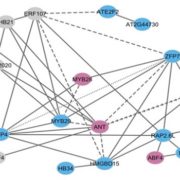
Symphony of the regulators: How do plants control complex responses to environmental signals?
Blog, The Plant Cell, The Plant Cell: In BriefThere are several models we use to conceptualize how plants respond to environmental signals through transcriptional regulation. In perhaps the best-understood model, the perception of some environmental signal flows through one or several mechanisms to a master regulator, often a transcription factor…
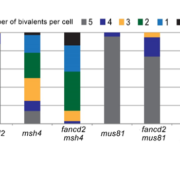
Hold Me Closer: Meiotic Crossover Formation and FANCD2
Blog, The Plant Cell, The Plant Cell: In BriefMeiosis takes a single, diploid cell and turns it into four haploid spores. The equal distribution of genetic material is critical for genome stability across generations, and relies heavily on proper pairing of chromosomes and their timely release. During the first meiotic division, crossovers (COs)…
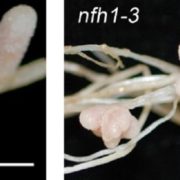
Goldilocks Principle: MtNFH1 Ensures Optimal Nod Factor Activity
Blog, The Plant Cell, The Plant Cell: In BriefPartner selection is a critical step that must occur early during establishment of Root Nodule Symbiosis (RNS). RNS refers to the mutualistic interaction between legumes and some non-legumes with soil bacteria that help convert atmospheric nitrogen into plant usable ammonia. In legumes such as Medicago…
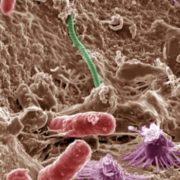
Opinion: Plant pathogen effector proteins as manipulators of host microbiomes? (Mol Plant)
Plant Science Research Weekly, Research, Research BlogTo understand disease development, effector research has mainly focused on the direct interaction of pathogen-derived molecules with plant host targets, or their sensing by surface or intracellular receptors. Recently, attention has turned to the plant microbiome and its key role in maintaining plant…
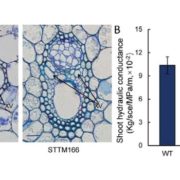
Knock-down of rice microRNA166 confers drought resistance through changes in leaf morphology (Plant Physiol.)
Plant Science Research Weekly, Research, Research BlogUnder drought conditions, moderate leaf rolling improves yield in rice by reducing water loss and allowing efficient photosynthesis (leaf upright position). In STTM166 transgenic rice plants, miRNA166 is knocked down (STTM means "short tandem target mimic") and the plants constitutively exhibit the…
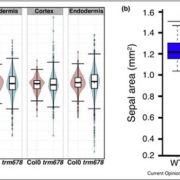
Review. Use it or average it: Stochasticity in plant development (Curr. Opin. Plant Biol.)
Plant Science Research Weekly, Research, Research BlogIn this interesting review, Roeder describes the importance of stochasticity in plant development. She starts off with an explanation: “A process that can be analyzed statistically but not predicted precisely is stochastic. Stochasticity does not imply the absence of regulation, just that the regulation…
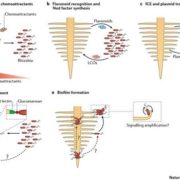
Review. Rhizobia: From saprophytes to endosymbionts (Nat. Rev. Microbiol.) ($)
Plant Science Research Weekly, Research, Research BlogOne of the best characterized plant-bacteria interactions is that between legumes and rhizobia. This review by Poole et al. explores rhizobia in their non-plant associated state (as saprophytes that derive energy and nutrients from organic matter in the soil), through the complex signals that lead to…
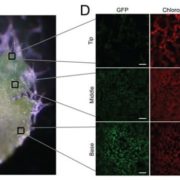
Control of retrograde signaling by rapid turnover of GENOMES UNCOUPLED 1 (Plant Physiol.)
Plant Science Research Weekly, Research, Research BlogCommunication between chloroplast and the nucleus is crucial to accomodate changes in the environment as well as regulate development of the chloroplast itself. Five GENOMES UNCOUPLED (GUN2 to -6) genes were previously described to regulate plastid-to-nucleus communication by affecting the synthesis…