


FERONIA rmaintains cell-wall integrity during salt stress through Ca2+ signaling (Curr. Biol.)
Plant Science Research WeeklyGrowing plant cells need to loosen up their cell walls while maintaining their integrity. This process gets trickier when plants are exposed to salt stress. Feng et al. describe the important role of the plasma membrane-localized receptor-like kinase FERONIA in restoring growth and cell wall integrity…

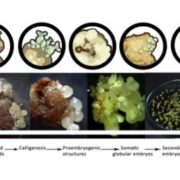
REVIEW In vitro propagation of bamboo species (Plant Cell Tissu Organ Cult) ($)
Plant Science Research WeeklyBamboos are economically important plants, with versatile applications including use in construction, paper, textiles and food production and bioenergy uses among others. Traditional methods of plant propagation are revealed to be challenging in this plant. First, bamboo propagation through seeds could…
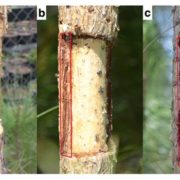
Transcriptomic analysis of wound xylem formation in Pinus canariensis (BMC Plant Biol.)
Plant Science Research WeeklyWoody plants, given their usually long life span, typically must face during their life several injuries that could take as long as several years to heal. In their work, Chano et al. use microarray analysis and RT-PCR to analyze the transcriptome changes that occurs during wood formation after a…
What We're Reading: February 23rd
WWR Full PostGuest Editor: Dr. Isabel Mendoza
Isabel is a plant biologist from Spain that got her PhD on (Plant) Biotechnology in 2013 with a study about secondary metabolism in spike lavender. Since then she has changed her career path a bit into R&D and innovation management and science communication.…

What We're Reading: February 16th
WWR Full PostGuest Editor: Dr. Amey Redkar
Amey is a postdoc at The Sainsbury Laboratory, Norwich, UK and has been a Plantae Fellow since September 2017. He is working to understand the interaction of plants and pathogens during disease development. His current research which is funded by EMBO Long Term Fellowship…
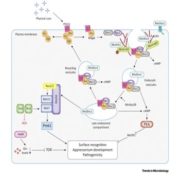
Review. Rise of a cereal killer: The biology of Magnaporthe oryzae biotrophic growth
Plant Science Research WeeklyThe fungal pathogen Magnaporthe oryzae causes one of the most destructive diseases of rice, destroying around 10-30% of rice production world-wide. The pathogen undergoes different developmental changes and produce specialized infectious structures in order to rapidly proliferate within the host cells.…
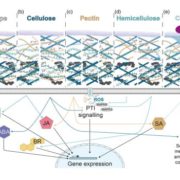
Review. Plant cell wall-mediated immunity: cell wall changes trigger disease resistance responses
Plant Science Research WeeklyPlant cell walls have recently been revealed as an essential factor of plant environment monitoring system, much more than just a passive defensive barrier as previously thought. In a recent work, Bacete et al. have reviewed how changes to plant cell wall integrity affect disease resistance. More specifically,…
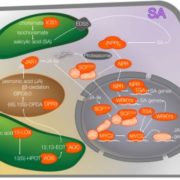
Jasmonic acid and salicylic acid signaling in fern Azolla filiculoides and its cyanobiont
Plant Science Research WeeklyThe phytohormones jasmonic acid (JA) and salicylic acid (SA) play key roles in how plants respond to microbes. However, this interplay between JA, SA and microbes is less understood in non-angiosperm linages. de Vries and colleagues examine JA/SA signalling between the water fern Azolla filiculoides…
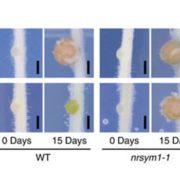
A NIN-LIKE PROTEIN mediates nitrate-induced control of root nodule symbiosis in Lotus japonicus
Plant Science Research WeeklyLegumes form root endosymbioses with Rhizobium bacteria in a special structure called nodule. In this symbiotic relationship, on one hand the plant provides the microbe with sugars and in exchange it receives fixed atmospheric nitrogen, the main limiting element for plant growth. Nevertheless, when nitrogen…