

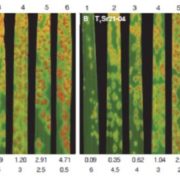
Identification and characterization of wheat stem rust resistance gene Sr21 effective against the Ug99 race group at high temperature (OA)
Plant Science Research Weekly, Research BlogStem rust is a fungal disease of wheat caused by Puccinia graminis f. sp. tritici (Pgt). The Ug99 race group of the fungus has evolved the ability to overcome most stem rust (Sr) resistance genes. Previously, Sr21, an Sr gene that confers partial resistance to Ug99, was found in diploid wheat. Chen et…

What We're Reading: April 13th edition
WWR Full PostGuest Editor: Dr. Elisa Dell’Aglio
Elisa holds a PhD in Plant Biochemistry from the University of Grenoble – CEA (France) and just finished a first Post-Doc at the University of Geneva, Switzerland. She has been a Plantae Fellow since September 2017. Her work is aimed at understanding how cofactors,…
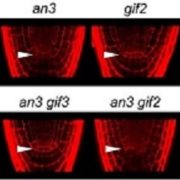
GIF transcriptional coregulators control root meristem homeostasis ($)
Plant Science Research Weekly, Research BlogTranscription factor GRFs (GROWTH-REGULATING FACTOR) are specifically expressed in TACs (transit-amplifying cells) and promote rapid cell divisions. Their expression is repressed in stem cells through miR396. In this work, they studied the functions of small cofactors known as GIFs (GRF-INTERACTING FACTORs)…
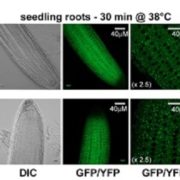
Trichome branching is regulated by the m6A reader ECT2 in Arabidopsis (OA)
Plant Science Research Weekly, Research BlogMethylation at position N6 of adenosines (m6A) is the most abundant mRNA chemical modification. It influences gene activity at the post-transcriptional level and is thus important for development. m6A is decoded by reader proteins. While the repertoire of reader proteins has been extensively studied…
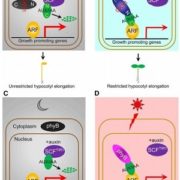
Photoactivated CRY1 and phyB interact directly with AUX/IAA proteins to inhibit auxin signaling in Arabidopsis (OA)
Plant Science Research Weekly, Research BlogSo far we know that light inhibits hypocotyl cell elongation and that the master regulatory plant hormone auxin induces hypocotyl elongation. Light signal depends on cryptochrome (CRY1) and phytochrome (PhyB). Auxin signal follows the traditional TIR1/AFB receptor-mediated degradation of AUX/IAA repressor.…

Commentary: The discovery of nickel hyperaccumulation in the New Caledonian tree Pycnandra acuminata 40 years on: an introduction to a Virtual Issue (OA)
Plant Science Research WeeklyA Commentary by Jaffé et al. introduces a New Phytologist Virtual Issue on the curious and fascinating plants that hyperaccumulate metals. These diverse species have shed light on metal transporter proteins and mechanisms of metal tolerance, on the ecological function of metal hyperaccumulation (possibly…
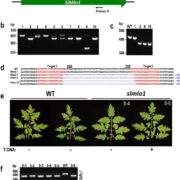
Rapid generation of a transgene-free powdery mildew resistant tomato by genome deletion (OA)
Plant Science Research Weekly, Research BlogUsing a traditional breeding approach, introducing a single gene into a desirable cultivar requires repeated backcrossing. This lengthy process can be circumvented through genetic engineering (making transgenic plants), but consumer concerns and extensive, expensive regulatory hurdles have stifled many…

Similar but Different: A Functionally Conserved of COI1 Receptor Recognizes Jasmonate Precursors in the Liverwort Marchantia polymorpha ($)
Plant Science Research Weekly, Research BlogLand plants evolved from freshwater charophyte algae over 450 million years ago and have since diverged into the multitude of plant lineages observed today. The extent to which prominent plant hormones and cognate receptor proteins, which play essential roles in evolutionarily young angiosperms, are…

SIAMESE-RELATED1 (SMR1) has roles in leaf growth repression under drought (OA)
Plant Science Research Weekly, Research BlogThe cell cycle of plants is regulated by signals that integrate endogenous and environmental cues to allow for adaptation to varying conditions. When a plant is under drought stress, cell division in young leaves is stopped by an active mechanism to conserve resources. Cyclin-dependent kinase-inhibitory…