

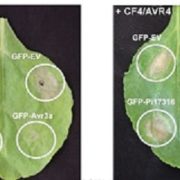
To the VIKtor goes the Spoils: The Phytophthora infestans Effector Pi17316 Manipulates the Host MAP3K VIK to Promote Disease Susceptibility in Potato (OA)
Plant Science Research Weekly, Research BlogPhytopathogens secrete effector proteins that enter and manipulate plant cells to facilitate microbial growth in planta. This is often achieved by exerting specific activity onto key host proteins to divert host cellular functions towards supporting pathogen growth. In a recently published article in…
Recognizing featured Plant Cell first authors: Zhangjian Hu
The Plant Cell, The Plant Cell: Author ProfilesZhangjian Hu, featured first author of A Plant Phytosulfokine Peptide Initiates Auxin-Dependent Immunity through Cytosolic Ca2+ Signaling in Tomato
Current Position: Graduate student in the Department of Horticulture, Zhejiang University, China
Education: B.S. (2012) in Applied Biological Science…

Recognizing featured Plant Cell first authors: Huan Zhang
The Plant Cell, The Plant Cell: Author ProfilesHuan Zhang, featured first author of A Plant Phytosulfokine Peptide Initiates Auxin-Dependent Immunity through Cytosolic Ca2+ Signaling in Tomato
Current Position: Graduate student in the Department of Horticulture, Zhejiang University, China.
Education: Bachelor's degree (2013) from the College…

Recognizing featured Plant Cell first authors: Suayib Üstün
The Plant Cell, The Plant Cell: Author ProfilesSuayib Üstün, featured first author of Bacteria exploit autophagy for proteasome degradation and enhanced virulence in plants
Current Position: FEBS (Federation of European Biochemical Societies) long-term postdoctoral fellow at Swedish University of Agricultural Sciences in Uppsala, Sweden
Education:…
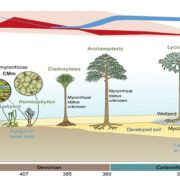
Review: The origin and evolution of mycorrhizal symbioses (New Phytol)
Plant Science Research WeeklyMany fungi are pathogens that kill or weaken their plant hosts. However, there are also many species that form beneficial relationships with plants, algae, and cyanobacteria. One of these mutualisms is the mycorrhizal association between a fungus and a plant root, where the fungus provides the plant…
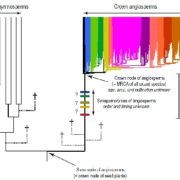
Review: Key questions and challenges in angiosperm macroevolution (New Phytol)
Plant Science Research WeeklyAre you curious about why and how angiosperms, flowering plants, are the youngest lineage of land plants and have become the most abundant group of plants? You are not alone. Generations of botanists and evolutionary biologists have wondered about this same thing. Many questions have been answered, such…
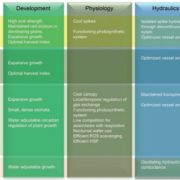
Review: Heat and drought tolerance in wheat – now and for the future (J Exp Bot)
Plant Science Research WeeklyStress due to high heat and drought causes losses in wheat production all over the world. While genetic variation and quantitative trait loci for drought and heat tolerance are known, the genetic loci that underlie tolerance to these combined stress are likely different from those that underlie each…
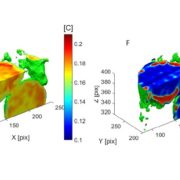
Breakthrough Technology: Soft X-ray imaging of cellular carbon and nitrogen distributions in cyanobacteria (Plant Phys)
Plant Science Research WeeklySoft X-ray imaging is a promising new technology that can be used to measure elemental compositions of living cells. By adjusting the energy (wavelength) of the incident X-rays, it is possible to specifically measure C or N, which have different photo-absorption edges. Teramoto et al. demonstrate the…
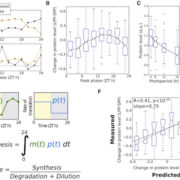
Translational coincidence in Arabidopsis (Mol Syst Biol)
Plant Science Research WeeklyChanges in photoperiod affect metabolism and development, as well as flowering time, hypocotyl elongation, freezing tolerance, stomatal opening, C-allocation and growth. Seaton and collaborators measured the Arabidopsis proteome under four photoperiods: 6h, 8h, 12h and 18 hours. At longer photoperiods,…