

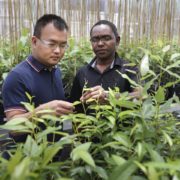
Critical plant gene takes unexpected detour that could boost biofuel yields
Blog, The Plant Cell, The Plant Cell: News
OAK RIDGE, Tenn., June 15, 2018 - For decades, biologists have believed a key enzyme in plants had one function--produce amino acids, which are vital to plant survival and also essential to human diets.
But for Wellington Muchero, Meng Xie and their colleagues, this enzyme does more than advertised.…
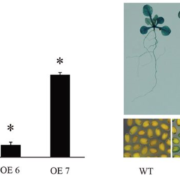
P-HYDROXYPHENYLPYRUVATE DIOXYGENASE from Medicago sativa Is Involved in Vitamin E Biosynthesis and Abscisic Acid-Mediated Seed Germination (OA)
Plant Science Research WeeklySci. Rep. Vitamin E has been shown to scavenge singlet oxygen, reduce lipid oxidation by-products and inhibit lipid peroxidation, thereby helping plant defenses against various stresses.
In this study, the authors identified MsHPPD as a key gene for vitamin E biosynthesis in alfalfa – an important…
What We're Reading: June 15th Edition
WWR Full PostPlant Vitamins and Cofactors Special Issue
This week’s “What We’re Reading” summarizes recent findings on plant vitamin and cofactor biosynthesis and their role in plant defense responses. This selection includes two reviews and nine research papers. The first review focuses on biofortification…

Aldehyde Dehydrogenases Function in the Homeostasis of Pyridine Nucleotides in Arabidopsis thaliana (OA)
Plant Science Research WeeklySci. Rep. Aldehyde dehydrogenase enzymes (ALDHs) are very common proteins involved in the oxidation of aliphatic and aromatic aldehydes to their corresponding carboxylic acids, using NAD and NADP as electron acceptors.
In this paper the authors explore the hypothesis that ALDHs are also important…
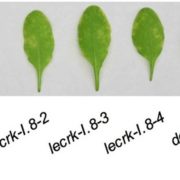
A Lectin Receptor Kinase as a Potential Sensor for Extracellular Nicotinamide Adenine Dinucleotide in Arabidopsis thaliana (OA)
Plant Science Research WeeklyeLife Besides its role as an enzyme cofactor, NAD is also a plant signaling molecule. In particular, it leaks from wounded areas and activates defense pathways in the neighboring tissue, an effect that can be mimicked by application of extracellular NAD.
The presence of a sensing mechanism for extracellular…
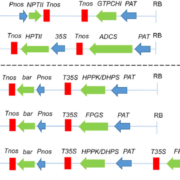
Folate Biofortification of Potato by Tuber-Specific Expression of Four Folate Biosynthesis Genes ($)
Plant Science Research WeeklyMol. Plant Deficiency in Vitamin B9 (folate) is one of the major causes of birth defects and maternal deaths. As potato is a staple crop for several populations worldwide, one strategy to reduce the risks of folate deficiency is the biofortification of potato. This would be extremely useful, as the…
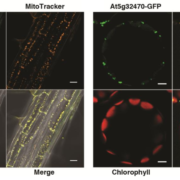
The Arabidopsis Thiamin‐Deficient Mutant pale green1 Lacks Thiamin Monophosphate Phosphatase of the Vitamin B1 Biosynthesis Pathway ($)
Plant Science Research WeeklyPlant J. Plants have the capacity of building several vitamin compounds that animals must uptake with their diet instead. Some of these pathways, such as the B1 pathway, are extremely complex and still not completely elucidated.
The At5g32470 gene was identified as a new thiamine monophosphate (TMP)…
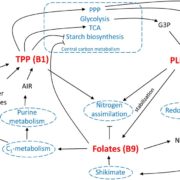
Review: Toward Eradication of B-Vitamin Deficiencies: Considerations for Crop Biofortification (OA)
Plant Science Research WeeklyFront. Plant. Sci. Micronutrient malnutrition (or “hidden hunger”) is estimated to concern one fourth of the human population worldwide and its main victims are children and pregnant women. This review summarizes the biosynthetic pathways, the role in plant physiology and the recent efforts of the…
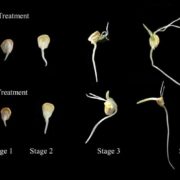
The Manipulation of Gene Expression and the Biosynthesis of Vitamin C, E and Folate in Light-and Dark-Germination of Sweet Corn Seeds (OA)
Plant Science Research WeeklySci. Rep. There is an increasing body of evidence suggesting that the vitamin content of cereal sprouts is higher than the one of cereal kernels. For example, it was recently shown that niacin, riboflavin and ascorbic acid accumulate during sweet corn sprouting. Liu and colleagues went further by measuring…