

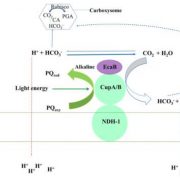
A thylakoid-located carbonic anhydrase regulates CO2 uptake in the cyanobacterium Synechocystis sp. PCC 6803 (New Phytol)
Plant Science Research WeeklyThe cyanobacterial CO2 concentrating mechanism (CCM) is dependent on a continuous supply of inorganic carbon (Ci) to rubisco inside carboxysomes in order to function optimally. CO2 uptake pathways are therefore of great importance for a full understanding of the cyanobacterial CCM. Sun et al demonstrate…
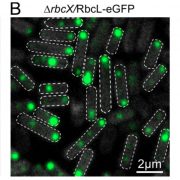
Roles of RbcX in carboxysome biosynthesis in the cyanobacterium Synechococcus elongates PCC 7942 (Plant Physiol)
Plant Science Research WeeklyIntroduction of the cyanobacterial carboxysome into C3 crops represents a viable strategy to increase photosynthetic conversion efficiency and boost crop yield. Key to this challenge is gaining a full understanding of the carboxysome system in cyanobacteria, including how these microcompartments assemble…

Whole plant chamber to examine sensitivity of cereal gas exchange to changes in evaporative demand (Plant Methods)
Plant Science Research WeeklyStomata represent the entry point into the leaf for CO2 that will be fixed by rubisco in photosynthesis and the exit point of water as it is lost to the atmosphere. As such, they are subject to tight regulation in response to the environment so that water loss is minimised and a supply of CO2 is…
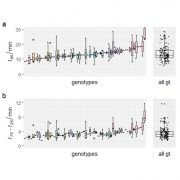
Rate of photosynthetic acclimation to fluctuating light varies widely among genotypes of wheat (bioRxiv)
Plant Science Research WeeklyThe speed at which photosynthesis is induced during shade-sun transitions, such as sun-flecks, contributes towards determining crop yield. The speed of induction can be limited by the dynamics of stomatal and mesophyll conductance, deactivation rates of photoprotective mechanisms, the acclimation rate…
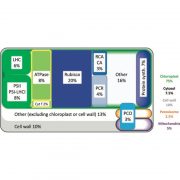
Expert View: The nitrogen cost of photosynthesis (J Exp Bot)
Plant Science Research WeeklyModern crop production is intimately linked to the availability of nitrogen. Photosynthetic proteins (including rubisco) account for most of the nitrogen in leaves, a significant amount of which is removed during harvesting and must be replenished primarily through the application of synthetic nitrogen…
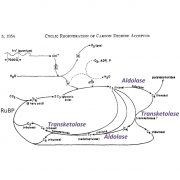
Review: Discovery of the canonical Calvin–Benson cycle (Photosynth Res)
Plant Science Research WeeklyIt has been over seventy years since Melvin Calvin and Andrew Benson first started on their journey to discovering the Calvin-Benson cycle – the series of biochemical reactions in which the Sun’s energy is converted to chemical energy stored inside the cells of plants, cyanobacteria and algae. …
What We're Reading: November 16th
Blog, WWR Full PostPhotosynthesis Special Issue
This week’s ‘What We’re Reading’ summarizes the latest papers from the field of photosynthesis research. This includes a review on the discovery of the Calvin-Benson cycle by Tom Sharkey, and an Expert View on the relationship between nitrogen and photosynthesis…

Recognizing Plant Cell first authors: Eric Soubeyrand
The Plant Cell, The Plant Cell: Author ProfilesEric Soubeyrand, first author of The Peroxidative Cleavage of Kaempferol Contributes to the Biosynthesis of the Benzenoid Moiety of Ubiquinone in Plants
Current Position: Postdoctoral Researcher, Horticultural Sciences, University of Florida, FL.
Education: PhD in plant biology; Ecophysiology and…
Autophagy and Chloroplast Quality Control: Fatty Acid Synthesis Counts
Plant Physiology, Plant Physiology: News and ViewsPlants devote more than 70% of their available nitrogen to maintaining chloroplast function (Makino and Osmond, 1991). During senescence or under stress conditions, chloroplasts are degraded and their constituent components are recycled. Chloroplasts can be degraded through at least three pathways: (1)…