


Brassica clubroot disease protist pathogen promotes phloem differentiation and expression of SWEET sucrose transporters (Plant Cell)
Plant Science Research WeeklyClubroot is a disease of brassicas (including oilseed crops and Arabidopsis) caused by the protist Plasmodiophora brassicae. The infection is characterized by the formation of swollen tissues called galls that are metabolic sinks in which the pathogen propagates. Walerowski et al. took advantage of Arabidopsis…
What We're Reading: November 23rd
WWR Full PostEditorial. Counting what counts: the importance of quantitative approaches to studying plant cell biology
In the new Cell Biology issue of Current Opinion in Plant Biology, editors Haswell and Dixit have chosen to focus on quantitative cell biology, arguing that, “if seeing is believing, then measuring…
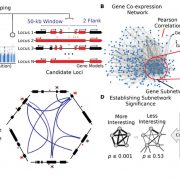
Finding candidate genes in maize with Camoco (Plant Cell)
Plant Science Research WeeklySchaefer and colleagues have developed Camoco (Co-analysis of molecular components), which integrates data from GWAS and co-expression networks to identify high confidence candidate genes associated with a phenotype of interest. To evaluate the program they used GWAS and co-expression data from maize.…
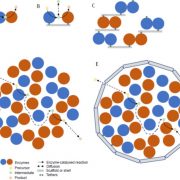
Update: Engineering of metabolic pathways using synthetic enzyme complexes
Blog, Plant Physiology, Plant Physiology: UpdatesBy Nicholas Smirnoff, University of Exeter. This article is part of the forthcoming Synthetic Biology focus issue.
Plants provide a source of enzymes for metabolic engineering to produce valuable or useful products in micro-organisms or can themselves be engineered (Andre et al., 2016; Vickery et…
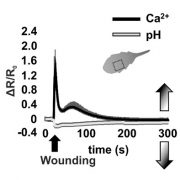
Small Talk: Protons Help Calcium Get the Message Across
The Plant Cell, The Plant Cell: In BriefCalcium (Ca2+) is a versatile second messenger that controls a range of cellular processes—from pollen tube growth to stress responses—by regulating the activity of various proteins. Although Ca2+ is present at millimolar concentrations in the cell wall and vacuole, a set of channels, pumps, and…
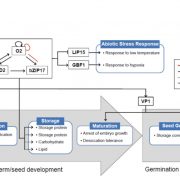
Corn ChIPs and RNA-seq: Researchers Dip into Advanced Tools and Resources to Examine bZIP Transcription Factor Function in the Maize Endosperm
The Plant Cell, The Plant Cell: In BriefThe endosperm of maize (Zea mays) seeds undergoes a complicated developmental program that ends with the production of massive amounts of storage compounds, particularly carbohydrates, but also including zein storage proteins (reviewed in Li and Berger, 2012; Hannah and Boehlein, 2017; Larkins et al.,…

Recognizing Plant Physiology first authors: Jiyue Huang
Plant Physiology, Plant Physiology: Author ProfilesJiyue Huang, first author of The Largest Subunit of DNA Polymerase Delta is Required for Normal Formation of Meiotic Type I Crossovers
Current Position: Postdoctoral Research Fellow at Copenhaver Lab, University of North Carolina-Chapel Hill, NC
Education: PhD in Biochemistry and Molecular Biology,…

Recognizing Plant Physiology first authors: Cong Wang
Plant Physiology, Plant Physiology: Author ProfilesCong Wang, first author of The Largest Subunit of DNA Polymerase Delta is Required for Normal Formation of Meiotic Type I Crossovers
Current Position: Ph.D. Candidate, Biochemistry and Molecule Biology, Fudan University, China.
Education: B. S. Biological Science, Sep. 2009-Jul. 2013. Lanzhou…

Recognizing Plant Physiology first authors: Nicholas Zoulias
Plant Physiology, Plant Physiology: Author ProfilesNicholas Zoulias, first author of Auxin and pattern formation of the Asteraceae flower head (capitulum)
Current Position: Post-Doctoral Researcher at the University of Sheffield.
Education: PhD in Computational Evolution and Biology, University of Manchester. MRes in Biological Sciences, University…