


Recognizing Plant Physiology first authors: Laura Dalle Carbonare
Plant Physiology, Plant Physiology: Author ProfilesLaura Dalle Carbonare, first author of Zinc excess induces a hypoxia-like response by inhibiting cysteine oxidases in poplar roots
Current Position: Postdoctoral research scientist at School of Biosciences – Plant and Crop Science Division, University of Nottingham (UK)
Education: PhD degree in…

Recognizing Plant Physiology first authors: Heena Yadav
Plant Physiology, Plant Physiology: Author ProfilesHeena Yadav, first author of Medicago Terpene Synthase 10 is involved in defense against an oomycete pathogen
Current Position: Guest Scientist at Leibniz Institute of Plant Biochemistry, Halle (Saale)
Education: Ph.D. student in Plant Biochemistry (2014-2018), Department of Cell and Metabolic Biology,…
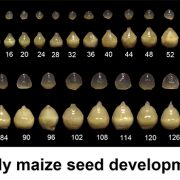
High-temporal-resolution Transcriptome Landscape of Early Maize Seed Development
Research, The Plant Cell: In a Nutshellhttps://doi.org/10.1105/tpc.18.00961
Yi et al. describe a high-temporal-resolution transcriptome landscape of early maize seed development.
By Fei Yi, Wei Gu, and Jinsheng Lai, State Key Laboratory of Agrobiotechnology and National Maize Improvement Center, Department of Plant Genetics and…

Making longer rice grains, the brassinosteroid way
Research, The Plant Cell: In a NutshellGao et al. identified a key protein phosphatase regulator of brassinosteroid signalling that modulates grain length and plant architecture. https://doi.org/10.1105/tpc.18.00836
By Ji Huang, State Key Laboratory of Crop Genetics and Germplasm Enhancement, College of Agriculture, Nanjing Agricultural…
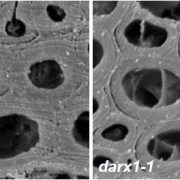
Cell Wall Polymers: The Importance of Deacetylation
Research, The Plant Cell: In BriefMany of the polysaccharides that make up the plant cell wall carry acetate side groups. Notably, the degree of such acetylation is not always the same—even within the same species, it changes over the course of development and is different between tissues. While the mechanism for adding acetyl groups…

Prohibitin shuttles between mitochondria and the nucleus to control genome stability during the cell cycle
Plant Physiology: News and Views, ResearchThe prohibitin (PHB) protein family is highly conserved from prokaryotes to eukaryotes (Van Aken et al., 2010). Initially identified as a tumor suppressor in rat liver, PHBs in animals are localized in various cell compartments, including mitochondria, nuclei, and plasma membranes, and function as scaffold…

Recognizing Plant Physiology first authors: Julia Bellstädt
Plant Physiology, Plant Physiology: Author ProfilesJulia Bellstädt, first author of A mobile auxin signal connects temperature sensing in cotyledons with growth responses in hypocotyls
Current Position: PhD student, Institute of Agricultural and Nutritional Sciences, Dept. of Crop Physiology, Martin Luther University Halle-Wittenberg, Germany
Education:…

Recognizing Plant Physiology first authors: Xiaojing Bi
Plant Physiology, Plant Physiology: Author ProfilesXiaojing Bi, first author of CENTRORADIALIS interacts with FLOWERING LOCUS T-like genes to control spikelet initiation, floret development and grain number
Current Position: Postdoctoral fellow, Institute for Plant Genetics, Heinrich Heine University, Düsseldorf, Germany
Education: PhD, Crop Genetics,…
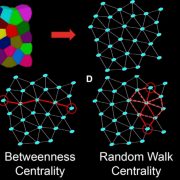
Review. Multicellular systems biology: Applying network science to plant organ patterning and function (Mol Plant)
Plant Science Research WeeklyI really enjoyed this review article, which very successfully introduces the reader to the why and how of how to apply network science to plant science. Bassel never veers off into abstraction or “math-speak”, but instead roots his explanations in familiar biological or ordinary terms. As an example,…