

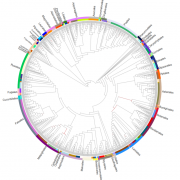
Molecular digitization of 689 vascular plant species from the Ruili Botanical Garden (Giga Science)
Plant Science Research WeeklyRecent advances in genome sequencing have increased our understanding of plant evolution and provided insights into factors affecting agriculturally important traits (e.g., yield, stress tolerance). There is an impetus to increase the quantity and quality of genomes publically available with around 350…
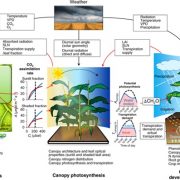
Modeling crop yield changes due to increased photosynthetic capabilities ($) (Nature Plants)
Plant Science Research WeeklyWith the need to feed the growing population and the threat of global climate change, there is an imminent need to increase crop yields. One commonly accepted method of accomplishing this is by enhancing the photosynthetic capability of major crop plants, which may result in an increased yield. A recent…
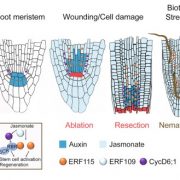
A jasmonate signaling network activates root stem cells and promotes regeneration ($) (Cell)
Plant Science Research WeeklyPlants possess plasticity for regeneration of organs after damage by physical, biotic or abiotic stress. The mitotically less-active organizer cells, quiescent center (QC) and surrounding initials form the stem cell niche, which is known to play a very important role in activation of the regeneration…
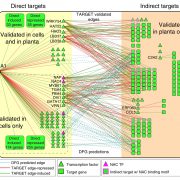
Network paths for nitrogen response in Arabidopsis (Nature Comms)
Plant Science Research WeeklyA goal of systems biology is to study how transcription factors participate in gene regulatory networks (GRN) underlying biological processes. In a recent report, Brooks et al. used network science to uncover how transcription factors mediate the early response to nitrogen (N). Authors identified the…

Pollinator functional diversity and abundance enhance crop pollination and yield (Nature Comms)
Plant Science Research WeeklyInsects provide a valuable service to the agricultural industry through pollination, which increases both the quality and harvest volume for many important food crops, however little is known regarding the role of insect functional trait differences in promoting crop pollination. Woodcock et al. tested…
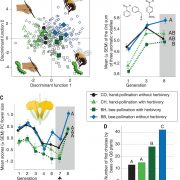
Pollinators and herbivores boost the evolution of floral traits ($) Science
Plant Science Research WeeklyThe characteristics of flowers, including morphology, color, nectar and fragrance, are closely related to their pollination methods. To attract pollinators, plants often produce large, colorful, or fragrant flowers. Increasing evidence has indicated that herbivorous feeding activity also affects flower…
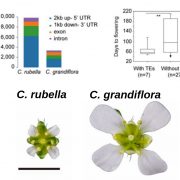
Transposable elements drive rapid phenotypic variation in Capsella rubella (PNAS)
Plant Science Research WeeklyHow can a species with limited genetic variation rapidly adapt to new environments? This phenomenon is known as the genetic paradox of invasion. Here, Niu et al. studied the role of Transposable Elements (TEs) in Capsella rubella, focusing on flowering-time variation. By analyzing population genomics…
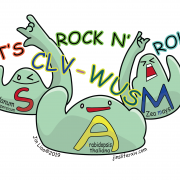
Genetic compensation mechanisms for maintaining plant stem cell robustness ($) (Nature Genetics)
Plant Science Research WeeklyIn shoot meristems, the CLAVATA (CLV)-WUSCHEL(WUS) signaling module contributes to the continuous stem cell proliferation for plant development. In Arabidopsis, core CLV-WUS signaling includes the peptide ligand CLV3 and its receptor protein kinase CLV1 together with the transcription factor WUS. These…
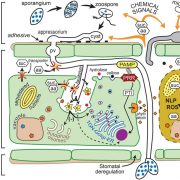
Plant Science Research Weekly: April 26th
WWR Full PostReview. After the deluge: Plant revival post-flooding
Crop losses due to flooding are occuring with increasing frequency. Whilst time submerged can be lethal, the post-submergence period is also potentially lethal. In this new review, Yeung et al. provide an overview of factors that contribute to…