


Plant Science Research Weekly: August 30th
Blog, WWR Full PostA modular cloning toolkit for genome editing in plants
Genome editing with the CRISPR/Cas system is now widely used in functional studies across biological sciences including plant biology. Typically, this system involves a DNA nuclease and a guide RNA that directs the nuclease to a specific location…
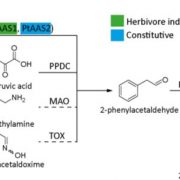
Do all roads lead to 2-phenylethanol in Populus?
Plant Physiology, Plant Physiology: News and Views, ResearchPlants emit scented volatile compounds to attract pollinators, or alternatively, as direct or indirect plant defense mechanisms. Direct defense involves compounds that are toxic, whereas an indirect defense uses volatiles to attract parasitoids of insect herbivores (Unsicker et al., 2009; Maag et al.,…

Turnip Mosaic Virus is Released into Extracellular Space
Plant Physiology, Plant Physiology: On The InsideTurnip Mosaic Virus (TuMV) is a +RNA virus that belongs to the order Picornavirales. +RNA viruses reorganize the endomembrane system to generate quasi-organelle structures called “viral factories”. In the case of TuMV, these factories are motile vesicles of ~100 nm in diameter that contain the TuMV…

Regulation of Imprinting in Arabidopsis
Plant Physiology, Plant Physiology: On The InsideThe seeds of flowering plants consist of three genetically distinct components: the diploid embryo with one genome copy from each of the parents, the triploid endosperm with two maternal copies and one paternal copy, and the seed coat having the same genotype as the diploid mother plant. Balanced parental…

Salicylic Acid Influences Root Meristem Patterning at Low Concentrations
Plant Physiology, Plant Physiology: On The InsideHigh exogenous concentrations (>50 µM) of salicylic acid (SA) stimulate systemic acquired resistance (SAR), a vitally important adaptive immunity response that protects against a broad spectrum of pathogens. The transcription of PATHOGENESIS-RELATED GENE 1 (PR1) is rapidly induced in leaves upon…

The Spatial Distribution of Chlorophyll in Leaves
Plant Physiology, Plant Physiology: On The InsideThe biochemistry of photosynthesis and biophysical processes that constrain it are intrinsically linked within the landscape of the inner leaf. Because leaf tissue is heterogeneous in structure as well as photosynthetic capacity, it follows that chlorophyll may also be spatially heterogeneous. Yet, while…

Domestication Affected Root System Architecture in Common Bean
Plant Physiology, Plant Physiology: On The InsideComparative analyses of wild and domesticated accessions have previously identified several aboveground domestication-related traits in common bean (Phaseolus vulgaris). Genetic analyses of these traits suggested the presence of several major quantitative trait loci (QTLs) with large effects. However,…
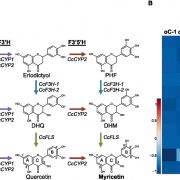
Synthesis of a Plant-Based Drug for the Potential Treatment of Type-2 Diabetes
Plant Physiology, Plant Physiology: On The InsideType 2 diabetes, which is characterized by high blood glucose (Glc) levels, afflicts ~6% of the population of the western world. A major goal in treating diabetes is reducing high levels of blood Glc, which is a particular problem in patients whose diets are rich in starch and other sugars. The main…

Recognizing Plant Direct first authors: Will Hinckley
Plant Direct, Plant Direct: Author ProfilesWill Hinckley, first author of The HAC1 Histone Acetyltransferase Promotes Leaf Senescence and Regulates the Expression of ERF022
Current Position: Undergraduate Senior in Dr. Judy Brusslan’s Lab at California State University, Long Beach
Education: Bachelors in Cellular/Molecular Biology in…