

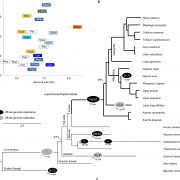
A reference genome for pea provides insight into legume genome evolution (Nature Genetics)
Plant Science Research WeeklyPea (Pisum sativum) is an important protein-rich crop that introduces most students to the principles of Mendelian genetics, but it has lagged behind in the genomics era due to its much larger genome size than newer model legumes. Kreplak et al. have now released an annotated chromosome-level reference…
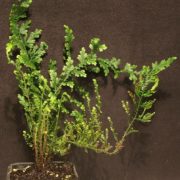
Selaginella moellendorffii expression atlas provides insight into the origin and evolution of plant vasculature (bioRxiv)
Plant Science Research WeeklyLand plants (embryophytes) evolved from freshwater algal predecessors over 450 million years ago and have since separated into the morphologically diverse lineages observed today. A key feature in the expansion of plant life on land was the development of the plant vasculature and complex rooting systems.…

Cannabis glandular trichomes alter morphology and metabolite content during flower maturation ($) (Plant J)
Plant Science Research WeeklyThe therapeutic and recreational applications of Cannabis sativa (Cs) attract public and clinical interest thanks to its secondary metabolites (cannabinoids and terpenes) synthesized and stored in glandular trichomes, hair-like epidermal protrusion densely concentrated in the flowers. Little is known…

teosinte branched1 and the control of bud dormancy and growth in maize (Nature Comms)
Plant Science Research WeeklyBranching has a significant impact on plant architecture. Maize, a domesticated species, has lower branching levels in comparison to its wild ancestor teosinte. Axillary branching is the result of lateral buds growth. Some factors such as phytohormones and transport of sugars are related to bud activation/dormancy…

Evolution of the KANADI gene family and leaf development in lycophytes and ferns ($) (Plants)
Plant Science Research WeeklyPlants constantly grow post embryonically through shoot and root apical meristems. Multiple transcriptional factors and other regulators fine-tune such growth. Leaf growth from the apical meristem is well studied in the model plant Arabidopsis where two main transcription factors, namely HD-ZIP III (Class…
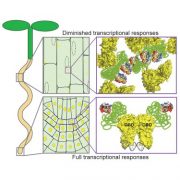
Nuclear-cytoplasmic partitioning of ARF proteins controls auxin responses ($) (Mol Cell)
Plant Science Research WeeklyARF (Auxin Response Factor) transcription factor proteins contain three domains: an N-terminal DNA-binding domain, a variable middle region, and a C-terminal PB1 domain. Powers et al. found that ARF7 and ARF19 accumulate as large-order assemblies in the cytoplasmic region of mature root cells, but the…
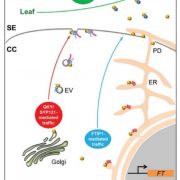
The QKY-SYP121 complex controls long-distance florigen movement ($) (Plant Cell)
Plant Science Research WeeklyIn Arabidopsis thaliana, changes in day-length (photoperiod) activate the expression and transport of phloem-mobile florigen (FT, FLOWERING LOCUS T) to the shoot apical meristem to trigger the transition to flowering. While the role of FT as a long-distance signal is well-established, the underlying…

Halotropism requires phospholipase Dζ1‐mediated modulation of cellular polarity of auxin transport carriers ($) (Plant Cell Environ)
Plant Science Research WeeklyPhospholipase D (PLD) enzymes cleave phosopholipds to release phosphatidic acid (PA), which is a signal that affects membrane dynamics. Previous studies have indicated a role for PLD and PA in root responses to osmotic and salt stress, but as the Arabidopsis genome has 12 genes encoding PLD questions…

A single amino-acid substitution impairs PTI and ETI in an SA-dependent manner in rice ($) (Plant Physiol)
Plant Science Research WeeklyPlants possess two immune strategies to prevent invasion by pathogens called pattern-triggered immunity (PTI, typically mediated by cell-surface receptors) and effector-triggered immunity (ETI). During ETI, intracellular resistance (R) proteins perceive specific pathogen effectors. Tang et al. describe…