

Evolutionary flexibility in flooding response circuitry in angiosperms ($) (Science)
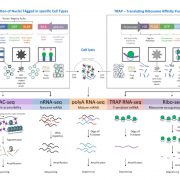
Plant Science Research WeeklyFlooding is unpredictable and can lead to plant death due to insufficient oxygen (hypoxia). Some plant species and varieties are better able to survive periods of submergence. Here, Reynoso et al. looked at gene networks induced transcriptionally and translationally by flooding in rice, Medicago and…

A virtual nodule environment (ViNE) of metabolic integration during symbiotic nitrogen fixation (bioRxiv)
Plant Science Research WeeklyGenetic and molecular studies have revealed a complex exchange of signals and metabolites accompanying the development and process of symbiotic nitrogen fixation. Clearly, the photosynthesis-capable plant provides fixed carbon to the bacterial symbiont, which uses some of this energy for its core metabolism…

Deep conservation of cis-element variants regulating plant hormonal responses (Plant Cell)
Plant Science Research WeeklyPromoter regions upstream of transcription start sites contain DNA regulatory elements (RE) crucial for the transcriptional control of gene expression. However, REs are short degenerated sequences with low conservation during evolution. In this paper, Lieverman-Lazarovich et al. studied REs in core hormone…
Control of adventitious rooting by TIR1/AFB2-Aux/IAA-dependent auxin signaling ($) (Mol Plant)
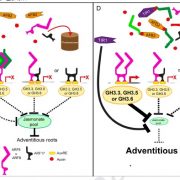
Plant Science Research WeeklyAdventitious roots typically develop from non-root tissue like shoots either naturally in some species or upon induction by stress in most species. The key roles of auxin signaling in lateral root development are well known but the role of these regulators in adventitious roots with their high phenotypic…
A novel hypothesis for the role of photosynthetic physiology in shaping macroevolutionary patterns (Plant Physiol)
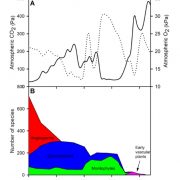
Plant Science Research WeeklyIn the 450 million(ish) years since plants acquired the ability to live on land, they have caused dramatic changes in the concentrations of atmospheric CO2 and O2 levels. As an example, due to tremendous increases in photosynthesis, CO2 levels dropped and O2 levels rose dramatically in the late Paleozoic…

Effector gene reshuffling involves dispensable mini chromosomes in wheat blast fungus (PLOS Genetics)
Plant Science Research WeeklyThe emerging disease wheat blast is devastating and has the capacity to cause 100% yield loss. Wheat blast is caused by the fungus Magnaporthe oryzae pathotype Triticum (MoT). This pathotype is distinct from most of the pathotypes that causes disease in other plants such as M. oryzae Oryza (MoO) in rice.…
Plant microbe co-evolution: Allicin resistance in Pseudomonas fluorescens (bioRxiv)
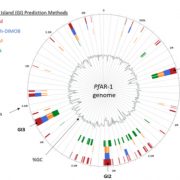
Plant Science Research WeeklyGarlic (Allium sativum L.) produces allicin (diallylthiosulfinate), which is an antibiotic defense substance. It can oxidize thiols in celular targets such as cysteines and glutathione. Because allicin has multiple sites and mechanisms of action, it is difficult for an organism to become resistant.…

Exploring the hydraulic failure hypothesis of esca leaf symptom formation (Plant Phys)
Plant Science Research WeeklyEsca is a leaf scorch (necrosis) disease of grapevine that causes tremendous yield losses. Bortolami et al. have investigated the etiology of this condition, which is known to be a consequence of fungal pathogen infection. But how exactly does the fungal infection contribute to the observed symptoms?…
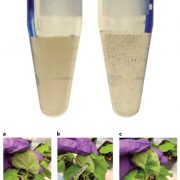
Carbon nanotube-mediated DNA delivery in intact plants (Nature Protocols)
Plant Science Research WeeklyOne promising use of nanomaterials is the delivery of biomolecules into cells. Demirer et al. report a detailed protocol for Carbon Nano Tube-mediated DNA delivery into intact plants, allowing transformation without transgene integration, that can be used in both model and crop species. In brief, carboxylated…