


Plant Science Research Weekly: September 27th
Blog, WWR Full PostEvolutionary flexibility in flooding response circuitry in angiosperms ($)
Flooding is unpredictable and can lead to plant death due to insufficient oxygen (hypoxia). Some plant species and varieties are better able to survive periods of submergence. Here, Reynoso et al. looked at gene networks…
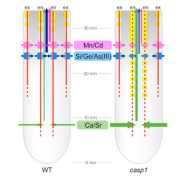
Casparian Strip Formation in Rice
Research, The Plant Cell, The Plant Cell: In a NutshellWang et al. identify a protein that mediates Casparian strip formation at the endodermis in rice roots. Plant Cell https://doi.org/10.1105/tpc.19.000296
By Jian Feng Maa and Jixing Xiab
aInstitute of Plant Science and Resource, Okayama University, Japan
bCollege of Life Science and Technology,…
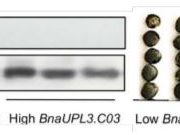
Promoting production: UPL3 promoter variation modulates seed size and crop yields
Research, The Plant Cell, The Plant Cell: In BriefIdentifying natural genetic variation, understanding how it influences traits, and utilizing it for crop improvement is a major objective in plant science. Miller et al. (2019) have identified genetic variation in the promoter region of BnaUPL3.C03 from a panel of Brassica napus accessions that can influence…

A novel specialized immune player: BSK5 is required for restricting pathogen progression
Plant Physiology, Plant Physiology: News and Views, ResearchAmna Mhamdi, Ghent University, Department of Plant Biotechnology and Bioinformatics, and VIB Center for Plant Systems Biology, 9052 Ghent, Belgium
Defense reactions are the fascinating result of a complex network between signals, receptors and effectors, where any missed nodes may spell disaster.…
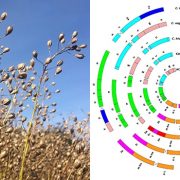
The genome history of camelina emerges from the shadows
Blog, Research, The Plant Cell, The Plant Cell: In a NutshellMandáková et. al. explore the origin of an ancient oilseed crop. https://doi.org/10.1105/tpc.19.00366
Background: Camelina (Camelina sativa; gold of pleasure or false flax) is an ancient oilseed crop grown in Europe as early as 4000 BC. Gold of pleasure was largely forgotten as a crop, being replaced…

Recognizing Plant Direct first authors: Anutthaman Parthasarathy
Plant Direct, Plant Direct: Author ProfilesAnutthaman Parthasarathy, co-first author of The Arabidopsis thaliana gene annotated by the locus tag At3g08860 encodes alanine aminotransferase
Current Position: Postdoctoral Research Associate (Prof. A. O. Hudson), Thomas H. Gosnell School of Life Sciences
Education: BSc - Chemistry (Madras University,…

Recognizing Plant Physiology first authors: Liang-Yu Hou
Plant Physiology, Plant Physiology: Author ProfilesLiang-Yu Hou, first author of NTRC plays a crucial role in starch metabolism, redox balance and tomato fruit growth
Current Position: PhD candidate in Dr. Peter Geigenberger’s lab, at the Ludwig-Maximilians-Universität München
Education: Bsc in Life Science at the National Central University…

Recognizing Plant Direct first authors: Ami N. Saito
Plant Direct, Plant Direct: Author ProfilesAmi N. Sait, first author of Structure-function study of a novel inhibitor of the Casein Kinase 1 family in Arabidopsis thaliana
Current Position: PhD student, Department of Applied Chemistry, Waseda University, Japan
Education: B. Eng. in synthetic organic chemistry, Waseda University, Japan
Non-scientific…

Recognizing Plant Cell first authors: Yingying Meng
The Plant Cell, The Plant Cell: Author ProfilesYingying Meng, first author of The MYB Activator WHITE PETAL1 Associates with MtTT8 and MtWD40-1 to Regulate Carotenoid-Derived Flower Pigmentation in Medicago truncatula
Current Position: Associate Professor, Biotechnology Research Institute, Chinese Academy of Agricultural Sciences
Education:…