

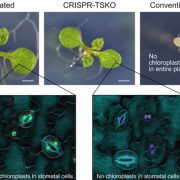
Tissue-specific Gene Elimination in Plants
Research, The Plant Cell, The Plant Cell: In a NutshellDecaestecker and Buono et al. develop a system for tissue-specific gene knockout to enable phenotypic analysis of context-specific gene function.
Plant Cell https://doi.org/10.1105/tpc.19.00454
By Ward Decaestecker, Rafael Andrade Buono, Moritz Nowack and Thomas Jacobs
Background: As plant molecular…

Keep sugar away to stay active: glycosylation of methyl salicylate shuts down systemic signaling
Plant Physiology, Plant Physiology: News and Views, ResearchPlant hormones are frequently modified by glycosylation, hydroxylation, methylation and other conjugations, and these modifications can alter the hormone’s activity and stability (Wang et al., 2019). The phytohormone salicylic acid orchestrates effective defense and mediates local and systemic-acquired…

Mellowed Yellow: WHITE PETAL1 Regulates Carotenoid Accumulation in Medicago Petals
Research, The Plant Cell, The Plant Cell: In BriefCarotenoids are tetraterpenoid (C40) lipophilic compounds that are widely distributed in nature and play key roles in pigmentation, photosynthesis, and development (Nisar et al., 2015). Detailed biochemical and genetic analyses have uncovered the carotenoid biosynthetic pathway, which generates a diverse…
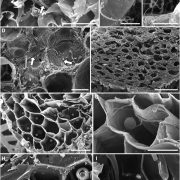
Insights into a Vascular Plant–Fungal Symbiosis
Plant Physiology, Plant Physiology: On The InsideThe land invasion by plants more than 500 million years ago was facilitated by the formation of mutualistic symbioses with fungi, through which the earliest plants gained access to mineral nutrients in exchange for photosynthetically fixed carbon (C). It was long hypothesized that this ancient mycorrhiza-like…
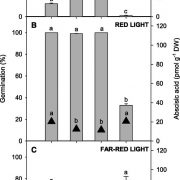
Smoke and Lettuce Seed Germination
Plant Physiology, Plant Physiology: On The InsideWildfire smoke contains certain potent bioactive compounds (butenolides) that play a major role in regulating the germination of many plant species, predominantly grasses and shrub species from fire-prone ecosystems but also many non-fire-dependent plants such as rice (Oryza sativa), wild oats (Avena…
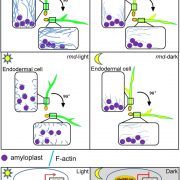
Actin Binding Protein and Negative Gravitropism
Plant Physiology, Plant Physiology: On The InsideGravity is a key determinant in orienting plant stems for proper growth and development. An intact and dynamic actin cytoskeleton is thought to be important for plants to respond to gravity; however, pharmaceutical treatment and mutant analyses have yielded conflicting results. In Arabidopsis (Arabdopsis…
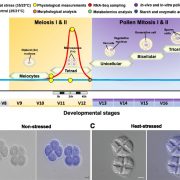
Heat Stress: Two New Insights
Plant Physiology, Plant Physiology: On The InsideHigh temperatures caused by climate change are predicted to decrease cereal productivity in many parts of the world. Yield losses due to rising temperatures have already been reported for major cereal crops including maize (Zea mays), wheat (Triticum sp.), and rice (Oryza sativa). These cereals together…
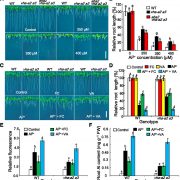
Vacuolar H+-ATPase Regulates Al Resistance
Plant Physiology, Plant Physiology: On The InsideIn acidic soils, phytotoxic levels of active aluminum (Al) are released from Al-containing minerals when the pH drops to 5 or lower. These active Al forms, primarily Al3+, often threaten root vitality and inhibit primary root elongation, thus limiting the acquisition of nutrient elements and water necessary…
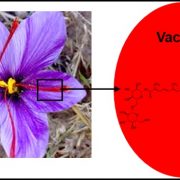
Saffron Red Pigment Is Stored in Vacuoles through Active Transport
Research, The Plant Cell, The Plant Cell: In a NutshellDemurtas et al. developed a high-throughput approach to identifying vacuolar transporters and used it to explore transport of crocins in saffron. Plant Cell https://doi.org/10.1105/tpc.19.00193
By Olivia C. Demurtas and Giovanni Giuliano
Background: The saffron spice is made of dried stigmas from…