


Recognizing Plant Cell authors: Fei Gao
The Plant Cell, The Plant Cell: Author ProfilesFei Gao, first author of The transcription factor bHLH121 interacts with bHLH105 (ILR3) and its closest homologues to regulate Fe homeostasis in Arabidopsis
Current Position: Ph.D. student in the lab of Dr. Christian Dubos at BPMP, INRA, CNRS, SupAgro, Univ Montpellier, Montpellier, France
Education:…

Recognizing Plant Physiology first authors: Naomi Cox
Plant Physiology, Plant Physiology: Author ProfilesNaomi Cox, first author of A novel upstream regulator of trichome development inhibitors
Current Position: PhD Candidate in Plant Molecular Biology at the University of Sheffield, UK and Visiting PhD Scholar at the International Rice Research Institute (IRRI), The Philippines
Education: MBiolSci…
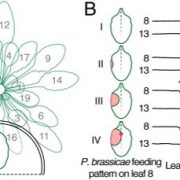
Insect-damaged Arabidopsis moves like wounded Mimosa pudica (PNAS)
Plant Science Research WeeklyStroking leaves of the sensitive plant Mimosa pudica causes them to fold inwards, but when touched more aggressively the leaf petioles and petioles of distal untouched leaves collapse dramatically downwards (as seen in this video); the propagating electrical signal is called the slow wave potential.…
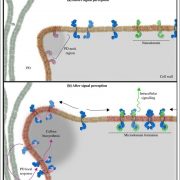
Review. Dare to change, the dynamics behind plasmodesmata-mediated cell-to-cell communication (COPB)
Plant Science Research WeeklyA new review by Petit et al. skillfully highlights the role of plasmodesmata at the interface between cell biology and whole-plant physiology. These tiny channels that connect plant cells determine what moves from cell-to-cell symplastically, so have roles in just about everything, from developmental…
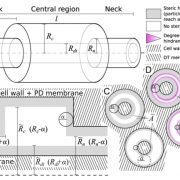
From plasmodesma geometry to effective symplasmic permeability through biophysical modelling (eLIFE)
Plant Science Research WeeklyPlasmodesmata are tiny regulated channels that connect adjacent plant cells through which nutrients, signaling molecules and viruses can move. To try to resolve discrepancies between functional and structural studies, Deinum et al. have developed a model for plasmodesmatal permeability that predicts…

Primer: Rhynie chert ($) (Curr. Biol.)
Plant Science Research WeeklyThis short Primer by Strullu-Derrien et al. introduces the amazing early vascular plant fossils from the Rhynie chert. The fossils' high level of detail is a consequence of their being embedded in a glass-like silica matrix, possibly derived from hydrothermal springs. The fossils are approximately 407…

Conversion of Escherichia coli to generate all biomass carbon from CO2 (Cell)
Plant Science Research WeeklyPlants are photosynthetic autotrophs, meaning they use light energy to feed themselves, with carbon dioxide as a carbon source. Heterotrophs like E. coli require organic carbon. Here, Gleizer et al. have rewired the metabolism of E. coli to make it into a (non-photosynthetic) autotroph, meaning it can…

A new B-BOX containing protein regulates red light photomorphogenesis ($) (PNAS)
Plant Science Research WeeklyAs the primary red light photoreceptor in Arabidopsis, phyB affects various developmental processes, such as seed germination, shade avoidance, etc. PIF3 is a key repressor of phyB-mediated photomorphogenesis that is degraded in red light. Recently Heng et al. identified a positive regulator of red light…
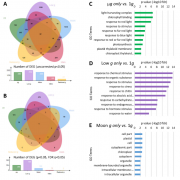
Arabidopsis transcriptional response to fractional gravity during spaceflight under blue-light (Frontiers Plant Sci)
Plant Science Research WeeklyA plant’s response to a microgravity environment allows for dissection of molecular pathways governing gravity sensing and other integrated pathways, such as phototropism. Renewed interest in long-term space travel also requires that plant behavior and growth under microgravity is well-understood and…