

Plant Science Research Weekly: December 27
Blog, WWR Full PostSpecial Current Opinion in Biotechnology issue Issue: Plant Biotechnology
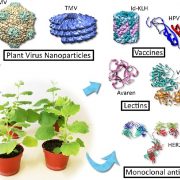
Since most of us will have a few days off this coming week as we welcome in 2020, I’d like to highlight some of the engrossing reviews in this special issue of Current Opinion in Biotechnology, edited by Ralf Reski, Gary…
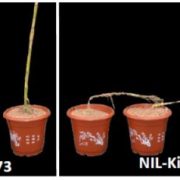
Stiffening stems: identification of the stiff1 gene involved in maize stalk strength
Research, The Plant Cell, The Plant Cell: In BriefStalk lodging, a structural failure in which crop stalks break prior to harvest, can result in high grain moisture, reduce grain quality, and cause harvesting difficulties. For the popular high-yielding cereal maize (Zea mays), lodging may result in global annual yield reductions of approximately 5-20%…

No Stakes for High Strength Corn
Plant Physiology, Plant Physiology: News and Views, ResearchKim L Johnson
La Trobe Institute for Agriculture & Food, Department of Animal, Plant and Soil Sciences, La Trobe University, Bundoora, Victoria 3086, Australia
In September 2019 hurricane Dorian swept across to the southeast coast of the USA and strong winds and downpours led to major crop…

Review: Pervasive human-driven decline of life on Earth points to the need for transformative change (Science)
Plant Science Research WeeklyReading this review by Diaz et al. feels a bit like reading a bad report card. Although we know we’re failing in our role as Earth’s stewards, we don’t always want to be reminded of this. But, in this case we need to read and act on the suggestions for improvement. The authors review the findings…
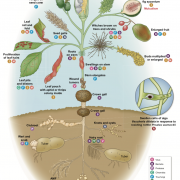
Plants make galls to accommodate foreigners: some are friends most are foes (New Phytol)
Plant Science Research WeeklyGall formation by plants is a commonly-seen phenomenon that occurs in response to foreign entities (here called “gall-inducers”) such as viruses, bacteria, fungi, nematodes, etc. In this review Harris and Pitzschke set out criteria for what is and is not a gall; by definition the gall is a developmental…
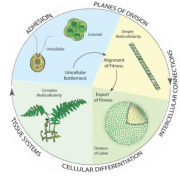
Review: The many roads to (and from) multicellularity (J. Exp. Bot)
Plant Science Research WeeklyMulticellularity is without doubt a fantastic fluke. We know that it arose independently in plants and animals, but how many times? And is there a common “predisposition” to multicellularity in the universal common ancestor? These are the questions addressed in this review by Niklas and Newman. Looking…

Rapid single-step affinity purification of HA-tagged plant mitochondria (Plant Physiol)
Plant Science Research WeeklyIn the middle part of the 20th century, cell biology leapt forward with the development of differential centrifugation methods for purifying subcellular compartments. However, these methods require large amounts of starting material and can suffer from contamination. Kuhnert et al. present a new simple…

Reprogramming of root cells during nitrogen-fixing symbiosis involves dynamic polysome association of coding and non-coding RNAs (Plant Cell)
Plant Science Research WeeklyKnowing RNA abundance is nice, but in most cases protein abundance is more biologically interesting. Traubenik et al. used TRAP (Translating Ribosome Affinity Purification) to examine efficiency of translation and contributions of non-coding and alternatively spliced RNAs during the establishment…
Identification of low-abundant lipid droplet proteins in seeds and seedlings (Plant Physiol)
Plant Science Research WeeklyThe ability of seeds to pack nutrients into dense stable capsules transformed plants’ and animals’ ability to thrive on land (imagine getting through your day without eating any foods derived from seeds or animals that eat seeds). Within many seeds, nutrients are packaged in lipid droplets, with…