


Recognizing Plant Direct authors: Christopher John Till
Plant Direct, Plant Direct: Author ProfilesChristopher John Till, first author of The Arabidopsis thaliana N‐recognin E3 ligase PROTEOLYSIS1 influences the immune response
Current Position: Scientist at Azotic technologies Ltd
Education: PhD in Biosciences, Department of Plant and Crop Sciences, Sutton Bonington, University of Nottingham.…

Recognizing Plant Cell authors: Brendan O’Leary
The Plant Cell, The Plant Cell: Author ProfilesBrendan O’Leary, first author of Metabolite regulatory interactions control plant respiratory metabolism via Target of Rapamycin (TOR) kinase activation
Current Position: Postdoc, Australian Research Council Centre of Excellence in Plant Energy Biology, University of Western Australia, Perth, Australia
Education:…

Recognizing Plant Physiology authors: Maryam Foroozani
Plant Physiology, Plant Physiology: Author ProfilesMaryam Foroozani, first author of Low-phosphate chromatin dynamics predict a cell wall remodeling network in rice shoots
Current Position: Ph.D. student in the lab of Dr. Aaron Smith at Louisiana State University
Education: M.Sc. in Plant Cell & Developmental Biology, Shiraz University, Shiraz,…

Review: The nanoscale organization of the plasma membrane and its importance in signaling – a proteolipid perspective (Plant Physiol)
Plant Science Research WeeklyAmple evidence shows that rather than being homogenous, plasma membrane lipids and proteins form distinct nanodomains. Jallais and Ott review plant plasma membrane nanodomains, and their important contributions to receptor-mediated signaling. The authors discuss methods for the study of membrane nanodomains,…

Opinion. A return to the wild: Root exudates and food security (Trends Plant Sci)
Plant Science Research WeeklyMy dog is a fantastic companion, but it’s obvious he could never fend for himself; domestication has eliminated his ancestral survival skills. Likewise, most crop plants thrive under human care, but have lost many of the traits that would help them survive in harsh conditions. Preece and Peñuelas…
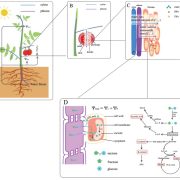
Review: Tomato fruit water accumulation and solute metabolism under water shortage (J. Exp. Bot.)
Plant Science Research WeeklyDeficit irrigation is water-conserving strategy in which a growing plant is given just enough but never too much water. Previous studies have shown myriad physiological changes caused by deficit irrigation including decreased growth rate and shoot:root ratio, and also a lower fruit water content. Here,…
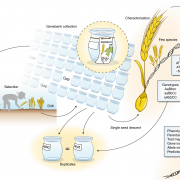
Review: Genebank genomics bridges the gap between the conservation of crop diversity and plant breeding (Nature Genetics)
Plant Science Research WeeklyCrop diversity is fundamental to safeguarding global food security. The high-yielding, input-responsive cultivars developed post-green revolution led to the replacement of traditional landraces that harbour beneficial genes and alleles governing biotic and abiotic stress resistance and nutritional quality…
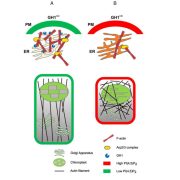
A SAC phosphoinositide phosphatase controls rice development via hydrolyzing PI4P and PI(4,5)P2 (Plant Physiol)
Plant Science Research WeeklyAs their name suggests, phosphoinositide (PI) phosphatases remove phosphates from phosphoinositides (try saying that fast!). Because the phosphorylation status of a membrane-bound PI determines which proteins it interacts with, PI phosphatases and kinases contribute to membrane functions and dynamics.…
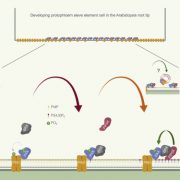
Plasma membrane domain patterning and self-reinforcing polarity in Arabidopsis (Devel. Cell)
Plant Science Research WeeklyPhosphoinositides (PIs) are specialized membrane lipids that contribute to membrane nanodomains, which affect protein localizations and vesicle trafficking. Previous studies have implicated PIs in the polar localization of auxin-transporter PIN proteins, and, in roots, the PIN-regulators PAX and BRX.…