

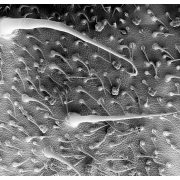
Tools to unravel the mystery of why some tomatoes are hairier than others
Research, The Plant Cell, The Plant Cell: In a NutshellGaldon-Armero et al. present an image resource that can be used to identify natural variation in leaf epidermal development in tomato. The Plant Cell (2020). https://doi.org/10.1105/tpc.20.00127
By Javier Galdon-Armero and Cathie Martin, John Innes Centre, Norwich, UK
Background: Just like our…
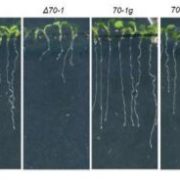
Twin-Positive Motifs Function as Specific Plastid Targeting Signals
Research, The Plant Cell, The Plant Cell: In BriefPrecise trafficking of proteins to their proper destinations in the cell, whether to an organelle, a membrane, or the cytoplasm, is required for optimal cellular function. Because most plastid proteins are nucleus-encoded and translated in the cytoplasm, proper targeting and import relies on the presence…

Recognizing Plant Physiology authors: Na Li
Plant Physiology, Plant Physiology: Author ProfilesNa Li, co-first author of Pseudo Response Regulators regulate photoperiodic hypocotyl growth by repressing PIF4/5 transcription
Current Position: Ph.D. candidate in Key Laboratory of Plant Molecular Physiology, Institute of Botany, Chinese Academy of Sciences, Beijing, China
Education: B.S. in College…
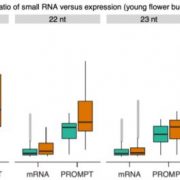
Exosome-Deficient Mutants Reveal Rare Promoter Upstream Transcripts (PROMPTs) in Arabidopsis
Research, The Plant Cell, The Plant Cell: In BriefIn eukaryotes and archaea, protein-coding DNA is transcribed to messenger RNA (mRNA) via a preinitiation complex (PIC) composed of over 100 proteins, among them regulatory proteins, numerous transcription factors, and RNA polymerase II—the enzyme that produces precursor messenger RNA (pre-mRNA). Although…

Recognizing Plant Cell authors: Peng Zhou
The Plant Cell, The Plant Cell: Author ProfilesPeng Zhou, first author of Meta Gene Regulatory Networks in Maize Highlight Functionally Relevant Regulatory Interactions
Current Position: Post-doctoral Associate in Dr. Nathan Springer lab at the University of Minnesota
Education: Ph.D. (Plant Pathology) in University of Minnesota; M.Sc. (Forensic…

RNA polymerase II transcription: cleave to elongate
Research, The Plant Cell, The Plant Cell: In a NutshellAntosz et al. show that the ability of RNA polymerase II to cleave transcripts is required for proper transcription and plant growth.
Wojciech Antosz and Klaus Grasser, University of Regensburg
https://doi.org/10.1105/tpc.19.00891
Background: In plants as in other eukaryotes, nuclear…

Recognizing Plant Physiology authors: Yunliu Zeng
Plant Physiology, Plant Physiology: Author ProfilesYunliu Zeng, first author of Sensory-directed Genetic & Biochemical Characterization of Volatile Terpene Production in Kiwifruit
Current Position: Associate Professor at Huazhong Agricultural University (HZAU), China
Education: Ph.D. and Master of Pomology at HZAU, China; BSc of Horticulture…

Recognizing Plant Cell authors: Lucas McKinnon
The Plant Cell, The Plant Cell: Author ProfilesLucas McKinnon, first author of Membrane Chaperoning of a Thylakoid Protease whose structural stability is modified by the Protonmotive force
Current Position: PhD candidate at University of California, Davis
Education: PhD in Plant Biology (expected March 2020), B.S. in Biological Sciences (UC Davis,…
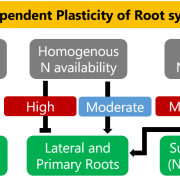
Review. Signalling pathways underlying nitrogen-dependent changes in root system architecture: from model to crop species (J. Exp. Bot.)
Plant Science Research WeeklyNitrogen (N) is one of the seventeen essential nutrients for a plant to complete its life cycle and is one of the most important determinants of productivity of various crops globally. Nitrate (NO3‑) and ammonium (NH4+) are the major plant-available forms of N. The spatiotemporal heterogeneity of N…