


Recognizing Plant Cell authors: María Jazmín Abraham-Juárez
The Plant Cell, The Plant Cell: Author ProfilesMaría Jazmín Abraham-Juárez, first author of Evolutionary Variation in MADS-box Dimerization Affects Floral Development and Protein Abundance in Maize
Current Position: Researcher, CONACyT- División de Biología Molecular, Instituto Potosino de Investigación Científica y Tecnológica (IPICYT).…

RDR6 is essential for double-strand break formation during male meiosis in rice
Blog, The Plant Cell, The Plant Cell: In BriefPlant RNA-dependent RNA polymerases (RDRs) are essential for the biogenesis of small, interfering RNAs (siRNAs). These polymerases function by converting single-stranded RNA transcripts into double-stranded RNAs, which are processed by Dicer-like ribonucleases into 21- to 24-nucleotide siRNAs (reviewed…
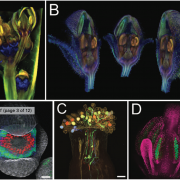
Review. Imaging flowers: a guide to current microscopy and tomography techniques to study flower development (J. Exp. Bot.)
Plant Science Research WeeklyFlowers bear the reproductive organs and determine the reproductive success of plants by producing fruits and seeds. Flowers usually include four whorls of organs: sepals, petals, stamen and carpel. In this review, Prunet and Duncan discuss various microscopic and tomographic techniques to image flower…
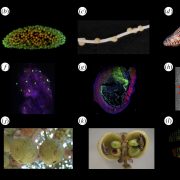
Review: Compartmentalization drives the evolution of symbiotic cooperation (Proc. Roy. Soc.)
Plant Science Research Weekly
Many plants take advantage of microbial symbionts to boost their nutrient uptake, with classic examples provided by mycorrhizal fungi and the legume/Rhizobia partnership. Similar symbiotic partners are found in other domains of life, including the coral/dinoflagellate symbiosis, and the symbiosis…
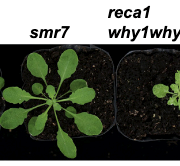
Plastid stress signaling alters cell cycle progression (Cell Reports)
Plant Science Research Weekly
The chloroplast is in constant communication with the nucleus via so-called retrograde signaling. This signaling, which can take many molecular forms, is important for maintaining chloroplast function. In this paper by Duan et al. we learn that interfering with plastid DNA replication, either through…
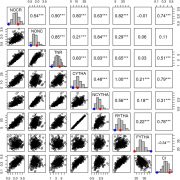
Multiple QTL mapping in autopolyploids: A random-effect model approach with application in a hexaploid sweetpotato full-sib population (Genetics)
Plant Science Research WeeklyGene mapping and QTL identification for the improvement of important traits have not been fully explored in an autopolyploid species like sweetpotatoes (2n=6x=90) due to its genetic complexity. Most sweet potato QTL mapping efforts have relied on models used for diploid species, leading to low density…
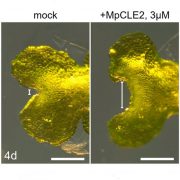
Molecular regulation of meristem development in liverworts (Curr. Biol.)
Plant Science Research WeeklyPlants grow through meristems, pools of undifferentiated cells that produce and develop into all varieties of cell types. Flowering plants such as Arabidopsis regulate meristematic cell division through CLAVATA3/EMBRYOSURROUNDING REGION-related (CLE) peptide signaling, but the molecular mechanisms in…
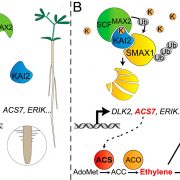
The karrikin signaling regulator SMAX1 controls Lotus japonicus root and root hair development by suppressing ethylene biosynthesis (Proc. Natl. Acad. Sci. USA)
Plant Science Research Weekly
KARRIKIN INSENSITIVE 2 (KAI2) and MORE AXILLARY GROWTH 2 (MAX2) form an important hormone receptor complex and mediate several developmental responses in the karrikin signaling pathway. The proteolytic degradation of the suppressor of MAX2 (SMAX1) is a major step in this pathway. Carbonnel et al.…
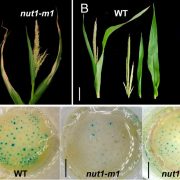
A protoxylem-specific NAC transcription factor modulates heat and drought stress in maize (PNAS)
Plant Science Research Weekly
Excessive heat and water deficit coincide with flowering and result in developmental defeats such as male floral organs browning, infertile pollen, and failure in fertilization: a syndrome known as “tassel blasting” in maize. The genetic pathway underlying tassel blasting is not well characterized.…