

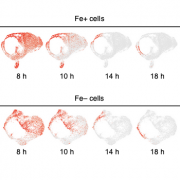
The final (algal) frontier: Chlamydomonas enters the age of single cell RNA-seq
The Plant Cell: In a NutshellMa, Salomé and colleagues use single cell RNA-seq (scRNA-seq) on the unicellular green alga Chlamydomonas reinhardtii as a proof-of-concept for the application of this method to unicellular algae.
By Patrice A. Salomé, Department of Chemistry and Biochemistry, UCLA*
Background: The sequenced…

Recognizing The Plant Cell author Niklas Klusch
The Plant Cell: Author Profiles
Niklas Klusch, first author of A ferredoxin bridge connects the two arms of plant mitochondrial complex I
Current Position: PhD student, Max Planck Institute of Biophysics
Education: BSc in Biology, MSc in Cell Biology and Physiology, Goethe University Frankfurt/Germany
Non-scientific Interests:…

Coevolving Chloroplast Proteins
The Plant Cell: In a NutshellBy ES Forsythe, AM Williams, DB Sloan, Department of Biology, Colorado State University, Fort Collins, Colorado
Forsythe and colleagues measured the rate of variation across thousands of nucleus-encoded and plastid-encoded proteins to then look for evidence of coevolution, suggestive of similar functions…
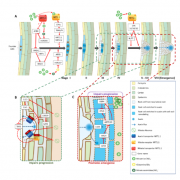
Update: Lateral root formation and nutrients: nitrogen in the spotlight (Plant Physiol)
Plant Science Research WeeklyWe marvel at the ability of starfish to regenerate an arm, or a lizard a new tail, but even more impressive than these feats is the ability of a plant root system to create lateral roots when and where they are needed. This root system plasticity has been long studied, with a wealth of insights into…
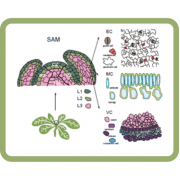
A single-cell analysis of the Arabidopsis vegetative shoot apex (Devel. Cell)
Plant Science Research WeeklyOne of the most fascinating challenges in developmental biology is to understand how a few stem cells hidden in a microscopic region of the shoot apex give origin to all aerial parts of the plant. Technological advances such as single-cell RNA-sequencing (scRNA-seq) are enabling the comprehensive analysis…
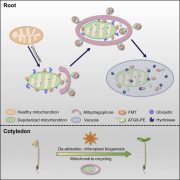
A clustered mitochondria family protein mediates the plant mitophagy (Curr. Biol.)
Plant Science Research WeeklyMitochondria function as cellular powerhouses to generate energy via oxidative phosphorylation and facilitate the synthesis of essential macromolecules. To protect against proteotoxic stress, damaged mitochondria are selectively removed by autophagy via a process known as mitophagy. In mammalian cells,…
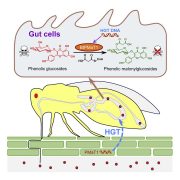
Whitefly hijacks a plant detoxification gene that neutralizes plant toxins (Cell)
Plant Science Research WeeklyThe sweetpotato whitefly, Bemisia tabaci, are devastating crop pests that lower yields and transmit viruses. They feed off more than 600 species, most of which produce toxic phenolic glycosides. Xia et al. investigated how the whiteflies manage to avoid the effects of the toxin. They found convincing…
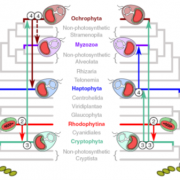
A molecular timescale for eukaryote evolution with implications for the origin of red algal-derived plastids (Nature Comms)
Plant Science Research WeeklyAlgae powered by red algal-derived plastids (e.g., diatoms, dinoflagellates, and coccolithophores) are among the most evolutionary and ecologically successful eukaryotes on Earth, but their origins and relationships remain poorly understood. Here, Strassert et al. test the rhodoplex hypothesis that designates…
Plant Science Research Weekly: April 2, 2021
WWR Full PostUpdate: Lateral root formation and nutrients: nitrogen in the spotlight
We marvel at the ability of starfish to regenerate an arm, or a lizard a new tail, but even more impressive than these feats is the ability of a plant root system to create lateral roots when and where they are needed. This root…