


Sanghun Lee: The Plant Cell First Author
The Plant Cell: Author Profiles
Sanghun Lee, first author of "Broad spectrum fungal resistance in sorghum is conferred through the complex regulation of an immune receptor gene embedded in a natural antisense transcript"
Current Position: Research Associate of Botany and Plant Pathology at Purdue University, USA
Education: BS…

Wenhan Cao: Plant Physiology First Author
Plant Physiology: Author Profiles
Wenhan Cao, first author of "Correlation of Vacuole Morphology with Stomatal Lineage Development by Whole-Cell Electron Tomography"
Current Position: Research Associate at School of Life Sciences, the Chinese University of Hong Kong, Hong Kong, China
Education: Ph.D. in Cell & Molecular Biology…
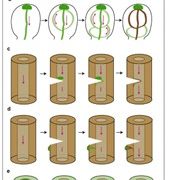
Review. Auxin canalization: From speculative models toward molecular players (Curr Opin Plant Biol)
Plant Science Research WeeklyThe versatility of roles that the hormone auxin plays led Paque and Weijers to suggest a new meaning to the acronym IAA (originally- Indole Acetic Acid)- ‘Influences Almost Anything’. It is known that PIN-FORMED (PIN) auxin exporters are responsible for cell-to-cell directional auxin flow and auxin…
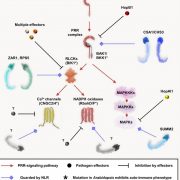
Review. The complex zigzagging in the plant immune system (Plant Cell)
Plant Science Research WeeklyI remember when I joined my PhD lab, the first article I was recommanded was a review by Jones and Dangl (2006) titled “The plant immune system”. Even today it remains the first article given to newbies in the lab. But the field has progressed way ahead in the more than fifteen years since that article…

Review: Embryo-endosperm interactions ($) (Annu Rev Plant Biol)
Plant Science Research WeeklyAngiosperm seed formation is an incredibly complex process, considering that it requires coordinating the development of three distinct structures –the embryo, the endosperm and the seed coat– in a small space. However, Doll and Ingram show us that angiosperms faced this challenge by evolving a complex…
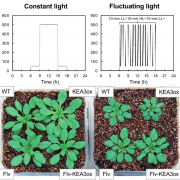
Flavodiiron proteins enhance the rate of CO2 assimilation in Arabidopsis under fluctuating light intensity (Plant Physiol)
Plant Science Research WeeklyPlants must adjust to varying levels of light in order to optimize photosynthetic rates; too little electron transport and plants will incur an energetic penalty, while excessive excitation of photosystem I leads to photodamage. During high light conditions, the increase in DpH acts as a brake on electron…
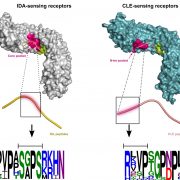
HSL1 and BAM1/2 impact epidermal cell development by sensing distinct signaling peptides (Nature Comms)
Plant Science Research WeeklyCell-to-cell communication is crucial for coordinating plant immunity, development, and environmental adaptations. The main players in sensing signaling molecules are membrane receptor kinases such as Leucine Rich Repeat Receptor Kinases (LRR-RKs). In some cases these receptors detect peptide signals.…
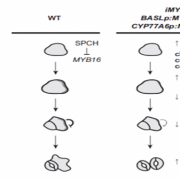
Misregulation of MYB16 expression causes stomatal cluster formation by disrupting polarity during asymmetric cell divisions (Plant Cell)
Plant Science Research WeeklyWater loss during photosynthesis is limited by specialized plant cells such as stomata, as well as cuticle formation on the epidermis. In Arabidopsis thaliana, stomata lineage is a good system in which to elucidate the interplay between biochemical signals and mechanical properties during leaf development.…

GA-GRF module – A key regulator of rice leaf length via spatial cell division control (New Phytol)
Plant Science Research WeeklyLeaf features have undergone significant changes during the course of evolution and domestication owing to ecological adaptations and changes in source-sink dynamics. Therefore, wild relatives of crop plants are important resources for exploring the genetic regulation of leaf features that might not…